
About the Book
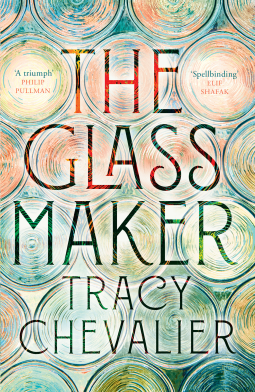
Venice, 1486. Across the lagoon lies Murano. Time flows differently here – like the glass the island’s maestros spend their lives learning to handle.
Women are not meant to work with glass, but Orsola Rosso flouts convention to save her family from ruin. She works in secret, knowing her creations must be perfect to be accepted by men. But perfection may take a lifetime.
Skipping like a stone through the centuries, we follow Orsola as she hones her craft through war and plague, tragedy and triumph, love and loss.
The beads she creates will adorn the necks of empresses and courtesans from Paris to Vienna – but will she ever earn the respect of those closest to her?
Format: Hardcover (400 pages) Publisher: The Borough Press
Publication date: 12th September 2024 Genre: Historical Fiction
Find The Glassmaker on Goodreads
Purchase The Glassmaker from Bookshop.org [Disclosure: If you buy books linked to our site, we may earn a commission from Bookshop.org, whose fees support independent bookshops]
My Review
I’ve read several of Tracy Chevalier’s previous books: her most well-known novel, The Girl with the Pearl Earring, but also The Last Runaway, A Single Thread, At the Edge of the Orchard and New Boy. What those books demonstrated is her ability to create stories that draw you in and to capture the essence of a period, whether that’s 17th century Delft, 1930s Winchester or 19th Century Ohio.
In The Glassmaker she attempts to do more than that with a story that encompasses centuries but focuses on a set of characters (chiefly the Rosso family but also a few others in their ‘bubble’) who age at a slower rate than the world around them. The author likens this to skipping a stone over water meaning that we see the history of Murano glassmaking and of Venice evolve through the centuries whilst remaining with the same small cast of characters. The book thus takes the reader from the 15th century to almost the present day. I confess I struggled with the concept as we got further away from the fifteenth century and modern technology became more of a feature. The last section set in a flooded Venice in 2019 felt like a bit of an add-on in order to introduce the impact of climate change.
The book’s main character, Orsola Rosso, daughter of a family who have been involved in glassmaking for centuries, faces the obstacle experienced by pretty much all women at the time: her gender prevents her pursuing her ambitions and restricts her independence. It even removes her freedom to choose with whom she should spend her life, the interests of the family coming before her own desires. The prospect of a life filled with household chores fills her with dismay.
However, encouraged by a woman who has defied convention, Orsola begins to learn the craft of glass beadmaking, work that doesn’t require a furnace like the other objects produced in the family’s factory. Her brother Marco considers beads an inferior product although as time goes on Orsola’s work proves its value to the family when tastes change and Murano no longer has a monopoly on glassmaking.
The 16th century sees the arrival of the plague in Venice and this, for me, was the most gripping section of the book. The inhabitants of Murano pray that the stretch of water that divides them from the city will protect them, but it is not to be. The Rosso family experience loss, separation and the rigors of quarantine on an island that is not self-sufficient. Some members of the family are never quite the same afterwards, physically or psychologically.
I loved learning about the process of glassmaking which the author has clearly researched in exhaustive detail. Although Murano is easily accessible today, for its inhabitants in earlier times it was very separate from Venice, not just geographically but culturally. When Orsola makes her first visit to Venice she feels very much an outsider, confused by the layout of the city and its busy streets and waterways. And the notion of visiting the mainland – terrafirma – fills her with terror despite her curiosity.
Even if the structure didn’t completely work for me, The Glassmaker is an intriguing story of a family, of a city and a craft over the centuries and entwined within it is a bittersweet romance.
I received an advance reader copy courtesy of The Borough Press via NetGalley.
In three words: Fascinating, imaginative, emotional
Try something similar: The Outcasts of Time by Ian Mortimer
About the Author
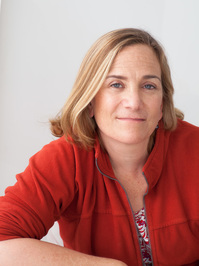
Tracy is the author of 11 novels, including the international bestseller Girl With A Pearl Earring, which has sold over 5 million copies and been made into an Oscar-nominated film starring Scarlett Johansson and Colin Firth. American by birth, British by geography, she lives in London and Dorset. Her latest novel, The Glassmaker, is set in Venice and follows a family of glass masters over the course of 5 centuries.
Connect with Tracy
Website | Facebook | X | Instagram

 What Cathy Read Next...
I’m nearly finished this book and have been enjoying it overall, but the time travel element wasn’t really what I expected and I’m not sure how I feel about it. I love the glassmaking details and the Venice/Murano setting, though!
LikeLike
Yes, I struggled with the time travel element. For example, how easily Orsola seemed to adapt to modern times and the randomness of who got included in the ‘time travel bubble’. I think it might have been better told through generations of the family, a bit like Kate Mosse’s recent series.
LikeLike
I don’t think I’ve ever read anything by her, but this does sound good.
LikeLike
It’s not my favourite of her books but still a good read. Obviously her most famous one is The Girl With the Pearl Earring but At the Edge of the Orchard is good, even if I did describe it my review as a ‘slow burn’.
LikeLiked by 1 person
Oh, I can slow burn. But I saw the film of Pearl Earring and now I’m not so interested in reading it.
LikeLike
Lovely review, Cathy. 💖📚
LikeLike
Nice of you to say especially as you probably detected I wasn’t quite as enthusiastic about it as other readers!
LikeLike
I’ve read a couple of her older books. This one is calling me more than her most recent ones have!
Thanks for sharing this review with the Historical Fiction Reading Challenge.
LikeLike