
About the Book
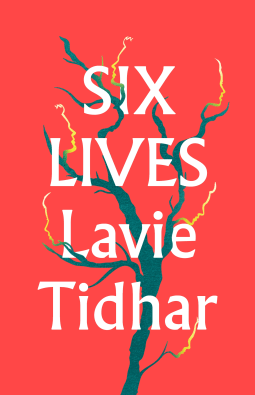
Six lives, connected through blood and history, each rooted in the dirt of their inheritance, look to the future, and what it might hold.
THE GUANO MERCHANT – In 1855, Edward Feebes travels to the guano islands of South America, to investigate an irregularity in the accounts of the House of Feebes & Co.
THE BLACKMAILER – In 1912, post-mortem photographer and reluctant blackmailer Annie Connolly plots her escape from Ireland to America on board the Titanic.
THE IDEALIST – In 1933, idealistic Edgar Waverley faces a choice of the heart when he becomes embroiled in a country house murder.
THE SPY – In 1964, hapless KGB agent Vasily Sokolov makes his career conjuring valuable information from worthless detritus.
THE MOVIE STAR – In 1987, actor Mariam Khouri looks back at ‘Black Dirt’, the movie that lifted her from the streets of Cairo.
THE HEIRESS – In 2012, Isabelle Feebes attempts to break with her poisonous heritage once and for all. Can she forge a new life for herself in the New World? Can you ever truly escape your past?
Format: Hardcover (464 pages) Publisher: Apollo
Publication date: 29th August 2024 Genre: Historical Fiction
Find Six Lives on Goodreads
Purchase Six Lives from Bookshop.org [Disclosure: If you buy books linked to our site, we may earn a commission from Bookshop.org, whose fees support independent bookshops]
My Review
Having very much enjoyed Lavie Tidhar’s novel Adama, I was pleased to spot Six Lives on NetGalley, especially since I’ve lately become a fan of interconnected stories.
I particularly enjoyed the first four stories. The fifth set in Cairo was interesting for its insight into the political history of Egypt in the 1970s and 1980s but I couldn’t warm to the angst of Isabelle, the subject of the sixth story. Having said that there are some clever touches in this final story such as the bookshelf of Isabelle’s adopted mother, Henrietta, which contains volumes with titles that relate to the previous five stories. And there’s an object that appears in each story, handed down the generations sometimes purposefully, sometimes accidentally.
Each story skilfully evokes the milieu of the period. The first set in mid-nineteenth century Peru is particularly notable for the amount of historical detail, meaning I learned more about the trade in guano than I ever thought possible. And I had no idea there was such a thing as memento mori photography which features in the second story. The third, written in the style of a ‘Golden Age’ murder mystery complete with country house setting, a brutal murder, a range of characters (including an Agatha Christie-like author of detective stories) and lots of possible motives, was the most entertaining. I imagine the author having a lot of fun writing this one, ticking off one trope of the genre after another.
It’s possible to detect several themes in the book. One is the value to be found in detritus, such as the guano which is the source of Feebes family’s prosperity – ‘the birds rained excrement upon those lonely outcrops of rock, and their shit turned to gold’ – or the intelligence material that KGB agent Vasily Sokolov harvests from the discarded papers of foreign embassies. Neatly, the film which makes actress Mariam Khouri a star is entitled ‘Black Dirt’.
Another theme is the consequences of actions and the moral choices people make. For example, the guano traded by Feebes & Co is used not only as fertiliser but increasingly for manufacturing munitions. And the Chinese workers who dig the stuff and load it onto waiting ships are pretty much slave labour, their lives merely an entry in a profit and loss account. Ironically, it is the Chinese from whom Edward Feebes obtains the supplies of laudanum he has become reliant on. These consequences become part of the inheritance of those who come later, often unaware their good fortune may have been earned through the suffering of others.
Even if I warmed to some of characters more than others, there’s no doubting the storytelling ability of the author. And who can resist chuckling at an absurd sentence like, ‘Rain rained and snails snailed and squirrels squirrelled squirrelly things‘. I enjoyed coming across the little connections between the stories, especially the ones that could easily pass you by. I was thoroughly entertained by Six Lives which I think demonstrates the author’s versatility, mastery of detail and sly humour.
I received a review copy courtesy of Head of Zeus via NetGalley.
In three words: Absorbing, assured, clever
Try something similar: Ancestry by Simon Mawer or Held by Anne Michaels
About the Author

Lavie Tidhar’s work encompasses literary fiction (Maror, Adama and Six Lives), cross-genre classics such as Jerwood Prize winner A Man Lies Dreaming (2014) and World Fantasy Award winner Osama (2011), and genre works like the Campbell and Neukom prize winner Central Station (2016). He has also written comics (Adler, 2020) and children’s books such as Candy (2018) and A Child’s Book of the Future (2024).
He is a former columnist for the Washington Post and a current honorary Visiting Professor and Writer in Residence at the American International University in London.

 What Cathy Read Next...
I am very certain that I have never read a book featuring a guano merchant before!
Thanks for sharing this review with the Historical Fiction Reading Challenge.
LikeLike
I’d be worried if many of us had 🙂
LikeLike