
About the Book
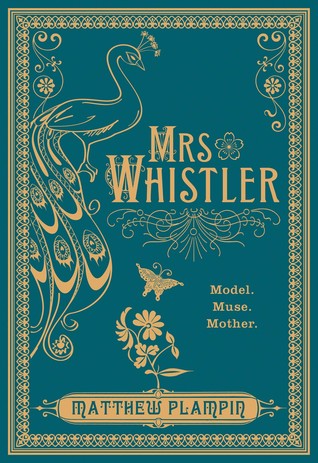
Chelsea, 1876. Struggling artist Jimmy Whistler is at war with his patron. Denied full payment, he and muse Maud Franklin face ruin.
As Jimmy’s enemies mount, he resolves to sue a famous critic for libel, in a last-ditch attempt to ward off the bailiffs. Although she has no position in society, Maud is expected to do her part.
But Maud has a secret that forces her to choose between art and love.
Format: ebook (465 pages) Publisher: The Borough Press
Publication date: 3rd May 2018 Genre: Historical Fiction
Find Mrs Whistler on Goodreads
Purchase links
Bookshop.org
Disclosure: If you buy a book via the above link, I may earn a commission from Bookshop.org, whose fees support independent bookshops
Hive | Amazon UK
Links provided for convenience only, not as part of an affiliate programme
My Review
Based on actual events, Mrs Whistler is the story of artist James MacNeill Whistler, a man so convinced of his own genius that he embarks on an ill-advised libel action against art critic, John Ruskin, who has been less than complimentary about his work, falls out with the wealthy and influential Frederick Leyland over a room known as ‘The Peacock Room’ he has been commissioned to decorate, and is gulled by individuals he thought were friends but who turn out to be anything but. It’s a story of hubris in which you feel all along that things are not going to turn out well although, to a certain extent, you do have to admire someone whose overwhelming self-confidence enables them to view what anyone else would see as a disaster as a mere temporary setback. I’m afraid that was the only thing I found to admire about the James Whistler revealed in the book. Sure, he’s good company and hosts lavish parties but mostly using other people’s money. And he is completely self-centred. ‘Jim was not known for his perceptiveness when it came to the thoughts and feelings of others…’ Too right.
There’s really only one ‘official’ Mrs Whistler in the book, James’ mother, the subject of probably his most famous painting. Maud, the young woman who starts off as his model, then his muse and then his lover, never achieves that status. Maud has artistic talent of her own but is destined to remain in Whistler’s shadow, supporting him through one scrape after another, enduring the penury that follows the outcome of his disastrous libel action and putting up with his moods. ‘When in the dumps, he was but a husk – a despondent child, a tired old man.’ Time and again, I found myself thinking, ‘Maud why on earth are you with this man?’ particularly when she is forced to make an unbearably sad decision on not just one, but two occasions purely so Whistler’s artistic life can continue unimpeded.
It’s Maud who finally puts two and two together and discovers just how ruthlessly Whistler has been manipulated – and betrayed – by a person he thought his closest friend (although I suspect most readers will have had their doubts about them from early on).
The reader gets a fascinating insight into the artistic community of the period with walk-on parts for artists such as Dante Gabriel Rossetti and Edward Burne-Jones. There’s even an appearance towards the end of the book by Oscar Wilde (described as ‘a fleshy, rather flamboyant young Irishman’) who of course also embarked on an ill-fated libel action.
In the author’s Historical Note he references the biography of Whistler written by American art critic Elizabeth Pennell and her husband Joseph, published in 1911. He describes how, whilst writing the book, they felt certain details about Whistler’s life were missing. However, although Maud was still alive, she refused to talk to the Pennells. As they described it: ‘Maud could tell the whole story, but she will not.‘ Mrs Whistler is Matthew Plampin’s very engaging attempt to fill in the gaps in that story.
I received a digital review copy courtesy of The Borough Press via NetGalley.
In three words: Fascinating, moving, insightful
Try something similar: Ecstasy by Mary Sharratt
About the Author

Matthew Plampin was born in 1975 and lives in London. He completed a PhD at the Courtauld Institute of Art and now lectures on nineteenth-century art and architecture. He is the author of four other novels: The Street Philosopher, The Devil’s Acre, Illumination and Will & Tom. (Photo credit: Karolina Webb)
Connect with Matthew
Goodreads | Twitter

 What Cathy Read Next...
Now this sounds interesting! Thanks!
LikeLike