
 About the Book
In the twenty-first century, we increasingly push our daily routines into the night, carrying out work, exercise and our social lives long after dark. But we have forgotten that our bodies are governed by a 24-hour biological clock which guides us towards the best time to sleep, eat and think. New science has proven that living out of sync with this clock is not only disrupting our sleep, but leaving us more vulnerable to infection, cancer, obesity, type 2 diabetes, heart disease and mental illness.
In Life Time, Professor Russell Foster shares his life’s work, taking us on a fascinating and surprising journey through the science of our body clocks. Using his own studies, as well as insights from an international community of sleep scientists and biologists studying circadian rhythms, he illustrates the surprising effects the time of day can have on our health:
– how a walk outside at dawn can ensure a better night’s sleep
– how eating after sundown can affect our weight
– the extraordinary effects the time we take our medication can have on our risk of life-threatening conditions, such as strokes
In the modern world, we have neglected an essential part of our biology. But with knowledge of this astonishing science, we can get back into the rhythm, and live healthier, sharper lives.
Format: Hardback (480 pages) Publisher: Penguin
Publication date: 19th May 2022 Genre: Nonfiction, Science
Find Life Time: The New Science of the Body Clock, and How It Can Revolutionize Your Sleep and Health on Goodreads
Purchase links
Bookshop.org
Disclosure: If you buy a book via the above link, I may earn a commission from Bookshop.org, whose fees support independent bookshops
Hive | Amazon UK
Links provided for convenience only, not as part of an affiliate programme
My Review
Although the book’s sub-title, ‘The New Science of the Body Clock, and How It Can Revolutionize Your Sleep and Health, might give the impression this is purely a self-help book in fact it’s a detailed account of the current thinking, based on scientific research by the author and others, about the effects of the body’s circadian rhythms – the so-called ‘body clock’ – on sleep, physical and mental health.
If I had to place the book on a scale between popular science and academic text, I’d say it tends more towards the latter although the ideas it contains are expressed with clarity and precision. Some chapters go into more depth than others and I’ll confess there were some sections I skipped entirely because of their complexity. There are detailed diagrams with even more detailed notes providing supplementary or explanatory information. With a few exceptions, I would say it’s not necessary to read all the additional information in order to understand the concepts the author is discussing or the propositions he is examining. For those wary of embarking upon a book of nearly five hundred pages, over a hundred pages are taken up by appendices, references and index.
Life Time is full of fascinating information and you get a real sense of the author’s passion for his subject. I certainly learned a lot about how much of our body’s functions are influenced by circadian rhythms, everything from saliva production to control of appetite, and how disruption of our body clock can have an impact on our sleep, our cognitive ability, our physical and mental health, even the effectiveness of medication. The book focuses a lot on the impact of sleep and circadian rhythm disruption (SCRD), especially in relation to night shift workers. For example, that this is likely to have been a factor in the accidents at the Three Mile Island and Chernobyl nuclear plants or the Exxon Valdez oil spill.
If this is all sounding a little heavy, there are moments of humour. For instance, at the end of each chapter the author includes examples of questions he has been asked at talks and lectures he’s given. My favourite was, ‘If we shouldn’t eat at night, why do they put a light in the fridge?’. Actually, the author demonstrates that there is scientific evidence for what we call the ‘munchies’. He also provides some useful, and often amusing, analogies. For example, when discussing the relationship between SCRD and stress, that stress is ‘a bit like the first gear of a car engine – it provides rapid acceleration – which can be very useful short term. But if you keep the engine in first gear for a long journey you will destroy the engine’. Or, when discussing the key elements of cognition, that essentially our ‘executive functions are the processes in the brain that allow us to solve problems – like E=MC² – or for most of us, how to turn what we find in the fridge into dinner’. He also demonstrates there is science behind the old adage that you should sleep on a problem.
The book ends with a ‘call to arms’, for more communication about the impact of sleep deprivation on education and employment, especially healthcare, and the actions that can be taken to mitigate this. My main takeaway from the book is summed up by the author’s comment that ‘what we do when really matters’.
In three words: Detailed, fascinating, authoritative
 About the Author
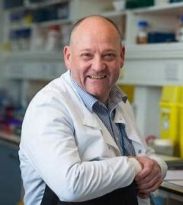
Russell Foster is Professor of Circadian Neuroscience, Director of the Sir Jules Thorn Sleep and Circadian Neuroscience Institute (SCNi) and Head of the Nuffield Laboratory of Opthalmology at the University of Oxford. He is a Fellow of the Royal Society and was awarded a CBE for services to science. Russell frequently contributes to newspapers, and often appears on television and radio, including an appearance on Desert Island Discs. He has co-written four popular science books, but this is his first as sole author.

 What Cathy Read Next...
The topic is of interest to me because my circadian rhythm is very off, but attempts to correct it don’t work. I might look for it, thanks for sharing
LikeLiked by 1 person
After reading your review, I got on the waitlist for it at the public library. Thanks for making me aware of the book.
LikeLiked by 1 person