
Welcome to today’s stop on the blog tour for The Lady in the Veil by Allie Cresswell. The book continues the story of the Talbot family who featured in Tall Chimneys and The House in the Hollow but works equally well as a standalone. I’m delighted to be able to bring you an extract from The Veiled Lady but, before I do, let Allie explain a bit more about the inspiration for the character of Mrs Quince who features in it.
“My new novel, The Lady in the Veil, is set in the year 1835, post Regency but pre-Victorian. Its predecessor, The House in the Hollow, was set firmly in the Georgian era, and as such I delighted in emulating an Austenesque style. But it seemed to me that this later period called for the addition of the colour and exuberance demonstrated by later writers. Charles Dickens’ Sketches by Boz was published in 1836, with The Pickwick Papers following a year later. Dickens embraced characters of what Austen would call ‘low degree’ who are nevertheless charming, humorous, appealing and salutary. I came up with Mrs Quince, a lady who makes her living by letting rooms in her little house.”
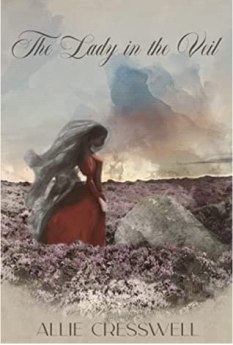 About the Book
What secrets hide beneath the veil?
When her mother departs for a tour of the continent, Georgina is sent from the rural backwaters to stay with her cousin, George Talbot, in London. The 1835 season is at its height, but Georgina is determined to attend neither balls nor plays, and to eschew Society. She hides her face beneath an impenetrable veil. Her extraordinary appearance only sets off gossip and speculation as to her identity. Who is the mysterious lady beneath the veil?
Format: ebook (270 pages) Publisher:
Publication date: 13th June 2021 Genre: Historical Fiction
Find The Lady in the Veil on Goodreads
Purchase links
Amazon UK
Link provided for convenience only, not as part of an affiliate programme
Follow this blog via Bloglovin
Extract from The Lady in the Veil by Allie Cresswell
Mrs Quince was the lady of the house, the widow-woman to whom Arthur had earlier referred. Her husband had been the captain of a river boat, trading goods and passengers up and down the Thames. Whatever stories of seafaring adventure and distant shores the various mementoes of the room suggested, they had not been Captain Quince’s. He had never travelled beyond East Tilbury in pursuance of his trade and had died a relatively young man. For the twenty or so years since his demise Mrs Quince had supported herself by accommodating lodgers in her cottage – usually sailors – and it was to these guests that her collection of maritime accoutrements could be attributed.
That Mrs Quince had been, in her youth, a lady of remarkable beauty, was unarguable. Popular opinion in Rotherhithe reported it so and Mrs Quince herself was far from contradicting what her neighbours were so adamantly certain of. Indeed, if anything, she rather thought that their protestations did not go quite far enough, for to say that she had been a beauty in her youth almost suggested that her youth was a thing now ended. What’s more it did not, in her opinion, give sufficient recognition to the significant degree of her current beauty. It may be that her eyes were not as sharp as they had once been, or that the brilliance of her little square of looking glass had become somewhat tarnished, but where others now saw hair that was greying and thin, to Mrs Quince it was as thick and lustrous as it had ever been. Her skin, which an unkind observer might have described as mottled was, to her, as peach-like as could be. A very dull-eyed person may have discerned a little hairiness about the chin and upper lip, or mistaken a natural beauty-spot for a wart, and someone with no knowledge of the matter could have described the perfect plumpness of Mrs Quince’s figure as fat, but Mrs Quince could be compassionate about their errors, telling herself that swine could not help their nature and she would certainly not waste her pearls before them.
Part and parcel of Mrs Quince’s charming appearance was an ineffable elegance of manner and an unswerving pretention to being a lady. Whichever hand had been at work polishing and scrubbing during the day, beating carpets and brushing cushions, carrying coals, making stew and providing all the homely comforts that had greeted Arthur on his return from work, there could be no misapprehension of that hand belonging to Mrs Quince. She, it was to be inferred, spent her day at ladylike pursuits whilst a hired drudge did the donkey work. The drudge in the case was Pansy, a slip of girl, small-boned and big-eyed, timid and altogether understanding of her place.
 About the Author
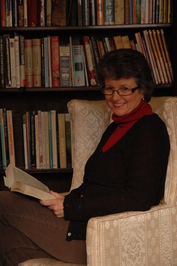
Allie was born in Stockport, UK and began writing fiction as soon as she could hold a pencil. Allie recalls: ‘I was about 8 years old. Our teacher asked us to write about a family occasion and I launched into a detailed, harrowing and entirely fictional account of my grandfather’s funeral. I think he died very soon after I was born; certainly I have no memory of him and definitely did not attend his funeral, but I got right into the details, making them up as I went along (I decided he had been a Vicar, which I spelled ‘Vice’). My teacher obviously considered this outpouring very good bereavement therapy so she allowed me to continue with the story on several subsequent days, and I got out of maths and PE on a few occasions before I was rumbled.’
She went on to do a BA in English Literature at Birmingham University and an MA at Queen Mary College, London. She has been a print-buyer, a pub landlady, a book-keeper, run a B & B and a group of boutique holiday cottages. Nowadays Allie writes full time having retired from teaching literature to lifelong learners.
She has two grown-up children, two granddaughters and two grandsons, is married to Tim and lives in Cumbria.
Connect with Allie
Website | Twitter | Facebook | Goodreads

 What Cathy Read Next...