
About the Book
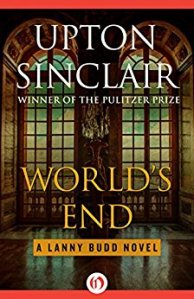
Lanning “Lanny” Budd spends his first thirteen years in Europe, living at the center of his mother’s glamourous circle of friends on the French Riviera. In 1913, he enters a prestigious Swiss boarding school and befriends Rick, an English boy, and Kurt, a German. The three schoolmates are privileged, happy, and precocious—but their world is about to come to an abrupt and violent end.
When the gathering storm clouds of war finally burst, raining chaos and death over the continent, Lanny must put the innocence of youth behind him; his language skills and talent for decoding messages are in high demand. At his father’s side, he meets many important political and military figures, learns about the myriad causes of the conflict, and closely follows the First World War’s progress. When the bloody hostilities eventually conclude, Lanny joins the Paris Peace Conference as the assistant to a geographer asked by President Woodrow Wilson to redraw the map of Europe.
Format: ebook (922 pages) Publisher: Open Road Media
Publication date: 19th January 2016 [1940] Genre: Historical Fiction
Find World’s End on Goodreads
Purchase World’s End from Amazon UK
My Review
World’s End is the first novel in Upton Sinclair’s ‘Lanny Budd’ series. First published in 1940, the book covers the period from 1913 to 1919 and is the beginning of a monumental 7,340 page novel, the story of a young American, Lanny Budd.
Lanny is drawn to art, poetry and music but, as the son of an American munitions manufacturer, is exposed to arguments of commercial reality, power-broking and realpolitik. The conflict Lanny experiences as he struggles to make sense of these opposing forces is at the heart of the novel. This is a long novel and at times, particularly in Part 5 covering the attempts to arrive at a peace settlement, it seems more straight history than historical fiction but Lanny’s Forrest Gump-like ability to be at the centre of important events and several underlying stories stop it from feeling completely like a college course.
Upton Sinclair depicts the motives of the countries involved, particularly Great Britain, France and America, with brutal clarity. ‘Now they were here, not to form a League of Nations, not to save mankind from future bloodshed, but to divvy the swag.’ That the war was fought for control of natural resources (coal, oil, steel) and territory is made very clear and in this sense, the lesson of history is that nothing much has changed.
In three words: Epic, detailed, factual
Try something similar: Any Human Heart by William Boyd
About the Author

 What Cathy Read Next...