Book Review: Dear Mrs. Bird by AJ Pearce

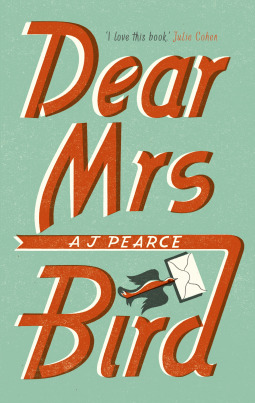
Dear Mrs BirdAbout the Book

London, 1940. Emmeline Lake is Doing Her Bit for the war effort, volunteering as a telephone operator with the Auxiliary Fire Services. When Emmy sees an advertisement for a job at the London Evening Chronicle, her dreams of becoming a Lady War Correspondent suddenly seem achievable. But the job turns out to be working as a typist for the fierce and renowned advice columnist, Henrietta Bird. Emmy is disappointed, but gamely bucks up and buckles down.

Mrs. Bird is very clear: letters containing any Unpleasantness must go straight in the bin. But when Emmy reads poignant notes from women who may have Gone Too Far with the wrong men, or who can’t bear to let their children be evacuated, she is unable to resist responding. As the German planes make their nightly raids, and London picks up the smouldering pieces each morning, Emmy secretly begins to write back to the readers who have poured out their troubles.

Format: ebook, hardcover (320 pp.) Publisher: Picador Books
Published: 5th April 2018                    Genre: Historical Fiction

Pre-order/Purchase Links*
Amazon.co.uk ǀ  Amazon.com ǀ Hive.co.uk (supporting UK bookshops)
*links provided for convenience, not as part of any affiliate programme

 Find Dear Mrs. Bird on Goodreads


My Review

Dear Mrs. Bird opens in a jolly, lively style full of ‘chin up’ and ‘stiff upper lip’ spirit – a spirit of which the domineering (and let’s be honest, quite frightful) Mrs. Henrietta Bird would be proud.   As far as Mrs. Bird is concerned, any problem can be resolved by showing the right amount of grit and by Not Giving In.

However, beneath the spirit of ‘Keep Calm and Carry On’, the book demonstrates through the letters sent to Woman’s Friend magazine, the impact of war on people’s personal lives.  ‘Women whose worlds had been turned upside down by war, who missed their husbands, or got lonely and fell in love with the wrong man Or who were just young and naïve and had their heads turned in a trying time.’  Not just the constant air raids and the rationing but the displacement, separation and life plans changed – engagements, marriages, even conceptions delayed or brought forward – because who knows what tomorrow will bring or if there will even be one?

Emmy’s friendship with Bunty is what helps her get through the days – that and the occasional luxury of a Garibaldi biscuit, a fig roll or a bath in more than an inch of lukewarm water.  But as events unfold, that friendship will be tested.

The reader is transported to a time when people still wrote letters and used them to express their feelings.  As Emmy notes, ‘I could see people were ever so frank when they wrote in, which I thought was quite brave.’  The importance of letters to those serving away from home comes across clearly, providing those receiving them with details of ‘normal life’ to which they can cling; a reminder of what they are fighting for.

The resilience shown by Emmy, her friends and work colleagues reminds us of the courage and fortitude of the people of London during the blitz.  ‘Mother always worried about how we kept going.  I had no idea.  We just did.’  Oh, and the often underappreciated role of tea in sustaining the war effort.

Humour played a key role in maintaining morale and there are some very funny bits in the book, such as Bunty’s and Emmy’s plan to use the hideous globe-shaped drinks cabinet bequeathed to them by Bunty’s grandmother as an offensive weapon.  ‘Bunty and I had decided that if the Germans invaded London and broke in, we would push it down the stairs at them.  The full extent of the British Empire was featured in a rather confident orange and we thought that would make them wonderfully cross.’

Dear Mrs. Bird also acts as a reminder of the important role played by women in World War 2 – manning fire station telephones (like Emmy), acting as dispatch riders and couriers, serving in the Women’s Voluntary Service, Red Cross, Land Army and so much more.  And that constant danger wasn’t only faced by those serving on the front line but also by men who served in the Fire Service and Bomb Disposal on the home front.

As the book progresses, the tone changes and darkness comes, showing the true costs of war, the horrors of the blitz (‘noise was coming from everywhere at once, as if we were being eaten by the very sound itself’) and the fact that sometimes ‘carrying on’ just isn’t enough.  ‘Stiff upper lips and getting on with things were all very well, but sometimes there was nothing to do but admit that things were quite simply awful.  War was foul and appalling and unfair.’

This makes it sound like Dear Mrs. Bird is a depressing book; far from it.  It is funny, charming and heart-warming.  The narrative voice sets the tone of the book delightfully: ‘The sun had pulled its socks up and was making a good effort in the almost cloudless winter sky’.  However, I liked that the author wasn’t afraid to feature darker moments amongst the light-hearted elements (because, of course, the cloudless winter sky just mentioned would be a gift to the Luftwaffe bombers.)

I received an advance reader copy courtesy of NetGalley and publishers, Picador, in return for an honest and unbiased review.

Follow my blog with Bloglovin

In three words: Spirited, compassionate, touching

Try something similar…The Chilbury Ladies’ Choir by Jennifer Ryan
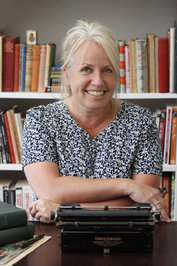

A J PearceAbout the Author

AJ Pearce grew up in Hampshire and studied at the University of Sussex. A chance discovery of a 1939 women’s magazine became the inspiration for her ever-growing collection and her first novel Dear Mrs Bird. She now lives and writes in the south of England.

Connect with AJ Pearce

Publisher website  ǀ  Facebook  ǀ  Twitter  ǀ  Goodreads


Blog Tour/Guest Post: London Spies by S. J. Slagle

London Spies Tour Banner

World War 2 London.  Spies.  Espionage.  Count me in!  As a lover of historical fiction and someone always on the lookout for a new historical mystery series, I’m thrilled to be kicking off the blog tour for London Spies by S. J. Slagle.

I’m delighted to say I have a fascinating guest post by the author about the real life exploits of amazing women who worked in military intelligence in World War 2.

WinPlus…there’s a giveaway with a chance to win a $5 Amazon giftcard. 
To enter, click here.

Follow my blog with Bloglovin


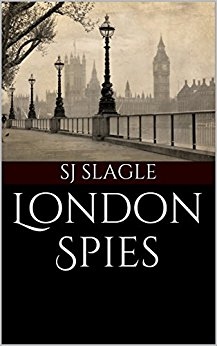
London SpiesAbout the Book

Phyllis Bowden, a secretary at the American Embassy, is catapulted into the limelight when the Military Attache is arrested for espionage and her boss, the Assistant Military Attache, assumes the position.   The arrest throws suspicion on everyone at the Embassy, particularly the Military Attache’s secretary whose attempted suicide convinces Phyllis to be more curious about what really happened. With bombs still falling on a devastated city, Phyllis begins asking questions but she never imagined the dark underbelly of diplomacy. Entering a shadowy world of cryptic messages, secret rendezvous and dangerous men, Phyllis learns quickly that a safety net doesn’t exist and if she wants to survive, she better figure out the game fast.

Format: ebook, paperback (196 pp.) Publisher:
Published: 9th May 2017                      Genre: Historical Fiction

Purchase Links*
Amazon.co.uk  ǀ  Amazon.com ǀ Barnes and Noble ǀ Kobo ǀ iTunes ǀ Smashwords
*links provided for convenience, not as part of any affiliate programme

Find London Spies on Goodreads


Guest Post: ‘Women in Military Intelligence’ by S. J. Slagle

Was my cousin a spy?

Women have long had varied positions with the United States military, but not much information has been forthcoming regarding women in military intelligence. What did they do? What sort of intelligence was collected?

While conducting research for a novel loosely based on the wartime experiences of a cousin, I uncovered the stories of three other women who made significant contributions toward the Allied efforts in World War II.

My cousin had, more than likely, been with the OSS, the Office of Strategic Services. My family learned of her involvement with the OSS after she had passed away. She had worked in the Pentagon and gone over to London at the end of the war to work as a civilian contractor with the War Department. She was placed in the Office of the Military Attaché at the American Embassy and later went on to Oslo, Norway when the war was over.  Her official title was stenographer, although she was upgraded to research analyst and later intelligence officer when she joined the CIG, Central Intelligence Group, which evolved into the Central Intelligence Agency. Her wartime experiences were cloaked in secrecy during her career and life. She didn’t speak of sensitive topics and took her oath of confidentiality to the grave.

Most people have heard of Mata Hari, but how many remember Claire Phillips, Virginia Hall and Amy Elizabeth Thorpe Pack?

Claire Phillips was never trained in military intelligence. A mother from Portland, Oregon, Claire (Clara Taste) grew up a devout Christian Scientist. An outgoing girl craving adventure, Claire ran away with a travelling circus passing through town. Her mother brought her home, but Claire was an entertainer who loved to sing and dance. She soon signed with a stock company touring the Far East eventually ending in the Philippines. In 1942, Claire witnessed American prisoners of war staggering by on the Bataan Death March and vowed she would try to help the prisoners. Hocking her jewellery, she started the exclusive Tsubaki Club in Manila frequented by Japanese officers and civilians. Claire’s code name in the smuggling business she conducted was “High Pockets” because she carried notes in her bra, notes containing intelligence pried from loose Japanese lips. She used her Manila contacts to smuggle money and medicine to the prisoners of the infamous Cabanatuan Prison, but eventually her time ran out. She was arrested, imprisoned, tortured and sentenced to twelve years in a women’s correctional institution on the island. Rescued when the camp was liberated in 1945, Claire went on to receive honors for her service to the military. “I was an American Spy” was a popular movie made in Hollywood about her. Claire Phillips lived out the rest of her life in Portland.

Virginia Hall Goillot was born in Baltimore. She was university educated with a desire to join the Foreign Service and was placed in the American Embassy in Warsaw as a clerk in 1940.  It was during her next assignment in Turkey when she lost part of her leg due to an accident. Still, Virginia continued her work wearing a prosthetic she affectionately named Cuthbert. When World War II broke out, Virginia joined the ambulance corps in France. Making her way to England, she volunteered to serve with British Special Operations, which trained her in weapons, resistance and communications. Virginia became a legendary intelligence officer with the OSS (Office of Strategic Services) and then CIA. Her exploits were well known and she was the only woman to be awarded the Distinguished Service Cross. The “Limping Lady” continued her intelligence work with resistance groups in countries behind the Iron Curtain. Virginia Hall retired from the CIA in 1966.

Amy Elizabeth Thorpe grew up travelling the world with her family and U.S. Marine Corps officer father. Gorgeous and well bred, Amy attracted men like bees to honey. An illicit affair brought about her marriage to Arthur Pack, a British Embassy secretary and when Arthur transferred to Madrid on the eve of the Spanish Civil War, Amy became involved in covert operations such as smuggling rebel Nationalists to safety. When Amy and her husband moved on to Warsaw, she was recruited by British intelligence and began a career trading sexual favours for information. Some say Amy deserves credit with helping to give the Allies the edge over the Nazis with the Enigma cipher machine when she learned crucial intelligence from a Polish diplomat. She and Arthur travelled to New York where she was given the code name of Cynthia. Her cover was a journalist in Washington, D.C. where Amy gleaned information about the Italian Navy’s code and cipher books contributing to British victories in the Mediterranean.  In 1942, she worked with Bill Donovan, head of the OSS on her most famous mission. Working with a French press attaché and an expert safe cracker, Amy was able to steal French naval ciphers used to help the Allies in North Africa. She once said, “Wars are not won by respectable methods.”

Wars are won by every method possible and every soldier who helped the Allied powers win in World War II deserves to be credited openly. So thank you to the women in military intelligence. All your exploits are not currently known, but perhaps one day they will be. If not, thank you from the bottom of our hearts.

Sources

“Claire Phillips: Forgotten Hero,” 1859, Oregon’s Magazine, Sig Unander, January 1, 2016 Virginia Hall: The Courage and Daring of the Limping Lady, http://www.cia.gov, October 8, 2015 “Amy Elizabeth Thorpe: WWII’s Mata Hari, www.historynet.com, June 12, 2006.

Teaser - London Spies by SJ Slagle


S J SlagleAbout the Author

S. J. Slagle is the celebrated author of the Sherlock and Me series and the Phyllis Bowden series. A teacher and nonfiction writer for part of her career, she taught in Florida, California and Nevada. She also writes western romances as Jeanne Harrell including the bestselling series Rancher, The Westerners and These Nevada Boys with picturesque settings in the wild west of Nevada.

Connect with S. J. Slagle

Website  ǀ  Facebook  ǀ  Twitter  ǀ  Instagram  ǀ Pinterest  ǀ Goodreads


RABT Book Tours & PR