Reading The Walter Scott Prize 2019 Longlist: After the Party by Cressida Connolly

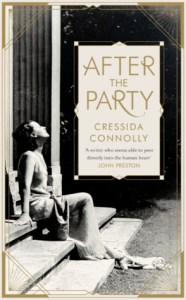
After the PartyAbout the Book

‘Had it not been for my weakness, someone who is now dead could still be alive. That is what I believed and consequently lived with every day in prison.’

It is the summer of 1938 and Phyllis Forrester has returned to England after years abroad. Moving into her sister’s grand country house, she soon finds herself entangled in a new world of idealistic beliefs and seemingly innocent friendships. Fevered talk of another war infiltrates their small, privileged circle, giving way to a thrilling solution: a great and charismatic leader, who will restore England to its former glory.

At a party hosted by her new friends, Phyllis lets down her guard for a single moment, with devastating consequences. Years later, Phyllis, alone and embittered, recounts the dramatic events which led to her imprisonment and changed the course of her life forever.

Format: Hardcover, ebook (272 pp.)    Publisher: Viking
Published: 7th June 2018                         Genre: Historical Fiction

Purchase Links*
Amazon.co.uk  ǀ  Amazon.com ǀ Hive.co.uk (supporting UK bookshops)
*links provided for convenience, not as part of any affiliate programme

Find After the Party on Goodreads


My Review

It’s 1938 and returning to England from abroad, Phyllis gets involved with helping her sister, Nina, organise the summer camp Nina runs as part of her ‘peace work’ for a political movement. For quite a while the identity of the charismatic individual who heads the movement, referred to only as ‘the Leader’, is not revealed, although readers will probably have their suspicions given some of the unpalatable views espoused and the period in which the events take place.  What the book does well is reflect the range of views that prevailed at the time.  How many people were fearful of the prospect of war not so much because they were advocates of appeasement or supporters of the Nazi regime but because they feared the upheaval of war, remembering only too well the carnage wrought by the First World War.

I really enjoyed the way the book explores the changing dynamics of the relationship between the sisters – Phyllis, Nina and Patricia – and their different characters.  Phyllis is the peacemaker of the trio, trying to accommodate other’s wishes.  ‘I always wanted to be friends with both my sisters.  Perhaps that was the source, really, of all the troubles of my life.’

It has to be said that the social circle the sisters move in, particularly Patricia, is not populated by the nicest of people.  It is made up of individuals who don’t really seem to like each other that much but preserve the social niceties whilst attending dinner parties and the like.  Gossipy anecdotes, cruel little asides, mockery and petty snobbery seem to be the order of the day.   It’s a picture of a section of society, with their cooks, parlour maids and drivers, which despite all the airs and graces seem removed from the everyday lives and experiences of most people.    The sort of people who live in houses with a ‘morning room’, such as the house Phyllis’s husband, Hugh, plans to build.  ‘In the mornings Phyllis would be able to take her coffee and write her letters there; perhaps they might install a nice little sofa too, where she might like to sew or read.’

The book opens in 1979 as Phyllis recounts her memories of the period just before the Second World War and during the War itself to an unnamed and unidentified individual researching the history of that time.  What follow are extensive flashbacks as Phyllis recalls events, both public and private.  Some of what she recalls, especially the circumstances of her imprisonment, was certainly new to me and rather an eye-opener.  These sections of the book have a real feeling of authenticity, albeit the events described are slightly bizarre at times.

The author is a skilful writer; I especially liked the imaginative descriptions and quirky similes.  A few of my favourites:
Nina’s house stood a little way along from the garage, set back from the road politely, like someone waiting to be introduced.’
‘The tide was out and little boats lolled on their sides in their sandy mud, like the tongues of overheated dogs.’
‘There were blackberries plumping in the hedgerows now and buddleia, giving off a faint scent like pencil sharpenings.’

Although there were elements of After the Party I very much enjoyed, overall I was left with a slight sense of disappointment; the feeling that the book was less than the sum of its parts.  For example, the ‘moment of weakness’ referred to in the blurb seems a minor misdemeanour on Phyllis’s part and one in which she is not really the most guilty party or responsible for what follows.  Yet it seems to weigh on her conscience for the rest of her life so much so that she treats her draconian imprisonment as justified punishment.  Later Phyllis experiences what she views as a ‘betrayal’ but which did not really to amount to anything like that, it seemed to me.

I learned a lot from reading After the Party and appreciated the skilful writing but wanted to feel more enthusiastic about the story than I did. In this respect I seem to be out of step with other readers given the book’s inclusion on the longlist for The Walter Scott Prize for Historical Fiction 2019.

I received a review copy courtesy of publishers, Penguin Books UK/Viking, and NetGalley.

Follow my blog with Bloglovin

In three words: Fascinating, well-researched, intimate


About the Author

Cressida Connolly is a reviewer and journalist, who has written for Vogue, The Telegraph, the Spectator, The Guardian and numerous other publications.

Cressida is the author of three books: The Happiest Days, which won the MacMillan/PEN Award, The Rare and the Beautiful and My Former Heart. Cressida is the daughter of writer Cyril Connolly. In 1985 she married Worcestershire farmer Charles Hudson. They have three children.

Connect with Cressida

Website  ǀ  Goodreads

Book Review: The Road to Grantchester by James Runcie

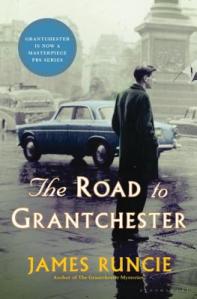
The Road to GrantchesterAbout the Book

It is 1938, and eighteen-year-old Sidney Chambers is dancing the quickstep with Amanda Kendall at her brother Robert’s birthday party at the Caledonia Club. No one can believe, on this golden evening, that there could ever be another war.

Returning to London from the war seven years later, Sidney has gained a Military Cross, and lost his best friend on the battlefields of Italy. The carefree youth that he and his friends were promised has been blown apart, just like the rest of the world – and Sidney, carrying a terrible, secret guilt, must decide what to do with the rest of his life. But Sidney has heard a call: constant, though quiet, and growing ever more persistent. To the incredulity of his family and the derision of his friends – the irrepressible actor Freddie, and the beautiful, spiky Amanda – Sidney must now negotiate his path to God: the course of which, much like true love, never runs smooth.

Format: Hardcover, ebook, (336 pp.)    Publisher: Bloomsbury Publishing
Published: 21st March 2019           Genre: Historical Fiction

Purchase Links*
Amazon.co.uk  ǀ  Amazon.com  ǀ Hive.co.uk (supporting UK bookshops)
*links provided for convenience, not as part of any affiliate programme

Find The Road to Grantchester on Goodreads


My Review

Structured in four parts – War, Peace, Faith and Love – The Road to Grantchester allows the author to explore and illuminate the back story of the Sidney Chambers readers will meet in the first book of the series, Sidney Chambers and the Shadow of Death.  Although I’d heard of The Grantchester Mysteries TV series,  I’d never actually watched any of the episodes (which having read The Road to Grantchester I’m now rather regretting).  Neither had I read any of the books on which the series is based but thankfully this prequel makes that unnecessary (although it’s now pretty likely I will read them in future). However, readers familiar with the books and/or the TV series will still find lots to enjoy about The Road to Grantchester, such as the first sight of characters who will appear in later books or spotting references to future events that I will have missed.

In the first part of the book, Sidney is exposed to the harsh realities of war as he is caught up in the brutal Battle of Monte Cassino.  Described in gritty and authentic detail, this part of the book will particularly appeal to fans of historical fiction set in World War 2. The death of his best friend, and the circumstances of that event, have a profound effect on Sidney and leave him struggling with his faith and with feelings of guilt.  Only the wise advice of army chaplain, Rev Nev, and Catherine, a nurse, persuade Sidney that, having survived the war against all expectations, he has a duty to use ‘the reward of peace’ wisely.

Back in London, Sidney still struggles to believe that he has a right to happiness or that he deserves the accolade of hero.  Gradually, the conviction grows that his vocation lies in the Church although this decision brings unexpected reactions from family and friends.  His father greets the news with surprise and bewilderment and Amanda, the sister of his best friend, Robert, regards it as a personal betrayal.  Only Sidney’s friend, Freddie responds with any degree of positivity.  As it transpires, Freddie will soon be grateful for Sidney’s support (and Sidney’s nascent deductive instincts) when Freddie is involved in a tragic event.

As Sidney commences his theological training, the reader gets lots of factual information about the process of ordination.  Assigned to the position of curate in war-damaged Coventry, Sidney gains experience of the pastoral duties of a priest, encountering social and moral issues in the manner of  Call the Midwife…but without the need to deliver babies.

The final section of the book explores the slightly spiky, quirky relationship between Sidney and Amanda.  Only readers of the later books or viewers of the series may know why Sidney puts up with Amanda’s at times hurtful, dismissive or downright accusatory comments but to me it just proved he clearly has the patience of a saint!  However, in a neat role reversal, she does finally become the recipient of his confession about the thing that has weighed on his conscience since the death of his best friend.

A spiritual element runs throughout the book.  Sidney’s sincere belief in God is conveyed clearly but the author manages to keep it just the right side of being ‘preachy’.  Rather than the reader feeling like they are on the receiving end of a sermon, it comes across as an authentic insight into Sidney’s character, values and principles.

The Road to Grantchester is the perfect example of a prequel to my mind.  For fans of the series, it provides more background on a character they have grown to love and an insight into the life experiences that have formed him.  For readers coming new to the series, it’s a useful sampler and, I suspect, the enticement they need to add the other books in the series to their wishlist.  I know I have.   It’s a terrific read and one which works equally well as a character study of a young man affected by his wartime experiences or as an introduction to a historical crime series.

I received an advance review copy courtesy of publishers, Bloomsbury, and NetGalley.

Follow my blog with Bloglovin

In three words: Reflective, insightful, emotive

Try something similar… Tightrope by Simon Mawer (read my review here)


James RuncieAbout the Author

James Runcie is a writer, director and literary curator. He is the author of ‘The Grantchester Mysteries’, a Fellow of the Royal Society of Literature and Commissioning Editor, Arts at BBC Radio 4.

(Photo credit: Goodreads author page)

Connect with James

Website  ǀ  Facebook  ǀ  Twitter  ǀ  Instagram ǀ Goodreads