#BookReview Land of the Living by Georgina Harding

Land of the LivingAbout the Book

Every time the dream came it was different and yet he felt that he had dreamt it exactly that way before. The trees, there were always the trees, and the mist and the shadows and the running.

Charlie’s experiences at the Battle of Kohima and the months he spent lost in the remote jungles of Northern India are now history. Home and settled on a farm in Norfolk with his wife Claire, he is one of the lucky survivors. The soil promises healthy crops and Claire is ready for a family. But a chasm exists between them. Memories flood Charlie’s mind; at night, on rain-slicked roads and misty mornings in the fields, the past can feel more real than the present.

What should be said and what left unsaid? Is it possible to find connection and forge a new life in the wake of unfathomable horror?

Format: ebook (240 pages)                     Publisher: Bloomsbury
Publication date: 1st November 2018 Genre: Historical Fiction

Find Land of the Living on Goodreads

Purchase links
Bookshop.org
Disclosure: If you buy a book via the above link, I may earn a commission from Bookshop.org, whose fees support independent bookshops

Amazon UK
Link provided for convenience only, not as part of an affiliate programme


My Review

One of my bookish resolutions this year is to catch up with reading and reviewing the books on my NetGalley shelf. Browsing through my Kindle, this one caught my eye because I recall it being highly recommended by other book bloggers and, I’ll admit, because it’s relatively short.

The novel is set predominantly in Nagaland, a mountainous state in the north east of India bordering Myanmar, or Burma as it would have been called at the time the novel is set. I confess it is an area of the world whose history I was unfamiliar with until reading this book. However, as the novel reveals, during the Second World War it became the site of fierce fighting between Japanese and British troops.

The book moves between three storylines. The first is Charlie’s rescue from the jungle by a Naga tribe and the time he spends living with them without the means to communicate in anything beyond basic fashion. Gradually the reader gets glimpses of what happened to Charlie’s comrades and how he came to be alone in the jungle.

The second storyline describes Charlie’s arduous journey through the jungle back to British administered territory alongside a guide and another Naga who joins them on the trek. “There was no way of telling where the border was and Burma began. No name to anywhere. There was only jungle and mountain, and bare slashed mountain and jungle again, and the rivers ran wild in gorges and you could see across but you could not cross them except where the people had swung their cat’s-cradle bridges of vines, which you walked like a dancer, one foot delicate and light before the other.”

Reaching his destination, Charlie is encouraged by Hussey, a local government official with an interest in anthropology, to talk about his time with the Naga people.

“What did they call themselves, your tribe?”
“I don’t know.”
“We should have a name for them. Tell me about them.”
With Hussey there would be names. Words, story, a route, flattened onto a map on a plain wooden table.

The naming of things, or the absence of names, is one of the themes of the book, as is the inability to talk about some events because they are too traumatic to be shared.  Back in Norfolk with his wife, Claire, Charlie is tormented by flashbacks to the scenes he witnessed in the jungle but he keeps these to himself believing people simply won’t understand what the realities of combat can do to a person.  ‘It was a bit of war one didn’t mention, the clearing up. One mentioned battlefields but one didn’t explain what was there. What was there already when they arrived, what had massed there all through the siege, that they had spent more time clearing up than fighting.’

Those back home want to hear about heroes, not the sordid details that are the reality of war.  We get the sense Claire partly understands there are things Charlie just cannot bring himself to speak about.  ‘Their eyes exchanged what they both knew: that he wouldn’t tell it all and that she would humour him by pretending there was no more to tell.

I received a review copy courtesy of Bloomsbury Books via NetGalley.

In three words: Haunting, lyrical, intense

Follow this blog via Bloglovin


About the Author

Georgina Harding is the author of four previous novels: The Gun RoomThe Solitude of Thomas CaveThe Spy Game, which was shortlisted for the Encore Award, and Painter of Silence, which was shortlisted for the Orange Prize for Fiction 2012. Georgina Harding lives in London and on a farm in the Stour Valley, Essex.

#BookReview When The World Was Ours by Liz Kessler @simonkids_UK @BagsofBooks

WTWWO-blog-tour-twitter

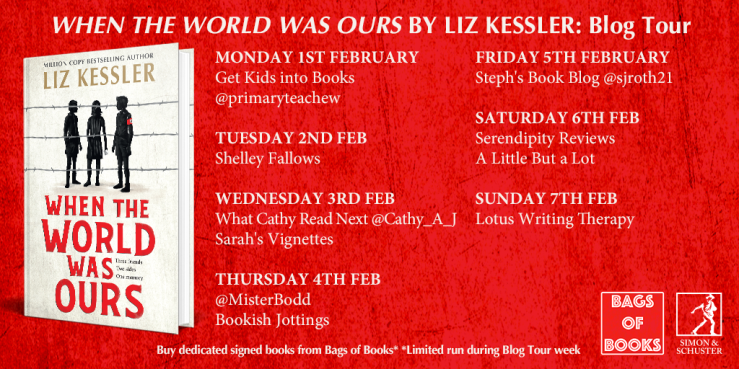
Welcome to today’s stop on the blog tour for When The World Was Ours by Liz Kessler. My thanks to Eve at Simon & Schuster for inviting me to take part in the tour and for my review copy. Do check out the post by my tour buddy for today, Sarah at Sarah’s Vignettes.

For the duration of the blog tour, you can purchase signed copies of When The World Was Ours from independent children’s bookshop, Bags of Books.


When The World Was OursAbout the Book

Three friends. Two sides. One memory.

Vienna, 1936. Leo, Elsa and Max have been best friends for years. Since the day they met they’ve been a team of three. But then the Nazis come, and their lives, once so tightly woven together, take very different paths.

Leo must rely on the kindness of strangers to escape the rising threat to the Jewish people.

Elsa, like Leo, is hated for simply being who she is. To be safe, she must run.

Max suddenly finds that he is the danger his friends are trying so desperately to escape as his father rises through the Nazi ranks.

Format: Hardcover (320 pages)          Publisher: Simon & Schuster
Publication date: 21st January 2021 Genre: Historical Fiction

Find When The World Was Ours on Goodreads

Purchase links
Bookshop.org
Disclosure: If you buy a book via the above link, I may earn a commission from Bookshop.org, whose fees support independent bookshops

Hive | Amazon UK
Links provided for convenience only, not as part of an affiliate programme


My Review

Inspired by the true story of her father’s escape from Nazi-occupied Europe, in When The World Was Ours the author takes the reader on a journey from Vienna in 1936 to the outbreak of the Second World War and beyond in the company of three childhood friends – Leo, Max and Elsa. Since Leo and Elsa are Jewish, the lives of the three children, and their families, are destined to take very different paths.

Given their youth, the friends don’t always understand, at least to begin with, the full import or implications of the things they see or hear their parents discussing. Only gradually do the youngsters become aware of the consequences of Leo and Elsa’s Jewish faith when anti-Jewish sentiment becomes more widespread and is followed by legal restrictions, and worse. It results in the three friends being separated, unsure if they will ever see one another again.

The author really captures the emotional and psychological toll of their experiences on the three children and the insidious nature of Nazi indoctrination. This is especially evident in the case of Max, who emerges as the most complex character and the only one of the three children whose thoughts are communicated in the third person. His mental contortions as he tries to reconcile what his conscience is telling him about his friends with the anti-Semitic hatred he is being fed by his father and the authorities is hard to witness. “Before long Max had convinced himself Leo and Elsa weren’t Jewish at all. They couldn’t have been. And if they weren’t Jewish then Max didn’t have a problem.”

Max’s fourteenth birthday evokes memories of an earlier birthday shared with Elsa and Leo – captured in a precious photograph – and a rare moment of self-awareness. “In an instant, nothing of his current life was real. He saw it for what it was: a vain, superficial attempt to fit in. To be loved. To be praised by his father…”. Unfortunately, it’s short-lived thanks to the intervention of his father who forces Max to demonstrate his loyalty to the Nazi regime in the cruelest of tests. It is not the last time he will face such a test.

Amidst the heartbreak and tragedy, there are small moments of joy. For example, Elsa’s delight in acquiring a best friend, Greta, and their joint adoption of a cat they feed with scraps. Or Leo’s pride at overcoming the obstacles to getting himself and his mother to safety. These provide a counterpoint to some of the truly chilling scenes in the book: the school assembly at which Jewish children are singled out; the day Max accompanies his father to work and its location is revealed; and, later, Max’s feeling that it is “his destiny” when found a job at his father’s new posting.  It’s difficult not to get a sense of foreboding also at Elsa’s hope that the outbreak of war against Germany means, “Everything is going to be all right. I can feel it in my bones and in my heart”.

The fact the book is written from the perspective of the three children makes it both accessible and educational for teenage readers. But it also has much to offer for older readers like myself. As we look around the world today, Elsa’s reflection should provide us all with food for thought. “How rapidly something unthinkable can become commonplace. How easily we let the inconceivable become a new normal. How quickly we learn to stop questioning these things…”

In war, there are rarely happy endings and books, even if works of fiction, that recount the events of the Holocaust are often difficult to read. At the same time, books like When The World Was Ours are an inspiring testament to the resilience of the human spirit and the kindness of strangers.

In three words: Moving, heartbreaking, powerful

Try something similar: The Young Survivors by Debra Barnes or People Like Us by Louise Fein

Follow this blog via Bloglovin


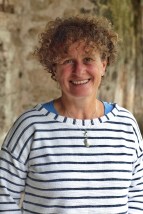
Liz Kessler © Jillian Edelstein

About the Author

Liz Kessler has written more than twenty books for children and young people, including the internationally bestselling Emily Windsnap series. She has an MA in Novel Writing and has been a full-time writer for the past twenty years. When The World Was Ours has been brewing in her heart for at least half of that time.  Liz lives in the north west of the UK with her wife, Laura, and their dog, Lowen.

Connect with Liz
Website | Twitter | Facebook | Instagram

image009