#BookReview The Metal Heart by Caroline Lea @MichaelJBooks

The Metal HeartAbout the Book

Orkney, 1940. On a remote island, a prisoner-of-war camp is constructed to house five hundred Italian soldiers. Upon arrival, a freezing Orkney winter and divided community greets them.

Orphaned sisters Dorothy and Constance volunteer to nurse the men. Dot is immediately drawn to Cesare, a young man fighting on the wrong side and broken by war and destruction.

The soldiers spend their days building a secret barricade between the islands. By night, however, they construct a reminder of their native land – an exquisite chapel.

As tensions between the islanders and outsiders grow, the sisters’ loyalty is tested. Will Dot choose love, or family?

Format: Hardcover (400 pages)    Publisher: Michael Joseph
Publication date: 29th April 2021 Genre: Historical Fiction, WW2

Find The Metal Heart on Goodreads 

Pre-order/Purchase links
Bookshop.org
Disclosure: If you buy a book via the above link, I may earn a commission from Bookshop.org, whose fees support independent bookshops

Hive | Amazon UK
Links provided for convenience only, not as part of an affiliate programme


My Review

I loved Caroline Lea’s first book, The Glass Woman, so I was delighted when I learned she had a new novel on the way. Set in the Orkney islands during World War 2, The Metal Heart is inspired by the true story of how Italian soldiers constructed a chapel on the island of Lamb Holm (Selkie Holm in the book) during the period it was used as a prisoner-of-war camp. You can find photographs of the chapel, the island and the surrounding landscape on Caroline’s Instagram feed.

Alongside the building of the chapel, the author has created a wonderful story involving twin sisters, Dorothy (known as Dot) and Constance (known as Con). Although identical in appearance, as the reader learns from the sections written from each sister’s point of view, they possess a very different outlook on life. For Constance, haunted by an experience that has made her distrustful of others, the dilapidated bothy on Selkie Holm which has become the sisters’ home is a refuge, a place she can feel safe. So the arrival of hundreds of male prisoners along with the often brutal men who guard them, reawakens disturbing memories.  These, and feelings of guilt about her role in the fate of their father and mother, makes Con determined to protect her sister from experiencing anything like the trauma she has undergone. In contrast, for Dorothy, bolder in spirit than her sister, the arrival of the prisoners to the island opens up the possibility of a different future. 

The arrival of the prisoners is initially greeted with suspicion by the Orcadians, the inhabitants of the Orkney islands. Fiercely independent, for them ‘mainland’ does not refer to Scotland but to the largest island in the group and the location of the centre of the community, Kirkwall.   Their reservations partly ease when some of the prisoners are deployed as much-needed labour on local farms. The rest of the prisoners remain employed on Selkie Holm quarrying rocks in order to build barriers that will prevent German U-boats attacking the British fleet anchored in Scapa Flow.  In one of the many interesting contradictions the book explores, the barriers eventually form causeways, making access between some of the islands easier than before for the local people.

I loved the way the author exposed the natural beauty of what could be viewed as a harsh, even bleak environment in  some wonderful descriptive writing. ‘The sky is clear, star-stamped and silvered by the waxing gibbous moon.’  The signs  of earlier inhabitants of the island – barrows and caves – combined with the myths associated with the island create a wonderful atmosphere.  (While reading The Metal Heart, I was reminded of Amy Liptrot’s book The Outrun also set on Orkney and was delighted to see it mentioned in the author’s bibliography.)  

The sections of the book describing the construction of the Catholic chapel are absolutely fascinating, with the prisoners making ingenious use of everyday objects and materials reclaimed from the damaged hulks of ships that surround the island.  For the prisoners, and Cesare in particular, the building of the chapel is both a connection with home and a way of distracting themselves from the daily hardships of life in the camp: the gruelling, dangerous work; the brutality of the guards; the cold; the sickness that sweeps through the prisoners. ‘He is, for a moment, no longer a prisoner. His muscles do not ache, his stomach does not gripe. He is a free man, standing in a church in his own country. War and death are things that happen to other people, in other places. The chapel will be a place of peace.’

The chapel may be a place of peace but there is danger on other fronts, forcing each sister to make a heartbreaking choice and risk everything to do what they believe is right. A fascinating blend of fact and fiction, The Metal Heart is a touching love story and a message of hope that beauty can emerge from unexpected places, even in time of war.  

I received an advance review copy courtesy of Michael Joseph via NetGalley.

In three words: Emotional, atmospheric, haunting

Try something similar: The Lost Lights of St Kilda by Elisabeth Gifford or Shelter by Sarah Franklin

Follow this blog via Bloglovin


Caroline LeaAbout the Author

Caroline Lea grew up in Jersey and gained a First in English Literature and Creative Writing from Warwick University, where she now teaches writing. Her fiction and poetry have been shortlisted for the Bridport Prize, and The Glass Woman was shortlisted for the HWA Debut Crown. (Photo credit: Twitter profile)

Connect with Caroline
Twitter | Facebook | Instagram


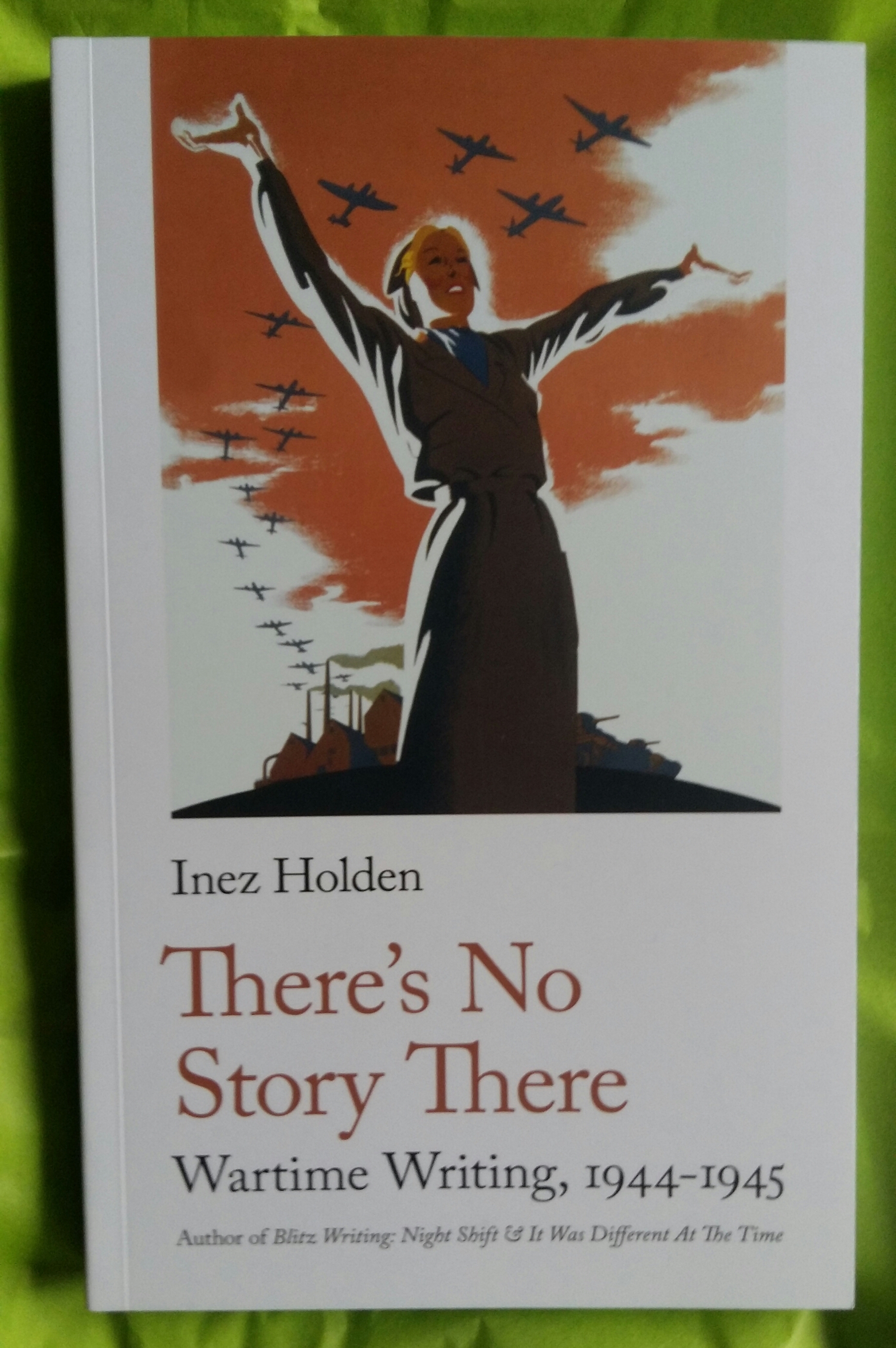
#BookReview There’s No Story There: Wartime Writing, 1944 – 1945 by Inez Holden @KateHandheld

There's No Story ThereAbout the Book

There’s No Story There is about the lives of conscripted workers at Statevale, an enormous rural munitions factory somewhere in England during the Second World War. The workers are making shells and bombs, and no chances can be taken with so much high explosive around. Trolleys are pushed slowly, workers wear rubber-soled soft shoes, and put protective cream on their faces. Any kind of metal, moving fast, can cause a spark, and that would be fatal. All cigarettes and matches are handed in before the workers can enter the danger zone, and they wear asbestos suits.

This new edition of There’s No Story There also includes three pieces of Holden’s long-form journalism, detailing wartime life.

Format: Paperback (231 pages)                  Publisher: Handheld Press
Publication date: 23rd March 2021 [1944] Genre: Fiction,

Find There’s No Story There: And Other Wartime Writing on Goodreads

Purchase links
Publisher | Hive 
Links provided for convenience only, not as part of an affiliate programme


My Review

In her introduction to There’s No Story There, Lucy Scholes describes the book as ‘a detailed and compassionate portrait of life during wartime’. She argues that Holden had the gift of seeing the story others didn’t and of challenging the prevailing notion that the lives of ordinary working people weren’t a suitable topic for fiction. I think, having now read There’s No Story There, I can safely say that the men and women who worked in the real life counterparts of the Statevale munitions factory imagined in the book, were far from ‘ordinary’. It was dirty, dangerous work as the book vividly depicts.

The final chapter ‘Writing Home’ provides the clearest picture of the vast scale of the Statevale factory site, employing as it does 30,000 workers and guarded by armed police. In a letter to her sister, factory worker Jane describes even just the company hostel where many of the workers live, with its sleeping blocks, laundry and allotments, as being like a small town.

The hostel’s dining room provides much material for Geoffrey Doran who, in addition to performing his time and motion duties, has set himself the task of becoming a one man Mass Observation project. Eavesdropping on conversations, he hears workers discussing the minutiae of daily life – everything from the contents of food parcels to the reasons behind nicknames – which he meticulously records in his notebook. That is, until he loses that precious object, resulting in ‘a mass of workers observing him’ in his frenzied efforts to retrieve it.

Holden particularly demonstrates her keen ear for mannerisms of speech in the chapter ‘Time Off’ set in the local pub, and in the chapter ‘Internal Railway’ when a character remarks, “Never seem to fancy being in this valley when old Adolf’s Loofter Wafter’s overhead”. She also possesses an inventive way with words. For example, she describes the workers completing their shift as ‘limb-heavying’ their way out of the factory.

When heavy snow prevents many of the workers leaving the factory, everyone pitches in to make the best of the situation. As one character remarks, “Funny, wasn’t it, all them people singing and working together – the Blue shift and the White, Labour Officers, operatives, canteen workers and all. They were all laughing and seemed happy. Funny when you think of what we’re all here for, and how we’re only making things to kill people. It don’t seem right do it?”

There are welcome moments of humour in the book. As someone who, in her working life sat through too many seemingly pointless meetings, I particularly enjoyed the chapter ‘Joint Production’ in which members of the factory’s management team attend a meeting chaired by factory superintendent, Mr. Whistler. In scenes reminiscent of the now infamous Handforth Parish Council meeting, the Chief Clerk, Mr. Twizden, struggles to get the attendees to address remarks via the chair, especially during a heated debate about installing additional ventilation. Where’s Jackie Weaver when you need her? Observing those leaving the meeting, one character concludes, “Twizden’s tie was crooked too, and it takes a lot to upset him. It must have been a stormy meeting”.  And the chapter ‘Factory Tour’ sees the officious Head of Security, Major Quantock, making detailed preparations for a visit by a distinguished visitor that turns out to be not quite what was expected.

At the online book launch on 23rd March 2021 chaired by Kate MacDonald of Handheld Press (you can watch a recording of it here) there was a fascinating discussion involving Lucy Scholes and Ariane Bankes, Inez Holden’s literary executor, about the balance between dispassionate observation and empathy in Holden’s representation of the characters in There’s No Story There. My own thoughts are that Holden’s sense of empathy is most clearly demonstrated in the character of Julian, silently transporting dangerous materials around the factory whilst all the time engaged in an internal dialogue of ‘what ifs’ until the intensity of another character’s story prompts him finally to speak. On the other hand, the dispassionate observation is perhaps most clearly demonstrated by a tragic incident that occurs fairly early on in the book that is described almost in passing.

The book also includes three short pieces of Inez Holden’s writing. ‘Musical Chairman’ describes a meeting of an Appeals Board hearing cases brought by the workers refused permission to leave their employment under wartime regulations. Although the stories of hardship provide an insight into many of the domestic challenges thrown up by wartime, I found the language used to describe some of the applicants with mental health issues, albeit no doubt in wide circulation at the time, quite objectionable. The final two stories, ‘Soldiers Chorus’ and ‘Exiles in Conversation’ once again show Holden’s keen ear for the idiosyncrasies of conversational style.

In three words: Authentic, witty, immersive

Try something similar: Blitz Writing: Night Shift & It Was Different At The Time by Inez Holden

Follow this blog via Bloglovin


About the Author

Inez Holden (1903-1974) was a British writer and literary figure whose social and professional connections embraced most of London’s literary and artistic life. She modelled for Augustus John, worked alongside Evelyn Waugh, and had close relationships with George Orwell, Stevie Smith, H G Wells, Cyril Connolly, and Anthony Powell.