Book Review – The Matchbox Girl by Alice Jolly @BloomsburyBooks @JollyAlice

About the Book

Adelheid Brunner does not speak. She writes and draws instead and her ambition is to own one thousand matchboxes. Her grandmother cannot make sense of this, but Adelheid will stop at nothing to achieve her dream. She makes herself invisible, hiding in cupboards with her pet rat, Franz Joseph, listening in on conversations she can’t fully comprehend.

Then she meets Dr Asperger, a man who lets children play all day and who recognises the importance of matchboxes. He invites Adelheid to come and live at the Vienna paediatric clinic, where she and other children like herself will live under observation.

But the date is 1938 and the place is Vienna – a city of political instability, a place of increasing fear and violence. When the Nazis march into the city, a new world is created and difficult choices must be made.

Why are the clinic’s children disappearing, and where do they go? Adelheid starts to suspect that some of Dr Asperger’s games are played for the highest stakes. In order to survive, she must play a game whose rules she cannot yet understand.

Format: Hardback (416 pages) Publisher: Bloomsbury
Publication date: 6th November 2025 Genre: Historical Fiction

Find The Matchbox Girl on Goodreads

Purchase The Matchbox Girl from Bookshop.org [Disclosure: If you buy books linked to our site, we may earn a commission from Bookshop.org, whose fees support independent bookshops]

My Review

Adelheid tells her story from a singular perspective and in her own unique style, complete with erratic use of capitalisation. Although looking back on events, she is determined to describe them as they happened and not with the benefit of hindsight. Of course, this is the way we all experience the world; unaware of what will happen next, only able to make decisions and adopt moral positions based on what we know now, or are told.

Adelheid is a patient in the ‘Curative Education’ department of the Vienna Children’s Hospital where children whom we would now describe as being on the autism spectrum are the subject of observation and research. Adelheid is an astute observer, both of events and of people, recording her thoughts in a series of notebooks, often with a wry humour. She is a lover of facts and of order, the latter exemplified by her obsession with collecting matchboxes and pondering how best they should be organised.

She finds herself in a chaotic world in which people try to persuade her that pretending is not the same as lying, and want her to get involved in activities she views as pointless. Ironically, in complete innocence, she initially finds some comfort in the Nazi’s promise to bring order to Austria. And, as a collector of facts, she believes what she is told.

Adelheid’s only friend is Adolf, a boy who has disdain for many of the other children on the ward, categorising them as Cabbages, Penguins (always flapping) or worse. Himself he describes as just ‘a Regular Delinquent’. He loves nothing better than creating mayhem and encourages Adelheid to join him in eavesdropping on staff meetings. Later we learn the dark secrets of his family life.

Nazi Germany continues its seemingly inexorable advance through the countries of Europe. By now Adelheid’s gift for accurately recording information has been noted and she’s given responsibility for recordkeeping. She begins to detect anomolies in patient records, noticing the unexplained transfer of children to a clinic in another hospital, Am Spiegelgrund, supposedly better able to meet their needs but in reality a place from which children never return. What Adelheid finds is a calculated, systematic programme targeting children who do not meet the Nazi ideals of racial purity, children categorised as ‘Useless Eaters’.

Through the response of the various members of hospital staff to what is happening, the book explores the question of accountability and complicity. Some, like the vile Dr. Jekelius, enthusiastically embrace Nazi ideals. Others, like Sister Viktorine and Dr. Feldner do everything they can to disrupt what’s going on, risking their own lives in the process. Even these efforts can only reduce the number of children sent to Am Spiegelgrund.

The role of Dr. Asperger (referred to in the book as ‘Dr. A’) comes under particular scrutiny. Was he knowingly complicit in what was going on? Did his desire to continue his research outweigh his moral scruples? Or did he in fact, as some of the hospital staff believe, at least prevent more children from disappearing?

Adelheid is a fictional character but many of the others in the book, including some of the children, were real people. Adelheid’s viewpoint means she is able to diverge from her own experiences now and again to give us information from a different perspective.

The Matchbox Girl depicts a dark period in European history when unimaginably evil things were done. I found some of the events in the book difficult to read about although, arguably, they should be difficult otherwise how are we to learn from them. The author has found an imaginative way of telling this story and, in Adelheid, created a memorable and captivating character.

I received a review copy courtesy of Bloomsbury via NetGalley.

Hop over to Linda’s Book Bag to read Linda’s conversation with Alice about The Matchbox Girl.

In three words: Dark, thought-provoking, quirky
Try something similar: Darkness Does Not Come At Once by Glenn Bryant

About the Author

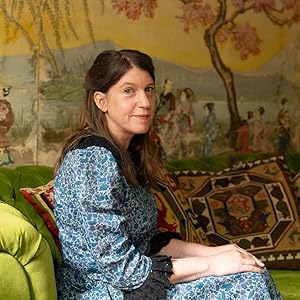
Author Alice Jolly

Alice Jolly is a novelist and playwright. Her writing has been awarded the PEN/ Ackerley Prize, an O. Henry Prize and the V. S. Pritchett Memorial Prize, and has been longlisted for the Ondaatje Prize and the Rathbones Folio Prize. She teaches on the Creative Writing Masters at Oxford University.

Connect with Alice
Website | X/Twitter |

Book Review – One Good Thing by Georgia Hunter

About the Book

Ferrara, Italy. 1940. Lili Passigli is studying at the University of Ferrara when Mussolini’s Racial Laws deem her of ‘inferior’ Jewish descent. As Hitler’s strength, Lili’s world begins to shrink around her, with the papers awash in Fascist propaganda and the city walls desecrated with anti-semitic slurs. When Germany invades northern Italy, Lili and her best friend Esti find themselves on their own in Nazi-occupied territory.

With the help of the resistance, they flee with Esti’s two-year-old son, Theo, in tow, facing a harrowing journey south toward the Allies and freedom. On this trek through war-torn Italy, they will face untold challenges and devastating decisions.

Format: Hardcover (432 pages) Publisher: Allison & Busby
Publication date: 22nd May 2025 Genre: Historical Fiction

Find One Good Thing on Goodreads

Purchase One Good Thing from Bookshop.org [Disclosure: If you buy books linked to our site, we may earn a commission from Bookshop.org, whose fees support independent bookshops]

My Review

I’ve read a lot of historical fiction set in WW2 but not, I think, any which explores the experience of Italians, especially Jewish Italians. One Good Thing fills that gap and it taught me a lot about what it felt like to live in Italy during the period of the war.

I admired Lili for her determination to fulfil her promise to her friend Esti and her dedication to keeping Esti’s son, Theo, safe. I would have liked to know more about how they became such close friends. It did feel rather presented to the reader as established fact. However, I loved Lili’s close relationship with her father and welcomed the moments when she revealed memories of her childhood. In fact, I would have liked more of her back story.

Although there was a lot I enjoyed about the book, there were a few things that didn’t quite work for me, such as the occasional use of modern day, often American-sounding phrases, such as ‘You okay, kiddo’ or ‘It’s a lot to process’. (Perhaps these were amended before the final version.) I found it difficult to believe in Theo as a two or three-year-old; his behaviour and vocabularly seemed that of an older child. Although having many dramatic moments, the book felt slow-paced and drawn out. However, it did pick up in the final part of the book. I wasn’t a great fan of the romance introduced towards the end of the book which felt quite predictable.

Despite these reservations, One Good Thing definitely has more than one good thing going for it. I felt it really captured the reality of life for people displaced and separated by war, and the uncertainty of what each day might bring. In particular, how do you explain it all to a young child, separated from his mother and forced into hiding? Lili’s journey across a war-torn Italy, tired, hungry and living from day to day, felt very authentic, as was her dawning realisation of the horrors inflicted on Jewish people, and others, by the Nazi regime.

I received a review copy courtesy of Allison & Busby via NetGalley.

In three words: Dramatic, emotional, authentic

About the Author

Georgia Hunter comes from a family of Holocaust survivors. We Were the Lucky Ones was born of her quest to uncover her family’s staggering history. It has since been published in twenty languages and adapted into a critically acclaimed TV series. One Good Thing is her second novel. She lives in Connecticut, USA. (Photo: Goodreads author page)

Connect with Georgia
Website | Instagram