Book Review – Helm by Sarah Hall

About the Book

Helm is a ferocious, mischievous wind – a subject of folklore and wonder – who has blasted the sublime landscape of the Eden Valley since the very dawn of time.

This is Helm’s life story, formed from the chronicles of those the wind enchanted: the Neolithic tribe who tried to placate it, the Dark Age wizard priest who wanted to banish it, the Victorian steam engineer who attempted to capture it – and the farmer’s daughter who fell in love. But now Dr Selima Sutar, surrounded by measuring instruments, alone in her observation hut, fears the end is nigh.

Vital and audacious, Helm is the elemental tale of a unique life force – and of a relationship: between nature and people, neither of whom can weather life without the other.

Format: Hardcover (368 pages) Publisher: Faber & Faber
Publication date: 28th August 2025 Genre: Historical Fiction

Find Helm on Goodreads

Purchase Helm from Bookshop.org [Disclosure: If you buy books linked to our site, we may earn a commission from Bookshop.org, whose fees support independent bookshops]

My Review

Helm was shortlisted for the Winston Graham Historical Prize 2026 and is longlisted for both the Walter Scott Prize for Historical Fiction and the Climate Fiction Prize.  

The book is set in the Eden Valley in Cumbria revealing a landscape that has been shaped by the elements and by the people who’ve lived there over the centuries, leaving their mark by way of stone circles, roads, castles and railways.

Observing it all, since the dawn of time to the present day, is Helm, Britain’s only named wind. In the book Helm doesn’t just have a name, it has a voice, frequently addressing the reader directly. And it has a personality too: ferocious, mischievous, mercurial, occasionally vindictive, and a wry observer of human behaviour. It revels in its own power whilst at the same time bemoaning the fact that it often gets the blame for human mishaps, everything from headaches to flatulence. (Helm does have rather an obsession with bodily functions.) If you can’t get your head around the idea of an anthropomorphic wind, then this may not be the book for you.

The book features multiple storylines set in different historical periods ranging from Neolithic times to the present day. Through them, each of which are stylistically different, the author explores the interaction between humans and the natural world.

I’m going to focus on three storylines I particularly enjoyed. In the first a Neolithic tribe embark on the mammoth task of adding a huge monolith of red sandstone to a sacred stone circle (modelled on Long Meg and Her Daughters), enacting a vision revealed to its matriarch whilst she battled against a storm caused by Helm. Moving forward to the 13th century, a fanatical priest with a reputation for savagery, arrives in the area causing fear amongst its inhabitants. He views Helm as a demonic presence and, intent on exorcising it, undertakes a gruelling trek up the mountain from which the wind arises. And in the 1950s, a troubled, lonely young girl comes to regard Helm as a friend but this is viewed as evidence of mental disorder with tragic results.

A modern day storyline involves a scientist studying the increasing levels of microplastics in the atmosphere, something that may result in irreversible change to Helm. For me, this was the least engaging of the stories, partly because I found the character Dr Selima Sutar rather annoying and because its thriller-like tone seemed out of keeping with the theme of the book. I also thought it took up too much of the book.

Helm switches frequently between the various storylines, some of which have no neat resolution. Interspersed with these are lists – Helm’s own version of the Beaufort Scale, for example – diagrams, and descriptions of ‘trinkets’, objects that are souvenirs of Helm’s encounters with humans. Helm‘s stylistic inventiveness won’t appeal to every reader but it did, for the most part, to this one.

In three words: Imaginative, spirited, compelling
Try something similar: Villager by Tom Cox or There Are Rivers in the Sky by Elif Shafak

About the Author
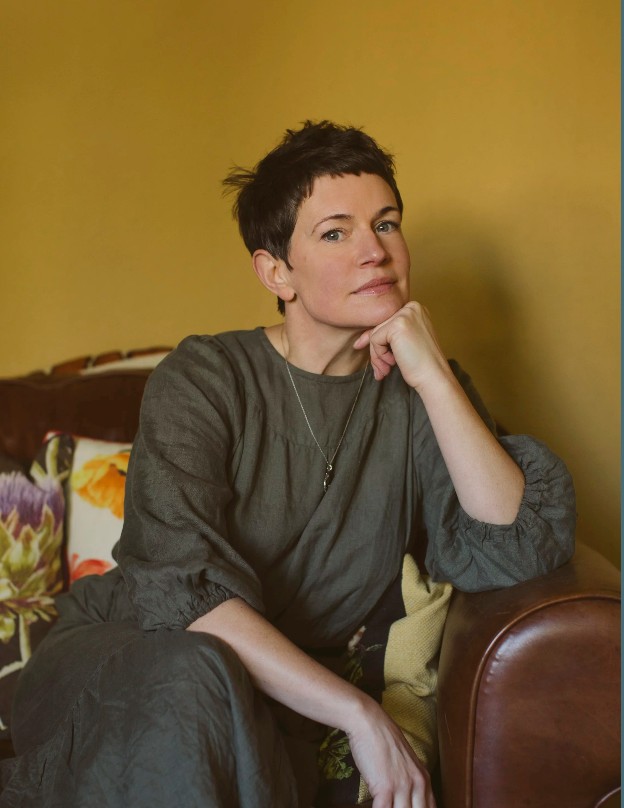
Sarah Hall has twice been nominated for the Man Booker Prize and is the award-winning author of six novels and three short-story collections. Notably, she is the only author to win the BBC National Short Story Award twice – first in 2013 with ‘Mrs Fox’ and again in 2020 with ‘The Grotesques’. (Photo: Author website)

Connect with Sarah
Website | Facebook

The Winston Graham Historical Prize 2026

The winner of this year’s Winston Graham Historical Prize was announced yesterday evening at the awards ceremony at Cornwall Museum and Art Gallery in Truro.

The shortlisted novels are:

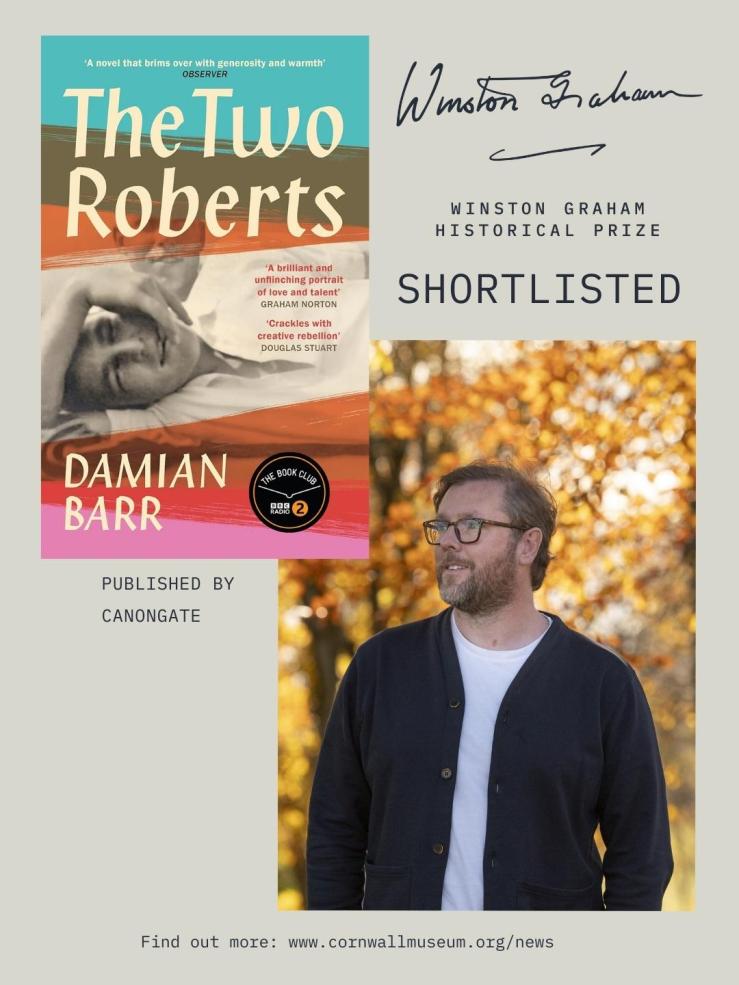
The Two Roberts by Damian Barr (Canongate)
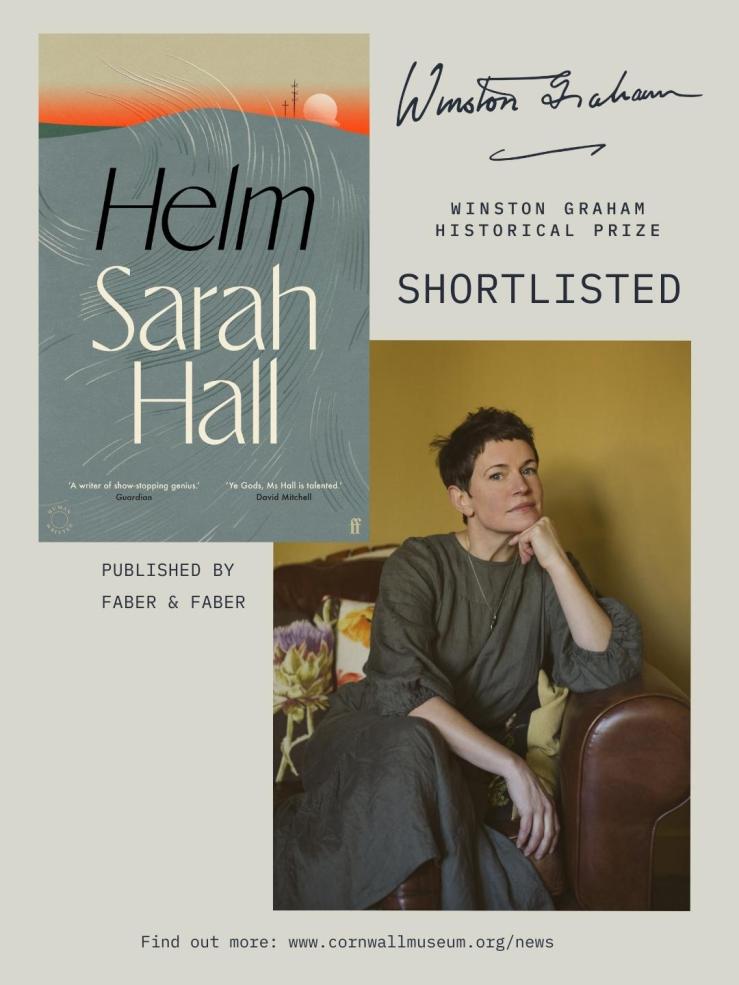
Helm by Sarah Hall (Faber & Faber)
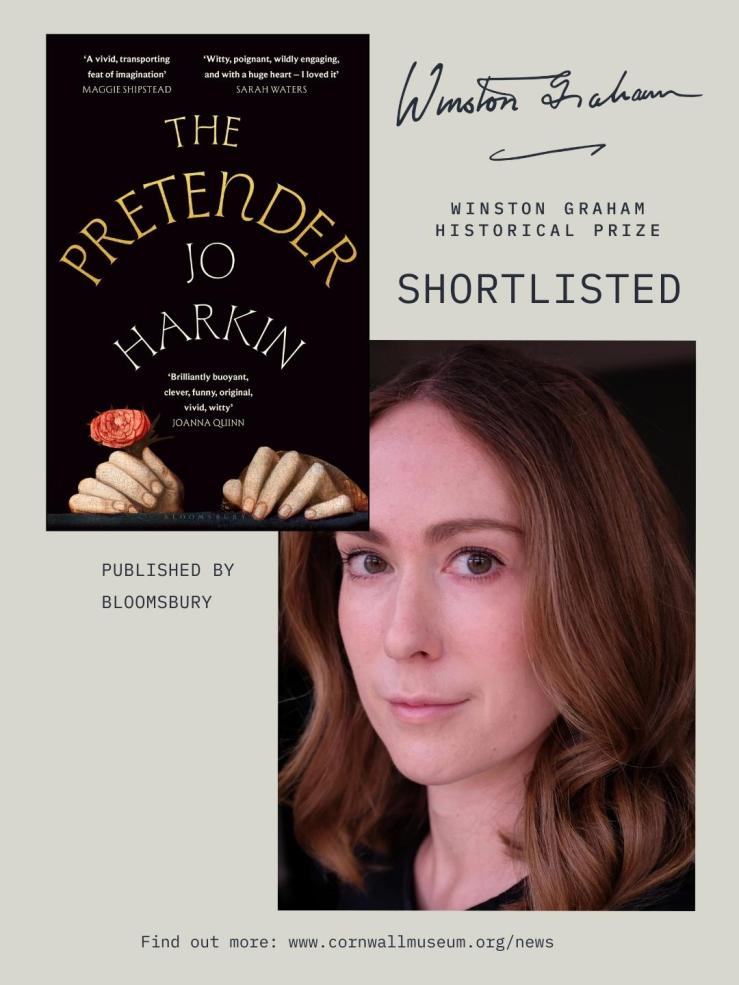
The Pretender by Jo Harkin (Bloomsbury)
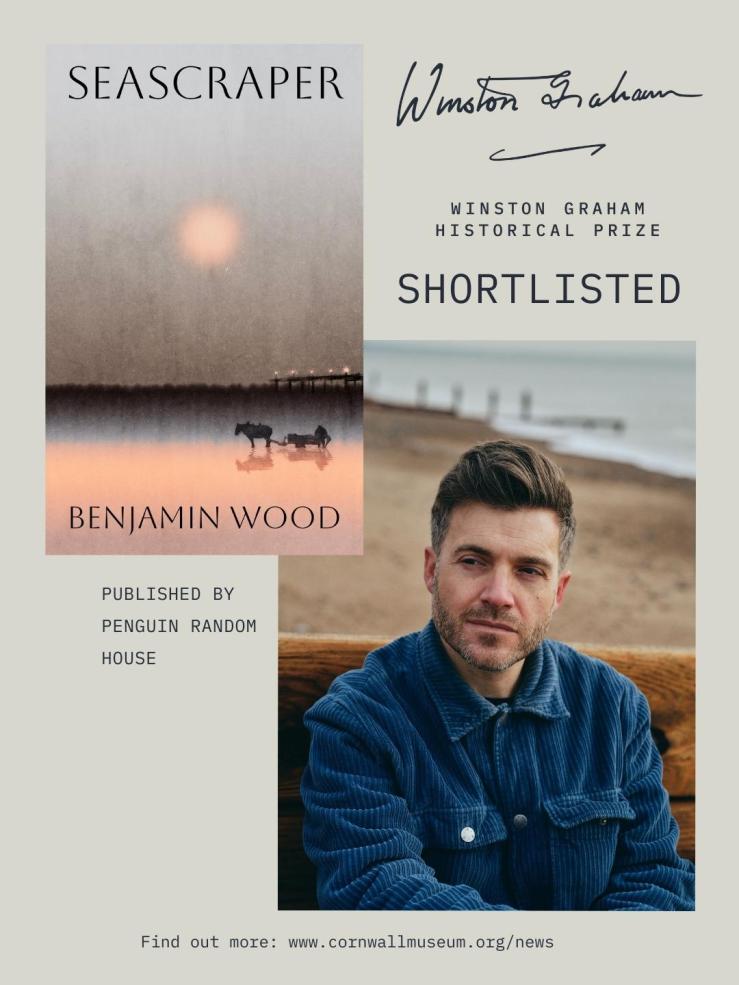
Seascraper by Benjamin Wood (Penguin Random House)
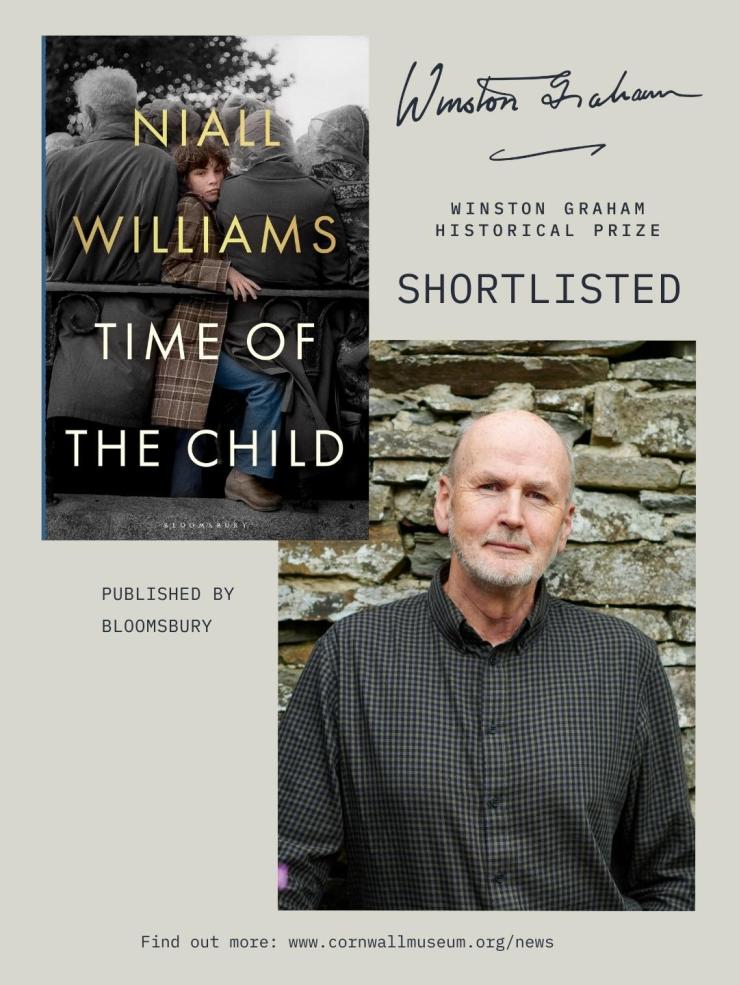
Time of the Child by Niall Williams (Bloomsbury)

I’m thrilled to be a member of this year’s judging panel alongside Chair of the Judges award-winning writer Charlotte Hobson, distinguished academic and Winston Graham’s daughter-in-law Peggotty Graham, authors Wyl Menmuir and Patrick Gale, and editor and arts administrator Sravya Raju. 

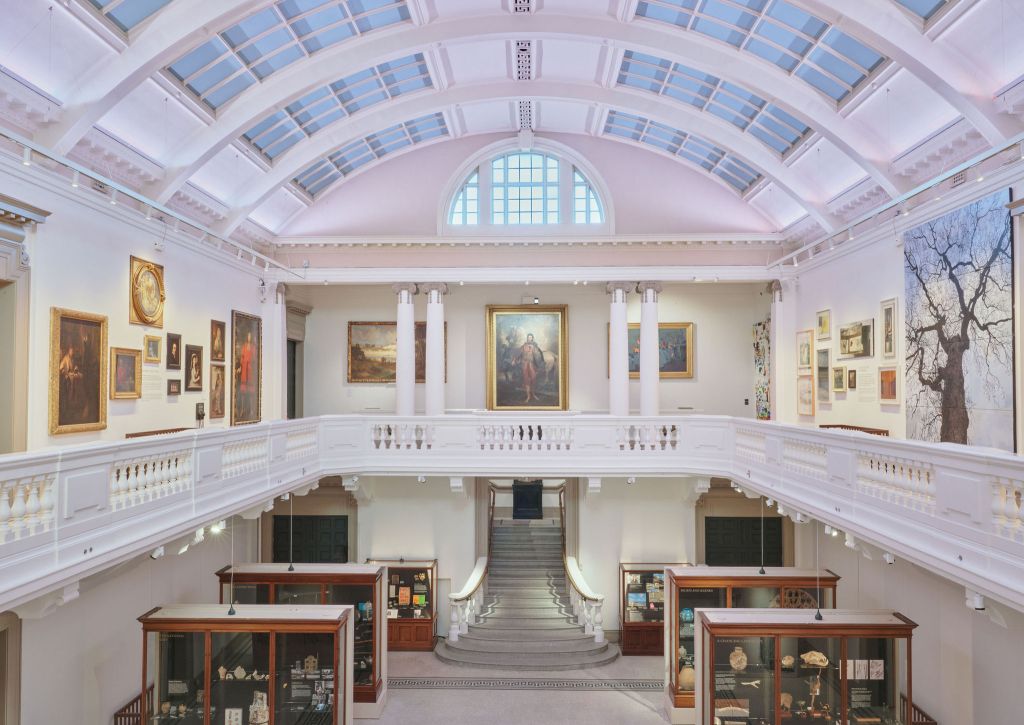
Interior of Cornwall Museum & Art Gallery in Truro

The Winston Graham Historical Prize

The prize celebrates the best new historical fiction with a powerful sense of place published in the past year; to enter novels must be set at least 60 years ago in the UK and Ireland.

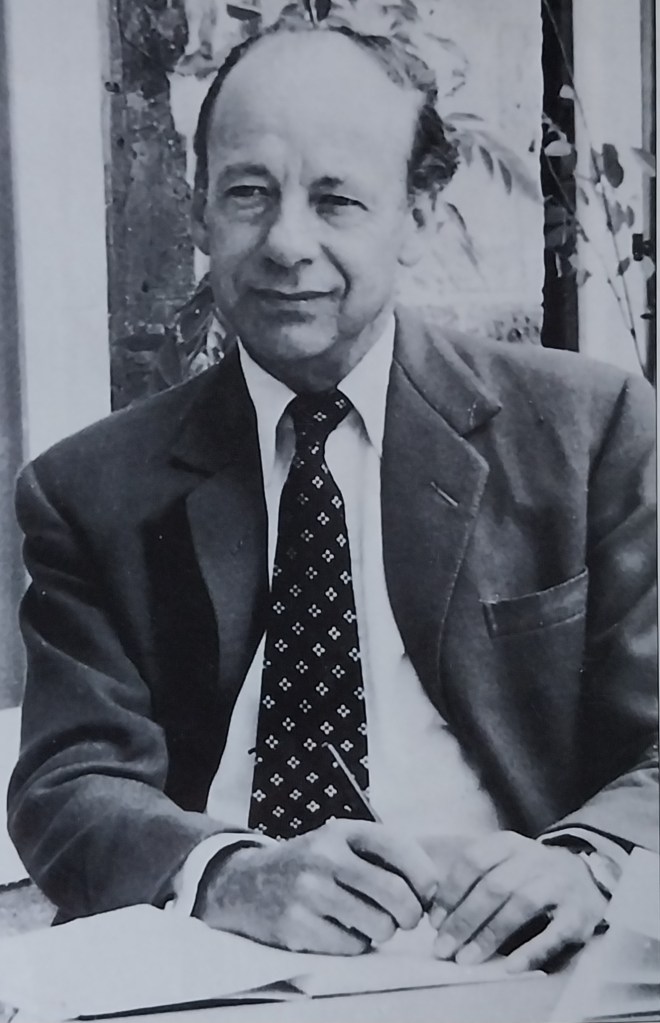
Author Winston Graham

This quest to reveal atmospheric new windows onto the past is the legacy of Winston Graham, author of the Poldark novels, which painted an unforgettable picture of 19th century Cornwall through the lives of Ross, Demelza and co. Creation of the annual shortlist is carried out by readers’ groups across Cornwall who, via their local library, are provided with entries and tasked to report back.

Cornwall Museum’s Co-Director Jonathan Morton commented: “We’re proud of Winston Graham’s connection with the museum and always enjoy the prize ceremony and the anticipation it brings. We’re also now using Graham’s legacy to inspire young writers with Winston’s Wordsmiths, a creative writing prize for children aged 8-16. This year’s winners will be announced at Waterstones in Truro on the same day as the adults’ prize, so do look out for the names of emerging writers to watch!”

The shortlisted novels and their authors

The Two Roberts begins in Glasgow in the 1930s and is inspired by the lives of two nearly-forgotten artists, Robert MacBryde and Robert Colquhoun. Locked in a lifelong passion for each other and art, Barr charts their course to Paris, Rome and then London, where they mixed with the likes of Lucian Freud, Francis Bacon, Dylan Thomas and Wyndham Lewis as the bombs begin to fall and their lives become increasingly hedonistic as artistic success arrives and rapidly departs.

Damien Barr is an award-winning writer and columnist, who writes regularly for The Big Issue amongst others and often appears on BBC Radio 4. Maggie & Me, his memoir about coming of age and coming out in Thatcher’s Britain, was a BBC Radio 4 Book of the Week and Sunday Times Memoir of the Year. Barr’s first novel, You Will Be Safe Here, was published in 2019, The Two Roberts is his second.


Main character energy in Helm is firmly in the hands of a ferocious and mischievous wind, a unique force which has been living alongside humans for time immemorial. From neolithic roots, through the dark ages and into the Victorian Era, Helm symbolises the co-dependency of man and nature, but now that all may be about to change according to the novel’s second protagonist, Dr Selima Sutar. Is human pollution killing Helm, and what can be done to stop it?

Sarah Hall is an acclaimed author with seven multi award-winning novels under her belt, including two that were shortlisted for the Booker Prize. Her short story collections have won the BBC National Short Story Award twice, first with Mrs Fox in 2013 and then again in 2020 with The Grotesques. Hall is currently involved in a “Human Written” campaign to raise public awareness about AI and protect writers and their work.


Inspired by a footnote to history—the true story of the little known Simnel, who was a figurehead of the 1487 Yorkist rebellion and ended up working as a spy in the court of King Henry VII— The Pretender is a gripping and poignant portrait of an innocent caught up in power struggles for the English throne, with a cast of unforgettable heroes and villains drawn from 15th century England.

Jo Harkin’s first novel, Tell Me An Ending, was a New York Times Book of the Year, but The Pretender is her first historical novel. She said she is very much inspired by the great Hilary Mantel’s approach to writing historical fiction, in which anything recorded as historical fact she didn’t depart from, but the grey areas were where a novelist could step into character and run with it.


Though set in Northern England in the 1960s, Seascraper is described by critics as timeless – a moving portrayal of human nature and a celebration of the power of music. The setting is notably cinematic, as the bleak and foggy coast where the protagonist Thomas collects shrimp for a living emerges and recedes across the pages of the novel. Thomas is offered a once-in-a-lifetime opportunity to change his back-breaking existence by an exotic stranger, but where will the chance take him?

Seascraper is Benjamin Wood’s fifth novel. It won the 2026 Nero Prize for Fiction and was longlisted for the 2025 Booker Prize. His previous works have been shortlisted for, amongst other things, the Costa First Novel Award, and the Sunday Times Young Writer of the Year Award. Seascraper was inspired by Wood’s childhood memories of Southport Beach, where an industry of shrimpers used to thrive.


Time of the Child by Niall Williams takes us to rural Ireland in the 1960s during advent season. As the town readies itself for Christmas, Ronnie and Doctor Troy’s lives are turned upside down when a baby is left in their care. As the winter passes, father and daughter’s lives, the understanding of their family, and their role in their community are changed forever.

Born in Dublin where he studied English and French Literature at University College, Niall moved to New York after graduating before he and his wife Christine Breen returned to Ireland to live in Niall’s grandfather’s cottage in West Clare. Both writers, they published four books together about their lives in Ireland, before Niall moved onto plays and then novels. His first, Four Letters of Love, went on to become an international bestseller and was re-issued in 2016 as a Picador Modern Classic. Time of the Child is his 10th novel. 

Have you read any of the novels on the shortlist?