Book Review: Golden Hill by Francis Spufford

GoldenHillBanner

GoldenHill2About the Book

Publisher’s description: New York, a small town on the tip of Manhattan island, 1746. One rainy evening in November, a handsome young stranger fresh off the boat arrives at a counting house door on Golden Hill Street: this is Mr. Smith, amiable, charming, yet strangely determined to keep suspicion shimmering. For in his pocket, he has what seems to be an order for a thousand pounds, a huge sum, and he won’t explain why, or where he comes from, or what he is planning to do in the colonies that requires so much money. Should the New York merchants trust him? Should they risk their credit and refuse to pay? Should they befriend him, seduce him, arrest him; maybe even kill him?

Format: ebook Publisher: Scribner Pages: 336
Publication: 27th June 2017 Genre: Historical Fiction

Purchase Links*
Amazon.co.uk ǀ Amazon.com ǀ Barnes & Noble
*links provided for convenience, not as part of any affiliate programme

Find Golden Hill on Goodreads


My Review

Golden Hill is one of the novels shortlisted for the 2017 Walter Scott Prize for Historical Fiction. You can find a complete list of the shortlisted novels here.

The author convincingly captures the style of an 18th century novel with its long sentences, epistolary sections and random capitalization. There are elements of the picaresque – think Henry Fielding’s Joseph Andrews or perhaps, given some of the more salacious episodes, Tom Jones. There are also some colourful characters, such as the awful creature Smith is forced to share a room with at one point and about whom he writes:

‘He has a Nose swollen to the Likeness of a Piece of Crimson Fruit, ornament’d by a many black Pores as there are Seeds upon a Strawberry; and a Skin of sunburn’d Leather otherwise, much pock’d and moul’d; and verminous Hair as long as his Shoulders, depending from a bald Pate; and a Pair of Eyes so crusted and blood-shot They would deserve to be made an Epithet by Homer, yet bright, and lively, and designing.’

There are also some wonderfully atmospheric descriptions of 18th century New York:

‘Day upon day, the cold winds off the river stirred slow grey tributaries of fog between the houses, through which the crush of traffic loomed, and darkened as it loomed, as if becoming more solid with each approaching step. The fog contained and muffled the cries of draymen, squeak of wheel rims, hammering from aloft, et cetera, as a jewel-box with a cushioned lid presses all within into the smothering clasp of velvet.’

The mystery of the true purpose of Richard Smith’s mission provides the narrative arc for the book, into which the author drip feeds the occasional nugget of information about his background.  There is some amusing verbal sparring between Smith and Tabitha Lovell, who is definitely not a typical heroine of 18th century literature.  Spiky, moody and contrary, there are hints of deeper psychological problems.

Viewed with suspicion by some, who fear he is a fraud or spy, and as a possible source of political advantage by others, Smith has one escapade after another.  Luckily, an impressive arsenal of talents emerges, including acting, dancing and card playing.

I did feel slightly disappointed by the ending. I guess I was hoping to be more surprised by the real purpose of Smith’s mission. This wasn’t helped by a significant piece of information having been revealed fairly early on in the novel. But this is a minor quibble.  Golden Hill is a highly enjoyable romp with a great cast of characters, some wonderful set pieces, lots of sly humour and a convincing period setting.

I received an advance reader copy courtesy of NetGalley and publishers, Scribner, in return for an honest review.

Follow my blog with Bloglovin

In three words: Playful, rich, atmospheric

Try something similar…History of Tom Jones, A Foundling by Henry Fielding


FrancisSpuffordAbout the Author

Spufford began as a writer of non-fiction, though always with a strong element of story-telling. Among his early books are I May Be Some Time, The Child That Books Built, and Backroom Boys. He has also edited two volumes of polar literature. But beginning in 2010 with Red Plenty, which explored the Soviet Union around the time of Sputnik using a mixture of fiction and history, he has been drawing steadily closer and closer to writing novels, and after a slight detour into religious controversy with Unapologetic, arrived definitely at fiction in 2016 with Golden Hill. He has been longlisted or shortlisted for prizes for writing about history, science, politics, theology and ‘the spirit of place’. Spufford studied English at Cambridge University. He was a Royal Literary Fund fellow at Anglia Ruskin University from 2005 to 2007, and since 2008 has taught at Goldsmiths College in London on the MA in Creative and Life Writing there.

Connect with Francis

Website ǀ Goodreads


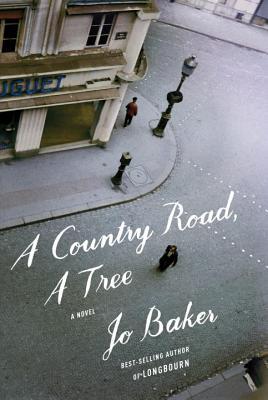
Book Review: A Country Road, A Tree by Jo Baker

ACountryRoadATree

‘Always the hardest path. Always the highest tree.’

About the Book

Description (courtesy of Goodreads): When war breaks out in Europe in 1939, a young, unknown writer journeys from his home in neutral Ireland to conflict-ridden Paris and is drawn into the maelstrom. With him we experience the hardships yet stubborn vibrancy at the heart of Europe during the Nazis’ rise to power; his friendships with James Joyce and other luminaries; his quietly passionate devotion to the Frenchwoman who will become his lifelong companion; his secret work for the French Resistance and narrow escapes from the Gestapo; his flight from occupied Paris to the countryside; and the rubble of his life after liberation. And through it all we are witness to workings of a uniquely brilliant mind struggling to create a language that will express his experience of this shattered world. Here is a remarkable story of survival and determination, and a portrait of the extremes of human experience alchemized into timeless art.

Book Facts

Format: Hardcover Publisher: Doubleday Pages: 336
Publication: 5th May 2016 Genre: Historical Fiction    

 Purchase links*
Amazon.co.uk ǀ
*links provided for convenience, not as part of any affiliate programme

Find A Country Road, A Tree on Goodreads


My Review

A Country Road, A Tree is one of the books shortlisted for the 2017 Walter Scott Prize for Historical Fiction. You can find out more about the prize and the other shortlisted novels here.

The book follows the experiences of an unnamed protagonist. However, he is easily identified as Samuel Beckett from the references to him as the author of Murphy, his friendship with James Joyce and his childhood home in Ireland, Cooldrinagh. As well as James Joyce and his wife Nora, the book has walk-on parts for other cultural figures of the period such as Marcel Duchamp. For convenience, I’m going to refer to the protagonist as Beckett.

The book is divided into three parts: Part One – End, Part Two – Purgatory, and Part Three – Beginning. Now the What Cathy Read Next intertextual radar is always on standby so I wondered if this was an allusion to Dante’s Divine Comedy which has three parts: Inferno, Purgatorio and Paradiso. Perhaps Beckett’s time in Ireland in part one is his version of Hell because of his inability to write, his experiences in occupied France in part two are his version of purgatory, and his new found inspiration for writing that emerges in part three, his version of paradise? As always, there is a danger of over thinking these things and seeking connections where none were intended.

Throughout the book, there is a sense of Beckett as an outsider, as being displaced. At times, it seems he even welcomes this feeling – for instance, when he finds himself alone in Paris ahead of the Germans advance.

‘He pulls his jacket collar up and shoves his way out again. The night streams past him, is wet in his face. He leans into it, as if there’s a wind blowing, though the air is perfectly still. He is drunk, of course; he has no papers, his friends are leaving left and right; Paris is deserted; he is no use to anyone at all. He feels, for once, and only briefly, quite content.’

Similarly, when faced with the alternative of returning to Ireland, where he knows he will be unable to write, or staying in Paris, where he knows he will face difficulties as a displaced person, he concludes: ‘There’s nowhere left to be.’

At one stage, Beckett and his partner, Suzanne, attempt to flee Paris and the plight of other refuges they observe from the train is vividly described.  I have read similar descriptions in non-fiction accounts of that period.

‘The road is a rubbish dump, a mound of junk and clutter. But then it separates itself into movement, , individuals, men and women trudging burdened like ants; into cars, donkeys, handcarts, prams, horses, suitcases, bicycles, frying pans and mattresses, birds in cages, briefcases. A child lugging a baby. An old woman in a pram, legs dangling, pushed by an old man who squints in the bright June sun.’

Eventually, Beckett finds he is unable to stand by and do nothing and agrees to assist the French Resistance by gathering information on German military strength and deployment. The author convincingly describes the sense of fear that must have been experienced by those involved – the unexpected knock at the door, the sound of vehicles arriving outside – and the uncertainty of knowing who to trust. Riding on the Metro to deliver information to his contact, Beckett’s fear of discovery puts him into an almost delusionary state.

‘There are not too many people in the Metro at this time of day. Which is just as well, since every single one of them is staring at him. Not unreasonably, either: his bag has swollen to the size of a suitcase, and his legs have grown too long for him, and his elbows stick out like coat-hangers.   He is a crane-fly carrying a brick. A flamingo in charge of a wardrobe. Who wouldn’t stare?’  

The torment – physical and mental – of a writer unable to write is another theme explored in the book. The necessity to write is summed up by a fellow writer he meets (Anna Beamish in the book, but in real life the author Anne O’Meara de Vic Beamish).

“If one is not writing, one is not quite oneself, don’t you find?”

And he thinks: the sweaty sleepless nights in Ireland, heart racing, battling for breath…The two things are connected: the writing and the panic. He just had not put them together, until now.

“It’s like snails make slime”, she’s saying. “One will never get along, much less be comfortable, if one doesn’t write.”

Beckett is comes across as a complicated character, in fact infuriating at times. His mother (but this could sum up the thoughts of his partner, Suzanne, as well) comments:

‘Always the hardest path. Always the highest tree. He’d fall, and having fallen, would dust himself off, and climb the tree again. When the tree itself had no need to be climbed at all.’

(Although tree climbing does come in useful at one point!)

Like many people, I suspect, my knowledge of Samuel Becket is confined to knowing him as a formidable figure in Irish writing and the author of Waiting For Godot. I certainly did not know that he had spent time in Paris during its occupation by Germany in WW2 or that he had been involved with the French Resistance. So whilst being thoroughly drawn into the story, which is beautifully told and compelling, I wondered if I was a missing a dimension through not knowing more about Beckett. Clearly the author approaches the book as an admirer and someone extremely familiar with Beckett’s work.

Having said that, reading this book did make me search out more information about Beckett and having done this my impression of this book became even more favourable. I was able to recall references that I’d missed before. For instance, the relevance of the book’s title.   In Waiting for Godot, the characters Estragon and Vladimir are waiting on a country road near a tree, bare of leaves initially. And at one point in A Country Road, A Tree, Beckett and Suzanne wait under a tree with only a few leaves on it on an unlit country road for someone to meet them. A boy arrives (as in Act 1 of Waiting for Godot). There you go; this is a very clever book.

Follow my blog with Bloglovin

In three words: Clever, literary, powerful


JoBakerAbout the Author


Jo Baker is the author of six novels, most recently Longbourn and A Country Road, A Tree. She has also written for BBC Radio 4, and her short stories have been included in a number of anthologies. She lives in Lancaster, England, with her husband, the playwright and screenwriter Daragh Carville, and their two children.

Connect with Jo

Website ǀ Twitter ǀ Facebook ǀ Goodreads