Throwback Thursday is a weekly meme hosted by Renee at It’s Book Talk. It’s designed as an opportunity to share old favourites as well as books that we’ve finally got around to reading that were published over a year ago. If you decide to take part, please link back to It’s Book Talk.
Today I’m reviewing The Clocks In This House All Tell Different Times by Xan Brooks, published in April 2017. It’s one of the thirteen books on the longlist for The Walter Scott Prize for Historical Fiction 2018. I’m attempting to read all the books on the longlist and you can find the complete list here along with links to my reviews of those I’ve read so far. Some way still to go!
 About the Book
‘An orphan is travelling through the deep, dark woods and discovers that the monsters she encounters are as much tragic as wicked and that the handsome young prince may be ugly inside. The world around her is callous, unjust and horribly scarred by the past. But she brings compassion and even a glimmer of hope.’
Summer 1923. The modern world. Orphaned Lucy Marsh climbs into the back of the old army truck and is whisked off to the woods, where the funny men live. If she can only avoid all the hazards on the path, she may just survive into a bright new tomorrow.
Format: ebook, paperback (384 pp.) Publisher: Salt Publishing
Published: 15th April 2017 Genre: Historical Fiction
Purchase Links*
Publisher ǀ Amazon.co.uk ǀ Amazon.com ǀ Hive.co.uk (supporting UK bookshops)
*links provided for convenience, not as part of any affiliate programme
Find The Clocks In This House All Tell Different Times on Goodreads
My Review
The recent experiences of the so-called ‘funny men’ who 14-year old orphan Lucy and her companions meet on their trips to the woods turn out to have been anything but funny. In fact, they have been traumatic and life-changing, leaving them excluded from society. And the Sunday evening trips to the woods, though they involve seemingly innocent games and coveted treats like trifle and ice-cream, turn out to be far from benign.
Tragically, Lucy and her friends are initially too innocent to see how they are being manipulated and used. Gradually, the true nature of events is revealed – I have to say to the disquiet of this reader. Lucy comes to suspect that what is taking place is wrong. After all she and her friend, Winifred, refer to it as ‘The Terrible Unmentionable’, as if not naming it for what it is makes it less real. However, the trips to the ‘funny men’ also fill a void in Lucy’s life, leaving her conflicted. ‘And this is why, as long as she lives, she will never completely regret her trips to the forest, in spite of the trouble they cause and the horrors that follow.’
Alongside Lucy’s experiences with the ‘funny men’, the book introduces several other often eccentric, sometimes grotesque, characters and other narrative threads that, initially, seem quite random and disparate. However, the connection the author makes between these characters and story lines is the long-lasting impact of the First World War on people, livelihoods and places. One character observes: ‘It is a time of beginnings for those who can make them and this is surely essential; the world must move on.’ But what about those who can’t move on?
The lives of the main characters converge in the second part of the book, set in Grantwood House, the home of aristocrat Rupert Fortnum-Hyde, heir to the Grantwood estate. In a manner reminiscent of Jay Gatsby, he throws wild drug and alcohol-fuelled parties, gathering around him a group of misfits and outcasts as a kind of human zoo, with his ‘collection’ expected to provide endless novelty and entertainment. However, events will take a tragic turn with cataclysmic consequences.
I really admired the author’s imaginative writing, in which metaphors morph into others, such as in this description of a performance by the jazz band, The Long Boys. ‘Aboard the Maplewood stage, the Long Boys take songs that are already unfamiliar and proceed to twist them out of shape, so that a tune that sets forth dressed as one thing changes costumes in the space of a bar, or doubles back on itself, or spins to reveal a set of outlandish music cousins who start to chatter and squabble, each vying for attention.’
The book ends in a way that suggests there may be redemption and repentance for some, and more hopeful times ahead for Lucy and those who care for her. However, this couldn’t quite wipe out for me the memories of the book’s darker moments. I’m afraid I found it difficult to get past the problematic nature of Lucy’s encounters with the ‘funny men’. I appreciate that the men’s wartime experiences had been dreadful leaving them scarred in all sorts of ways, but I couldn’t understand why this would make them want to act as they do with children.
‘When the world has been shattered, nothing makes any sense.’ I regret I did feel a little like this about the book. It has a dreamlike quality at times and at other times is more like the stuff of nightmares. The Clocks In This House All Tell Different Times is a book I admired for the skilful writing and imaginative characters but couldn’t fall completely in love with because of its dark, unsettling themes.
Follow my blog with Bloglovin
In three words: Dark, intense, unsettling
Try something similar…Regeneration by Pat Barker or Atonement by Ian McEwan
 About the Author
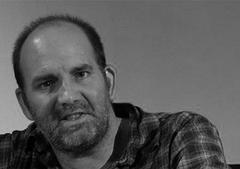
Xan Brooks is an award-winning writer, editor and broadcaster. He spent his rude youth as part of the founding editorial team of the Big Issue magazine and his respectable middle period as an associate editor at the Guardian, specialising in film. The Clocks in This House All Tell Different Times is his first novel.
Connect with Xan
Website ǀ Twitter ǀ Goodreads


 Manhattan Beach by Jennifer Egan
 Sugar Money by Jane Harris
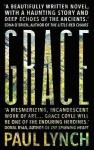 Grace by Paul Lynch
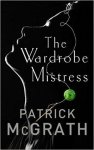 The Wardrobe Mistress by Patrick McGrath
 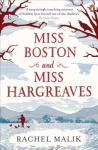 Miss Boston and Miss Hargreaves by Rachel Malik
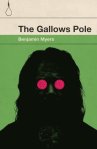 The Gallows Pole by Benjamin Myers

 What Cathy Read Next...