Book Review – All the Lives We Never Lived by Anuradha Roy

About the Book

Front cover of All the Lives We Never Lived by Anuradha Roy

“In my childhood, I was known as the boy whose mother had run off with an Englishman.”

So begins the story of Myshkin and his mother Gayatri, who is driven to rebel against tradition and follow her artist’s instinct for freedom.

Freedom of a different kind is in the air across India. The fight against British rule is reaching a critical turn. The Nazis have come to power in Germany. At this point of crisis, two strangers arrive in Gayatri’s town, opening up to her the vision of other possible lives.

What took Myshkin’s mother from India to Dutch-held Bali in the 1930s, ripping a knife through his comfortingly familiar universe? Excavating the roots of the world in which he was abandoned, Myshkin comes to understand the connections between the anguish at home and a war-torn universe overtaken by patriotism.

This enthralling novel tells a tragic story of men and women trapped in a dangerous era uncannily similar to the present. Its scale is matched by its power as a parable for our times.

Format: Hardcover (360 pages) Publisher: MacLehose Press
Publication date: 1st June 2018 Genre: Historical Fiction

Find All the Lives We Never Lived on Goodreads

Purchase All the Lives We Never Lived from Bookshop/org [Disclosure: If you buy books linked to our site, we may earn a commission from Bookshop.org, whose fees support independent bookshops]

My Review

The Walter Scott Prize for Historical Fiction always turns up a wealth of interesting books, some of which I might never have come across otherwise. Longlisted in 2019, it’s taken me a long time to get around to reading All the Lives We Never Lived but it’s another one ticked off the list. (By my reckoning there are still over 20 books longlisted since 2019 that I haven’t read.)

The book’s title tells you pretty much everything you need to know about the story. Myshkin’s mother Gayatri feels trapped in her current role as wife and mother. Her interest in art, poetry and music, awakened during trips abroad as a young girl with her liberal-minded father, has now been stifled. Myshkin’s father views them as affectations, increasingly so as he becomes involved in the Indian independence movement and a spiritual quest.

It’s through Myshkin’s eyes that we see his mother’s frustration played out. To be more accurate it’s his childhood memories we’re reading, set down by him towards the end of his life. There were many things he witnessed as a child that he didn’t understand the full meaning of. All he knew was that his mother was unhappy and that one day she simply disappeared in search of the fulfilment she craved. His only contact from that day forward was the occasional letter from the island of Bali, the place that had made such an impression on her during her travels with her father. And then, when war comes to the Dutch East Indies, suddenly even that stops.

It’s only much later, through letters sent by his mother to her friend Lisa, that we learn about Gayatri’s life in Bali. They describe her initial delight at her new found freedom to pursue her passion for painting and her determination to make enough money to have Myshkin join her. Then her growing disillusionment and, finally, her fear of what will happen if the Japanese occupy Bali.

It has to be said that Gayatri is a rather voluble correspondent, constantly chiding her friend Lisa to write more often and to send her news of Myshkin. Ironic given she’s the one who abandoned him. I found the letters rather gushing and I wasn’t convinced an epistolary format was the best way to tell the story of Gayatri’s time in Bali.

As we learn from Myshkin the man his mother was said to have ‘run off with’ was not an Englishman but a German painter, Walter Spies. (I didn’t realise until I read the author’s note that he was a real life figure.) Despite the fact he seems to put a spell on so many of the characters, including Myshkin, I didn’t feel I actually got to know him that well.

Myshkin pursues a career as horticulturalist specialising in urban tree planting. My favourite quote from the book is his mentor’s response when Myshkin confides he’s thinking about finding a more lucrative occupation. It’s a version of a Chinese proverb: ‘If you wish to be happy for an hour, drink wine; if you wish to be happy for three days, get married. If you wish to be happy for eight days, kill your pig and eat it; but if you wish to be happy forever, become a gardener.’

All the Lives We Never Lived covers a lot of ground, possibly too much. In addition to Gayatri’s story we get, amongst other things, stuff about Indian politics in the 1930s, Indian culture and spirituality, women’s position in society, the impact on India of WW2 and attitudes to homosexuality. Surprising then that, although beautifully written, I found it rather slow.

About the Author

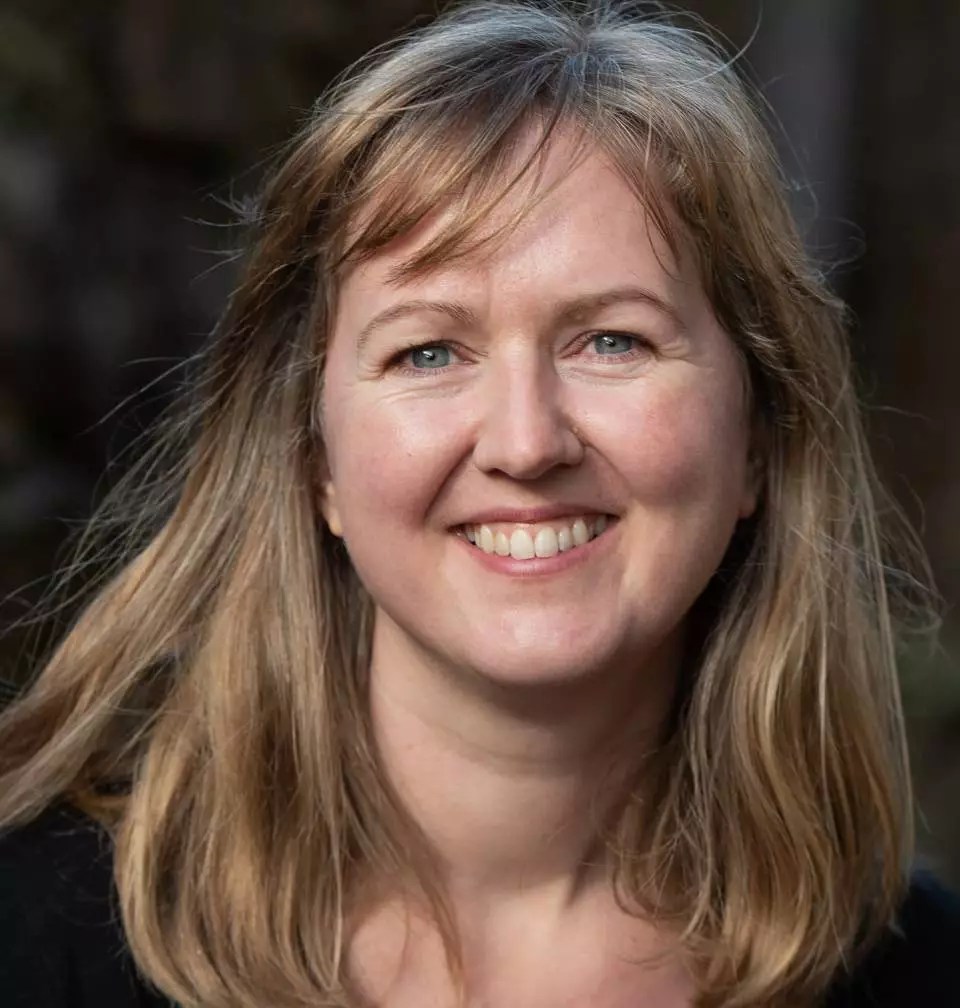
Author Anuradha Roy

Anuradha Roy is a writer and potter. She was born in Kolkata and grew up mostly in Hyderabad, India, though she lived in many places through her nomadic childhood. She studied Literature at Presidency College, Kolkata and at Cambridge University, UK.

Roy has written five novels. Her first, An Atlas of Impossible Longing, was translated into sixteen languages and was voted Book of the Year in a number of places, including Washington PostSeattle Times, and Huffington Post. It was Editor’s Choice, New York TimesSleeping on Jupiter, her third novel, won the DSC Prize for Fiction 2016 and was longlisted for the Man Booker Prize 2015. All the Lives We Never Lived won the 2022 Sahitya Akademi Award, one of India’s highest literary honours, and was shortlisted for the International Dublin Literary Award.

Roy lives in Ranikhet, where she is a graphic designer at Permanent Black, a scholarly press she runs with her partner, Rukun Advani, and four dogs. (Bio: Author website/Photo: Facebook profile)

Connect with Anuradha
Website | Facebook | Instagram

Book Review – Glorious Exploits by Ferdia Lennon

About the Book

Front cover of Glorious Exploits by Ferdia Lennon

Ancient Sicily. Enter GELON: visionary, dreamer, theatre lover. Enter LAMPO: feckless, jobless, in need of a distraction.

Imprisoned in the quarries of Syracuse, thousands of defeated Athenians hang on by the thinnest of threads.

They’re fading in the baking heat, but not everything is lost: they can still recite lines from Greek tragedy when tempted by Lampo and Gelon with goatskins of wine and scraps of food.

And so an idea is born. Because, after all, you can hate the invaders but still love their poetry.

It’s audacious. It might even be dangerous. But like all the best things in life – love, friendship, art itself – it will reveal the very worst, and the very best, of what humans are capable of.

What could possibly go wrong?

Format: Paperback (288 pages) Publisher: Fig Tree
Publication date: Genre: Historical Fiction

Find Glorious Exploits on Goodreads

Purchase Glorious Exploits from Bookshop.org [Disclosure: If you buy books linked to our site, we may earn a commission from Bookshop.org, whose fees support independent bookshops]

My Review

Shortlisted for the Walter Scott Prize for Historical Fiction 2025, Glorious Exploits transports the reader to Syracuse in Sicily in the 5th century BC during the Peloponnesian War between Athens and Sparta, and its allies. (I knew next to nothing about the Peloponnesian War but, to be honest, you don’t really need to know anything about it to enjoy the book.)

At the point the book opens an Athenian expedition to Sicily has ended in disaster with its fleet sunk and thousands of Athenians taken prisoner. With nowhere else to house them they’ve been imprisoned in a quarry in the baking sun barely surviving on the meagre rations they’re given. Sounds like a grim backdrop to a book doesn’t it? But somehow the author manages to find the humanity and the humour, albeit dark humour, in the situation through two brilliantly imagined characters: Lampo and Gelon.

Lampo is our narrator, telling the story with a delightful Irish lilt and wry humour. Somehow the modern dialogue doesn’t seem out of place, it’s just really funny. Shopping for supplies for an outing, he says, ‘I also grab an Italian white which the vintner says is “causing quite the stir”.’

Gelon has a passion for Greek plays, in particular those of the Athenian playwright Euripides and, fearing the defeat of Athens may mean his work being lost forever, comes up with the seemingly crazy notion of staging Euripides’ play Medea, and his new work The Trojan Women, using some of the prisoners as cast and the quarry as a theatre. Because perhaps it’s possible to be at war with another nation and still appreciate their art? Ironic then that Medea and The Trojan Women are about revenge and the consequences of war.

Lampo and Gelon hold casting sessions (with the promise of more generous rations for the successful) and set out to obtain financial backing for the enterprise, sets and costumes. They succeed in finding a patron who is an avid collector of objects from across the world. One object in his collection is particularly curious.

Their bold undertaking is fraught with problems but as Gelon says, ‘It’s poetry we’re doing… It wouldn’t mean a thing if it were easy’. Although they do meet with success, it quickly turns to tragedy as what’s being portrayed on stage is played out in real life, showing that, although art can convey universal emotions, unfortunately one of those is hate. It results in Lampo and Gelon embarking on an even more onerous task but one that shows a finer side of humanity.

Lampo and Gelon have been friends since childhood and their friendship is heartwarming. Lampo finds comfort in Gelon’s certainty, whilst Gelon depends on Lampo’s seemingly endless ability to get them out of sticky situations. But there’s sadness beneath the surface in both their lives. Gelon has lost his wife and son. Heartbreakingly, he often thinks he glimpses her but it always turns out to be just an illusion. Lampo, lame in one leg, is looking for love but the woman who’s captured his heart isn’t free to choose her own destiny. His efforts to rectify the situation are endearing.

Glorious Exploits is a terrifically entertaining story of friendship, and of optimism; the belief that ‘something’ will turn up. As Lampo says, ‘Anything is possible, and it always has been. For the world was once just a dream in a god’s eye, and the man who gives up on himself makes that very same god look away’.

In three words: Imaginative, funny, immersive

About the Author

Author Ferdia Lennon

Ferdia Lennon was born and raised in Dublin. He holds a BA in History and Classics from University College Dublin and an MA in Prose Fiction from the University of East Anglia. Glorious Exploits is his first novel. A Sunday Times bestseller, it was adapted for BBC Radio 4 and was the winner of the Waterstones Debut Fiction Prize 2024 and the Bollinger Everyman Wodehouse Prize for Comic Fiction. After spending many years in Paris, he now lives in Norwich with his wife and son. (Photo: Amazon author page)

Connect with Ferdia
Website | Instagram