
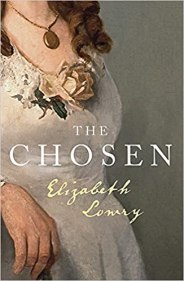
 About the Book
One Wednesday morning in November 1912, the aging Thomas Hardy, entombed by paper and books and increasingly estranged from his wife Emma, finds her dying in her bedroom. Between his speaking to her and taking her in his arms, she is gone.
The day before, he and Emma had exchanged bitter words – leading Hardy to wonder whether all husbands and wives end up as enemies to each other. His family and Florence Dugdale, the much younger woman with whom he has been in a relationship, assume that he will be happy and relieved to be set free. But he is left shattered by the loss.
Hardy’s bewilderment only increases when, sorting through Emma’s effects, he comes across a set of diaries that she had secretly kept about their life together, ominously titled ‘What I Think of My Husband’. He discovers what Emma had truly felt – that he had been cold, remote and incapable of ordinary human affection, and had kept her childless, a virtual prisoner for forty years. Why did they ever marry?
He is consumed by something worse than grief: a chaos in which all his certainties have been obliterated. He has to re-evaluate himself, and reimagine his unhappy wife as she was when they first met.
Format: Hardback (304 pages) Publisher: riverrun
Publication date: 14th April 2022 Genre: Historical Fiction
Find The Chosen on Goodreads
Purchase links
Bookshop.org
Disclosure: If you buy a book via the above link, I may earn a commission from Bookshop.org, whose fees support independent bookshops
Hive | Amazon UK
Links provided for convenience only, not as part of an affiliate programme
My Review
The Chosen is one of the books on the shortlist for the Walter Scott Prize for Historical Fiction 2023. It gives the reader an insight into Thomas Hardy the husband, not just the renowned author. It has to be said, he comes up wanting.
Emma once assisted Hardy in his writing – in fact, the author shows her contributing to the plot of Tess of the D’Urbevilles – but Emma’s role as his helper has gradually dwindled and been supplanted by a far younger woman, Florence Dugdale (whom Hardy later married). This along with Hardy’s rather offhand response to Emma’s own literary ambitions, and their childless state, has only fuelled her sense of resentment and feeling of emptiness. Their marriage has become stale. Although sharing the same house, they live separate lives only coming together at the dinner table, and sometimes not even then. In Emma’s own words, they have become ‘bricked up alive’ in a ‘make-believe marriage’.
Emma pours out her frustration, anger and sense of injustice in her diaries. ‘I am an irrelevance, a clog on his real life. He forgets that I believed in his gift when no one else did, that I saw from the very first what he might be.’ She rails at his neglect of her, noting ruefully that ‘he belongs to the public and all my years of devotion count for nothing.’ (Hardy destroyed Emma’s diaries after her death so the author has recreated them using a combination of her own imagination and Emma’s surviving letters, as well as the manuscript of her memoir.)
As the book progresses, we discover what happened (or didn’t happen) over the years to leave them in this state of virtual estrangement as well as the nature of their final exchange of words the night befome Emma’s death.
Hardy initially comes across as self-absorbed, totally engrossed in the process of writing his novels and poetry and unable to, or unwilling to, read the obvious signs of Emma’s unhappiness. It seems baffling that someone so skilful at communicating love and passion in his writing, should fail so lamentably when it comes to communicating with his wife. As Emma notes in her diary, ‘T. understands only the women he invents – the others not at all.’
However, it’s impossible not to be moved by Hardy’s utter distress at her death, his sense of regret and guilt, even if it does come many years too late. ‘This isn’t the beginning of grief but something worse, an absence without form or meaning, a chaos in which everything that was once certain is cancelled. Wherever she’s to be found now, it isn’t here.’ It’s only the stalwart Kate, Hardy’s sister, who gets him through the dark days.
So immersed did I become in the lives of Hardy and Emma that I moved between wanting to give them both a hug or a good shake and say, ‘For goodness sake, talk to each other!’. That and grabbing another tissue from the box.
The Chosen is a beautifully written portrait of a marriage that could have been so much happier if only the flame of passion had remained alight; instead, it was allowed to flicker and die. The book’s wistful, melancholic tone is perhaps best summed up by Hardy’s reflection, ‘Too late, he sees it all.’
In three words: Emotional, intimate, moving
 About the Author
Elizabeth Lowry was born in Washington DC and educated in South Africa and England. She is a frequent contributor to The Times Literary Supplement, The Guardian, The Wall Street Journal, the London Review of Books and other publications.
Her first novel, The Bellini Madonna, was published in 2008 to great critical acclaim. Her second novel, Dark Water, appeared in 2018 and was longlisted for the Walter Scott Prize for Historical Fiction 2019.
The Chosen is her third novel. A Guardian Fiction Book of the Day and a Times Best Historical Fiction Book of the Year, it has just been shortlisted for the 2023 Walter Scott Prize for Historical Fiction. Elizabeth lives and works in Oxford. (Photo: Goodreads author page)
Connect with Elizabeth
Goodreads | Twitter

 About the Book

 What Cathy Read Next...