#BookReview Ancestry by Simon Mawer @littlebrown @waltscottprize

AncestryAbout the Book

Almost two hundred years ago, Abraham, an illiterate urchin, scavenges on a Suffolk beach and dreams of running away to sea … Naomi, a seventeen-year-old seamstress, sits primly in a second-class carriage on the train from Sussex to London and imagines a new life in the big city … George, a private soldier of the 50th Regiment of Foot, marries his Irish bride, Annie, in the cathedral in Manchester and together they face married life under arms.

Now these people exist only in the bare bones of registers and census lists but they were once real enough. They lived, loved, felt joy and fear, and ultimately died. But who were they? And what indissoluble thread binds them together?

Format: Hardback (432 pages)      Publisher: Little Brown
Publication date: 28th July 2022 Genre: Historical Fiction

Find Ancestry on Goodreads

Purchase links
Bookshop.org
Disclosure: If you buy a book via the above link, I may earn a commission from Bookshop.org, whose fees support independent bookshops

Hive | Amazon UK
Links provided for convenience only, not as part of an affiliate programme


My Review

That is the trouble with the usual historical documents: they don’t say how things happen, merely when.’ Ancestry is the author’s attempt to address this problem and to paint a picture of the lives of some of his ancestors, and a picture more vivid and immersive than that set out in official documents – birth, marriage and death certificates, census returns – although even these provide interesting detail and a few puzzles.

The story begins with the author’s great-great-grandfather Abraham Block, the illiterate son of agricultural labourers who in 1847 leaves home at the age of fifteen to sign on as an indentured (apprentice) sailor aboard a merchant ship travelling between ports in the Mediterrean, as well as further afield.  Occasionally the ship docks in London and I particularly enjoyed, as imagined by the author, Abraham’s first impressions of the teeming city – its sights, sounds and smells – a place so different from the Suffolk village in which he grew up. ‘There were familiar smells – horse piss and horse shit, human shit, rotting vegetables – blended with smells he was only beginning to discover – the pungent smell of spices, the sour stench of vinegar, the stink of a tannery. The streets ran between cliffs of buildings. Pubs, factories, warehouses, a covered market, a church, shops, houses all slammed together as though by some ill-tempered child playing with pebbles and mud ….Whistles blew. Whips cracked. Shouts rang out.’

In London, Abraham meets Naomi Lulham, a young seamstress, who will eventually become his wife. As we discover, the life of a sailor’s wife in nineteenth century England is a lonely one with information about the whereabouts of crew, and even the ship, taking week, possibly months to arrive. And when it does, it may contain bad news.

Part two of the book focuses on another ancestor, George Mawer a soldier serving with the 50th Regiment of Foot. Married life for him and his Irish wife Annie involves frequent moves between barracks whose cramped conditions offer little privacy. When George’s regiment is sent to Crimea, he and Annie may be aware of the dangers but our sense of foreboding is greater knowing the history of that conflict. In fact, as the book demonstrates the danger was not restricted to the battlefield; many soldiers died of disease. Others died as a result of disastrous decisions by army leaders.

In George’s absence and later when she finds herself alone in the world, Annie has to find ways to fend for herself and her children. It’s a hostile world for a woman alone and Annie is forced to make desparately difficult decisions affecting her children’s future.

Alongside the human stories, there is a wealth of historical detail but this is subtly woven into the narrative in way that never makes it feel like you are reading a history text book. The details amplify the story, not interrupt it.

Throughout the book, the author makes plain the responsibility he feels to bring to life the experiences of  his ancestors whilst respecting the documented facts, so far as they are known. ‘Abraham Block, Naomi Lulham, these are real people with whom I am playing – their live, their loves, their innermost secrets. I feel the obligation to place the pieces with infinite care.’  Where there are gaps, he uses his imagination to give the reader a sense of them as individuals. We learn about their hopes, dreams and struggles, of which there are plenty. At times, this involves  speculation on his part. For example, at one point the author give us three possible versions of a pivotal moment in Annie’s life.

Another theme the author explores in the book is those things handed down through the generations.  Not just genetic material but the ‘intangible, unmeasurable things that run through families – memory, stories, myths and legends’.  He makes the point that physical evidence – not just documents but buildings, places – can disappear. For instance, November 1848 sees Abraham walking along a street that no longer exists towards a house that no longer exists.

I found myself especially drawn to the female characters, especially Annie. Her resilience and determination to find a way around the obstacles that confront her was inspiring. Sadly, both Naomi and Annie have to deal with the aftermath of tragedy, bringing up their children alone.

In comparison to the detail lavished on recounting the lives of the author’s distant ancestors, the manner in which the two branches become conjoined is covered in relatively short order. The absence of a family tree seems a strange omission. I would have found it helpful, especially given many names recur down the years.

At first sight, the lives of Abraham, Naomi, George and Annie may seem very different from our own but in Ancestry the author skilfully draws out the human connections that exist between them and us.

In three words: Fascinating, compelling, authentic

Try something similar: The Secret Diaries of Charles Ignatius Sancho by Paterson Joseph


Simon MawerAbout the Author

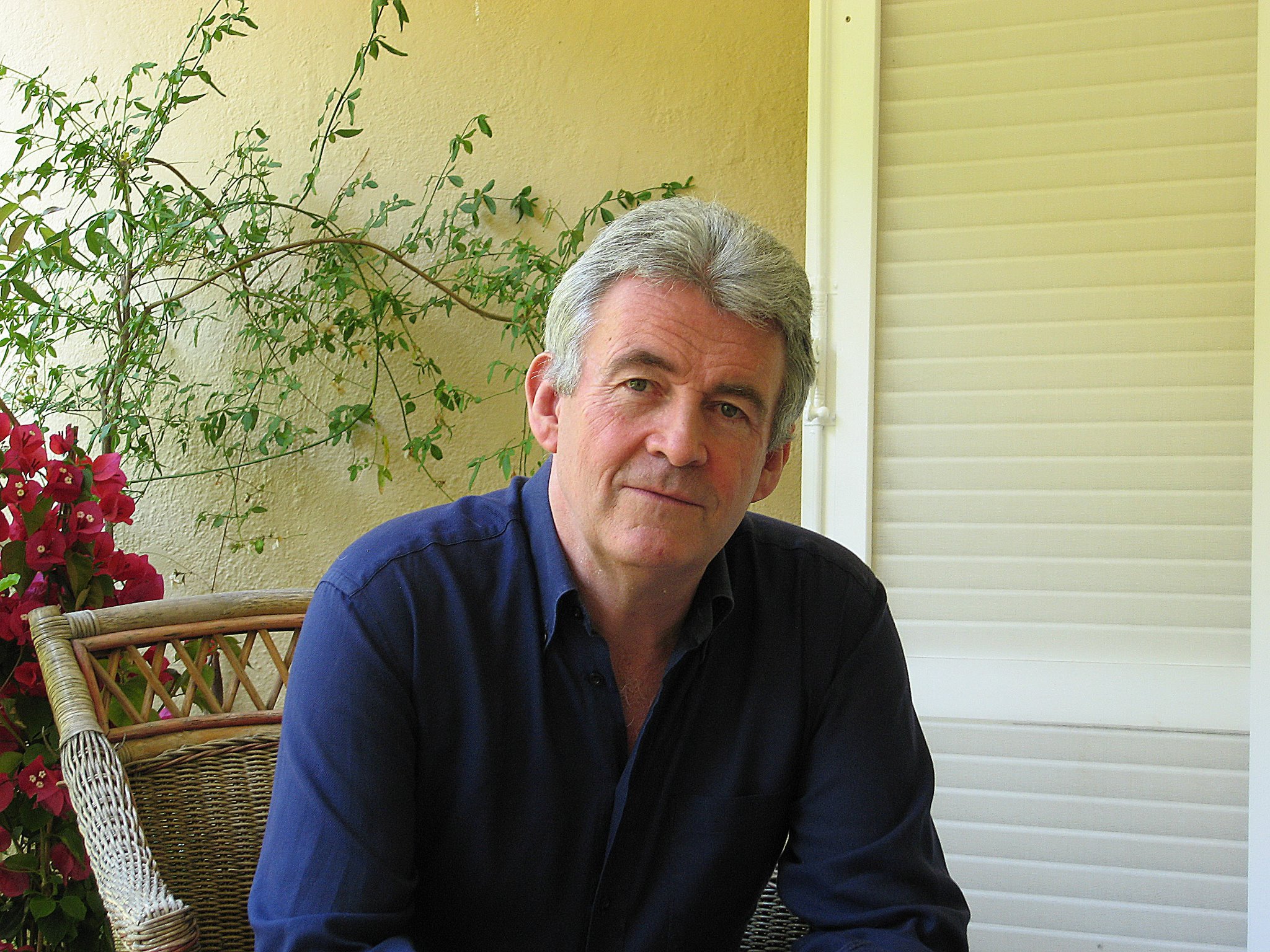
Simon Mawer was born in 1948 in England and spent his childhood there, in Cyprus and in Malta. He then moved to Italy, where he and his family lived for more than thirty years, and taught at the British International School in Rome. He and his wife currently live in Hastings. He is the author of several novels including the Man Booker shortlisted The Glass Room, The Girl Who Fell From The Sky, Tightrope and Prague Spring.

Connect with Simon
Website | Twitter | Facebook

#BookReview The Chosen by Elizabeth Lowry @riverrunbooks

The ChosenAbout the Book

One Wednesday morning in November 1912, the aging Thomas Hardy, entombed by paper and books and increasingly estranged from his wife Emma, finds her dying in her bedroom. Between his speaking to her and taking her in his arms, she is gone.

The day before, he and Emma had exchanged bitter words – leading Hardy to wonder whether all husbands and wives end up as enemies to each other. His family and Florence Dugdale, the much younger woman with whom he has been in a relationship, assume that he will be happy and relieved to be set free. But he is left shattered by the loss.

Hardy’s bewilderment only increases when, sorting through Emma’s effects, he comes across a set of diaries that she had secretly kept about their life together, ominously titled ‘What I Think of My Husband’. He discovers what Emma had truly felt – that he had been cold, remote and incapable of ordinary human affection, and had kept her childless, a virtual prisoner for forty years. Why did they ever marry?

He is consumed by something worse than grief: a chaos in which all his certainties have been obliterated. He has to re-evaluate himself, and reimagine his unhappy wife as she was when they first met.

Format: Hardback (304 pages)      Publisher: riverrun
Publication date: 14th April 2022 Genre: Historical Fiction

Find The Chosen on Goodreads

Purchase links
Bookshop.org
Disclosure: If you buy a book via the above link, I may earn a commission from Bookshop.org, whose fees support independent bookshops

Hive | Amazon UK
Links provided for convenience only, not as part of an affiliate programme


My Review

The Chosen is one of the books on the shortlist for the Walter Scott Prize for Historical Fiction 2023. It gives the reader an insight into Thomas Hardy the husband, not just the renowned author. It has to be said, he comes up wanting.

Emma once assisted Hardy in his writing – in fact, the author shows her contributing to the plot of Tess of the D’Urbevilles – but Emma’s role as his helper has gradually dwindled and been supplanted by a far younger woman, Florence Dugdale (whom Hardy later married). This along with Hardy’s rather offhand response to Emma’s own literary ambitions, and their childless state, has only fuelled her sense of resentment and feeling of emptiness. Their marriage has become stale. Although sharing the same house, they live separate lives only coming together at the dinner table, and sometimes not even then. In Emma’s own words, they have become ‘bricked up alive’ in a ‘make-believe marriage’.

Emma pours out her frustration, anger and sense of injustice in her diaries. ‘I am an irrelevance, a clog on his real life. He forgets that I believed in his gift when no one else did, that I saw from the very first what he might be.’ She rails at his neglect of her, noting ruefully that ‘he belongs to the public and all my years of devotion count for nothing.’  (Hardy destroyed Emma’s diaries after her death so the author has recreated them using a combination of her own imagination and Emma’s surviving letters, as well as the manuscript of her memoir.)

As the book progresses, we discover what happened (or didn’t happen) over the years to leave them in this state of virtual estrangement as well as the nature of their final exchange of words the night befome Emma’s death.

Hardy initially comes across as self-absorbed, totally engrossed in the process of writing his novels and poetry and unable to, or unwilling to, read the obvious signs of Emma’s unhappiness. It seems baffling that someone so skilful at communicating love and passion in his writing, should fail so lamentably when it comes to communicating with his wife.  As Emma notes in her diary, ‘T. understands only the women he invents – the others not at all.’

However, it’s impossible not to be moved by Hardy’s utter distress at her death, his sense of regret and guilt, even if it does come many years too late. ‘This isn’t the beginning of grief but something worse, an absence without form or meaning, a chaos in which everything that was once certain is cancelled. Wherever she’s to be found now, it isn’t here.’ It’s only the stalwart Kate, Hardy’s sister, who gets him through the dark days.

So immersed did I become in the lives of Hardy and Emma that I moved between wanting to give them both a hug or a good shake and say, ‘For goodness sake, talk to each other!’. That and grabbing another tissue from the box.

The Chosen is a beautifully written portrait of a marriage that could have been so much happier if only the flame of passion had remained alight; instead, it was allowed to flicker and die. The book’s wistful, melancholic tone is perhaps best summed up by Hardy’s reflection, ‘Too late, he sees it all.’

In three words: Emotional, intimate, moving


Elizabeth LowryAbout the Author

Elizabeth Lowry was born in Washington DC and educated in South Africa and England. She is a frequent contributor to The Times Literary Supplement, The Guardian, The Wall Street Journal, the London Review of Books and other publications.

Her first novel, The Bellini Madonna, was published in 2008 to great critical acclaim. Her second novel, Dark Water, appeared in 2018 and was longlisted for the Walter Scott Prize for Historical Fiction 2019.

The Chosen is her third novel. A Guardian Fiction Book of the Day and a Times Best Historical Fiction Book of the Year, it has just been shortlisted for the 2023 Walter Scott Prize for Historical Fiction. Elizabeth lives and works in Oxford. (Photo: Goodreads author page)

Connect with Elizabeth
Goodreads | Twitter