Book Review: Corpus by Rory Clements

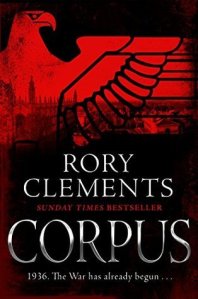
CorpusAbout the Book

It’s 1936. Europe is in turmoil. The Nazis have marched into the Rhineland. In Russia, Stalin has unleashed his Great Terror. Spain has erupted in civil war.

In Berlin, a young Englishwoman evades the Gestapo to deliver vital papers to a Jewish scientist. Within weeks, she is found dead in her Cambridge bedroom, a silver syringe clutched in her fingers. In a London club, three senior members of the British establishment light the touch paper on a conspiracy that will threaten the very heart of government. Even the ancient colleges of Cambridge are not immune to political division. Dons and students must choose a side: right or left, where do you stand?

When a renowned member of the county set and his wife are found horribly murdered, a maverick history professor finds himself dragged into a world of espionage which, until now, he has only read about in books. But the deeper Thomas Wilde delves, the more he wonders whether the murders are linked to the death of the girl with the silver syringe – and, just as worryingly, to the scandal surrounding King Edward VIII and his mistress Wallis Simpson…

Format: Hardcover (352 pp.)                   Publisher: Bonnier Zaffre
Published: 26th January 2017                  Genre: Historical Fiction, Thriller

Purchase Links*
Amazon.co.uk ǀ Amazon.com
*links provided for convenience, not as part of any affiliate programme


Find Corpus (Tom Wilde #1) on Goodreads


My Review

I’m a huge fan of Rory Clements’ John Shakespeare series set in Elizabethan England. I was lucky enough to hear Rory speak at the Henley Literary Festival in June, when I also got the chance to ask him to sign my copy of Corpus. To read my review of the event, click here. However, to save you looking, I will say that Rory revealed plans to return to John Shakespeare in the future after he’s completed the planned three books in his new Tom Wilde series.

Corpus_Signed

There were a couple of things that struck me as I was reading Corpus. The first was that, by chance, I was reading the book at the same time of year as the majority of story is set, namely the first few days of December (albeit quite a few decades apart). The second was that there were numerous parallels between Corpus and the author’s John Shakespeare series.

The obvious one is that the specialist subject of the protagonist of Corpus, Professor Thomas (Tom) Wilde, is the Tudor spymasters Sir Francis Walsingham and Sir Robert Cecil, who feature in the John Shakespeare books. Incidentally, the author gives us a few hints about Tom Wilde’s back story, including that there is a tragedy in his past which we will no doubt learn more about in future books.

Drawn into investigating a suspicious death, Wilde approaches detection with the eye of an historian.  As he tells his students: “Argue with me! […] Make me prove my points, demand evidence, get as near the truth as you can. Re-examine everything you have ever been told and make your own mind up on the evidence you can find. And if there is not enough evidence, then keep an open mind. Become a detective – because if you don’t, you’ll never become a historian.”

As I read on, I started to see other links between the world of John Shakespeare and the world of Tom Wilde.  For instance, the covert action, spying, intrigue and plots that infected Elizabethan times are mirrored in the turbulent politics of 1930s Britain.   As in the Tudor period, there are ruthless zealots prepared to die for a cause, men of cunning practised in the art of duplicity, and unknowing dupes drawn into plots through greed, ‘fake news’ or misguided adherence to organisations much more extreme than they appear on the surface.

And you have a clash of two different belief systems – in this case Communism and Fascism – with the adherents of each out to destroy the other. Finally the abdication crisis of 1936 sees a monarch in peril, with different political factions anxious either to preserve the status quo or to advance the fortunes of another candidate more sympathetic to their views.  Where you have the Duke of York (later George V) in the case of Edward VIII, you have Mary, Queen of Scots in the case of Elizabeth I. As Wilde, an American of Irish heritage, ruefully observes, “You English haven’t really moved on much from the Middle Ages, have you?”

The storyline unfolds with plenty of twists and turns. There are action-packed confrontations and dangerous situations for our hero to navigate, including answering that crucial question: who can I trust? Corpus is a compelling historical thriller with a storyline full of plots and intrigue that melds actual and imaginary events in a plausible way. I really enjoyed it and cannot wait to read the next book in the series, Nucleus.

Luckily for me, thanks to the lovely people at Bonnier Zaffre, I have an advance reading copy of Nucleus sitting on my bookshelf. Watch out for my review around the time of its publication in January 2018.  A third outing for Tom Wilde is promised as well…

Follow my blog with Bloglovin

In three words: Compelling, atmospheric, suspenseful

Try something similar…The Thirty-Nine Steps by John Buchan
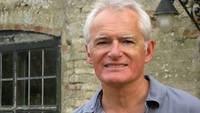

RoryClementsAbout the Author

Rory Clements has had a long and successful newspaper career including being features editor and associate editor of Today, editor of the Daily Mail‘s Good Health Pages, and editor of the health section at the Evening Standard. He now writes full-time in an idyllic corner of Norfolk, England.

Connect with Rory

Website ǀ Facebook ǀ Goodreads


Book Review: The Last Train by Michael Pronko

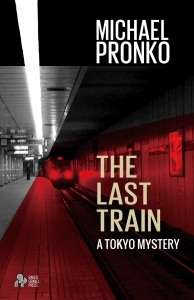
TheLastTrain1About the Book

Detective Hiroshi Shimizu investigates white collar crime in Tokyo. He’s lost his girlfriend and still dreams of his time studying in America, but with a stable job, his own office and a half-empty apartment, he’s settled in.  When an American businessman turns up dead, his mentor Takamatsu calls him out to the site of a grisly murder. A glimpse from a security camera video suggests the killer was a woman, but in Japan, that seems unlikely. Hiroshi quickly learns how close homicide and suicide can appear in a city full of high-speed trains just a step – or a push – away. Takamatsu drags Hiroshi out to the hostess clubs and skyscraper offices of Tokyo in search of the killer. To find her, Hiroshi goes deeper and deeper into Tokyo’s intricate, ominous market for buying and selling the most expensive land in the world. Hiroshi’s determined to cut through Japan’s ambiguities – and dangers – to find the murdering ex-hostess before she extracts her final revenge – which just might be him.

Format: ebook, Paperback (348 pp.)  Publisher: Raked Gravel Press
Published: 5th May 2017                      Genre: Crime, Thriller

Purchase Links*
Amazon.co.uk ǀ Amazon.com
*links provided for convenience, not as part of any affiliate programme

Find The Last Train on Goodreads


My Review

When I interviewed Michael on my blog last year (click here to read the full interview), he described The Last Train as ‘more whydunit than whodunit’ and having now read the book I can certainly understood why he said that. Much of the excitement of the book comes from following detective Hiroshi Shimizu in his attempts to identify and track down the mysterious woman who committed the murder. The trail leads Hiroshi from the flashy malls and smart high-rise buildings to the decidedly seedier world of hostess clubs and bars. As the author explains, “…in the novel, I wanted to look beneath the surface. The giant skyscrapers and constant construction are amazing, but there’s a lot going on behind the go-go big-city bright-lights, and a lot of it not so good.”

As the investigation progresses, Hiroshi begins to understand the threat he faces from vested interests who may be involved in the shady dealings he starts to uncover. He also starts to realise just what a clever and ruthless opponent he is up against and to get an inkling of the motivation that drives her. When the full facts are revealed you may find yourself questioning where true justice lies.

What really sets The Last Train apart from other run-of-the-mill crime thrillers for me was its Tokyo setting. I loved learning all about Japanese culture and customs. Take this scene in which Hiroshi and his boss, Takamatsu, drink sake together in the traditional manner.

‘The master pulled back a brown curtain over a glass-sided refrigerator filled with sake bottles. He pulled out two small chilled glasses from the top shelf and set these on the upper counter inside small, square, cedar wood boxes. The master shuffled the dozen or so bottles inside the fridge until he found the ones he wanted. Carrying these to the counter, he hoisted the large bottle of cold sake and, cradling it in the crook of his arm, poured out the clear, clean liquid. The sake flowed gently over the top of the lip of the glass into the box, arousing the aroma of cedar and fresh rice. He poured out sake from a different bottle for Hiroshi and placed both bottles on the counter so that each displayed the artful calligraphy of their labels.

They bowed down like penitents to take the first sip without spilling. Then they plucked up the small, thumb-sized glasses for a silent toast before downing the second gulp. Finally, they poured the spill-over from the cedar box into the glass, took another sip, and set their half-full glasses back inside the wet cedar boxes.’

The book cleverly brings to life the intriguing juxtaposition of ancient and modern that exists in Japan. So you have temples and prayer rituals, the elaborate customs for greeting and for drinking tea. But at the same time you have the modern malls full of shops selling up-to-the-minute designer goods and the latest technology, and the packed subways and neon-lit sidewalks of Roppongi.

‘People streamed out of subway exits, slid out of taxis, and stepped off bus after bus. Hordes of office workers in dull gray pants and dark skirts blocked corners, shouting directions into their cell phones to those yet to arrive. Fashion-conscious hipsters, mini-skirted amateurs, and yakuza wannabes walked to their favourite places to play, eat, drink, or work.’

The work culture with its emphasis on drinking with colleagues after work, to my eyes at least, seems particularly alien and the position of women quite regressive with real antipathy in some quarters towards women whose behaviour is considered ‘un-Japanese’.

I really enjoyed The Last Train for both its compelling storyline and its use of Tokyo as a location. Luckily for me – and I suspect, other readers – the author is working on two further books in the series: Japan Hand, which explores the relationship between Japan and the American military bases; and Thai Girl in Tokyo, which has two great female characters navigating the dangers of Shibuya’s underground nightlife. Both books are due for publication in 2018.

In three words: Atmospheric, compelling, mystery

Try something similar… Wolves in the Dark by Gunnar Staalesen (click here to read my review)

Follow my blog with Bloglovin


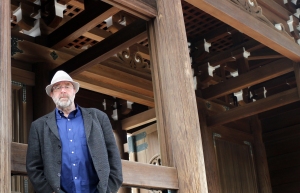
MichaelPronkoAbout the Author

Michael Pronko is a professor of American Literature and Culture at Meiji Gakuin University in Tokyo and writes about Japanese culture, art, jazz, and politics for Newsweek Japan, The Japan Times, Artscape Japan and other publications. He has appeared on NHK Public TV, Tokyo MXTV and Nippon Television. His website, Jazz in Japan can be found at http://www.jazzinjapan.com/. His award-winning collections of essays about life in Tokyo are: Beauty and Chaos: Slices and Morsels of Tokyo Life (2014), Tokyo’s Mystery Deepens: Essays on Tokyo (2014), and Motions and Moments: More Essays on Tokyo (2015). He has also published three essay collections in Japanese. When not teaching or writing, he wanders Tokyo contemplating its intensity and waiting for the stories to come.

Connect with Michael

Website ǀ Facebook ǀ Twitter ǀ Goodreads