
Today I’m delighted to welcome author Stephen Clark back to What Cathy Read Next and to bring you an extract from his new crime novel Hands Up. It’s available today as an ebook and published in paperback on 28th September 2019 (see purchase and pre-order links below).
I reviewed Stephen’s previous book, Citizen Kill, back in July 2017. (You can read my review here.) That book’s plot was built around the issue of Islamist terrorism and, as you can see from the book description below, Hands Up also tackles issues of contemporary relevance.
 About the Book
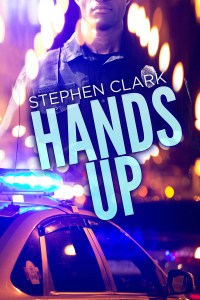
Officer Ryan Quinn, a rookie raised in a family of cops, is on the fast track to detective until he shoots an unarmed black male. Now, with his career, reputation and freedom on the line, he embarks on a quest for redemption that forces him to confront his fears and biases and choose between conscience or silence.
Jade Wakefield is an emotionally damaged college student living in one of Philadelphia’s worst neighborhoods. She knows the chances of getting an indictment against the cop who killed her brother are slim. When she learns there’s more to the story than the official police account, Jade is determined, even desperate, to find out what really happened. She plans to get revenge by any means necessary.
Kelly Randolph, who returns to Philadelphia broke and broken after abandoning his family ten years earlier, seeks forgiveness while mourning the death of his son. But after he’s thrust into the spotlight as the face of the protest movement, his disavowed criminal past resurfaces and threatens to derail the family’s pursuit of justice.
Ryan, Jade, and Kelly – three people from different worlds – are on a collision course after the shooting, as their lives interconnect and then spiral into chaos.
Format: Paperback (292 pp.) Publisher: WiDo Publishing
Publication date: 28th September 2019 Genre: Crime, Thriller
Pre-order/Purchase Links*
Amazon.co.uk | Publisher
*links provided for convenience, not as part of any affiliate programme
Extract: Hands Up by Stephen Clark
1: RYAN
I’m not a murderer.
I’m not a murderer.
I’m. Not. A. Murderer.
Oh, who was I kidding? No matter how many times or ways I said that to myself in the bathroom mirror, it didn’t change the fact that I had just killed someone. A teenager. An unarmed black teenager. Yet everyone kept telling me not to worry: My partner. My superiors. The lawyer I just met. They all said it was a justified shooting. But truth be told, I wasn’t so sure about that. I wasn’t so sure about anything anymore – especially whether I’d get away with it.
I splashed some cold water on my face and studied my reflection in the grimy mirror. My eyes were bloodshot and my face paler than I had ever seen it. I looked like shit. Even worse, if I held my head at a certain angle, I resembled a mugshot of a deranged suspect I recently collared. I smoothed my close-cropped brown hair and tried to pull myself together, but my mind was still in a fog. I needed to snap out of it – and fast. Internal Affairs would arrive at my station any minute now.
As I wandered back to the interrogation room, adrenaline was still burning through my veins like a raging wildfire. I should’ve never agreed to do an interview so soon after the shooting. My partner convinced me I would be able to remember all the details better if I gave a statement right away. But I didn’t realize I would get caught up in a whirlwind of emotions after the numbness of the initial shock wore off. I tried to buy myself some time by telling the lawyer for the police union that I needed a few days before I’d be ready to answer questions. But Harrison Clyne advised me against delaying the interview because he thought it would look suspicious. Although I had just met him, I had complete confidence in Mr. Clyne. Maybe it was his graying temples, professorial glasses or formal manner of speech. Whatever it might have been that inspired confidence, it definitely wasn’t his shabby off-the-rack suit.
I hated the interrogation room we were waiting in. It reeked of body odor, stale cigarette smoke and burnt coffee. I looked around the poorly lit, windowless room and saw cigarette butts scattered on the floor. Even if I was a potential suspect in a criminal investigation, they didn’t have to treat me like a criminal. It was bad enough when my supervising sergeant took my .45 caliber Glock after escorting me back to the station. They could’ve held this interview in the carpeted conference room with the fancy swivel chairs that overlooked the parking lot. I suspected my bosses wanted to send me a message: I wasn’t going to get special treatment.
Finally, a man in a charcoal suit walked into the room and introduced himself as Nate Wiley, the internal affairs detective. My insides froze as soon as I saw that he was black. With supreme confidence and an unmistakable intensity, the detective took a seat in one of the metal folding chairs across from me and Harrison. Dark-skinned and bald with a vaguely sinister mustache, he appeared to be in his early 40s. He was articulate and polite, but I still didn’t trust him. There was no way he’d let me slide if I hesitated, even for the briefest second, in my recollection.
Detective Wiley pulled out a recorder and implored me to relax. Easy for him to say. Mr. Clyne had already informed me I might still need to testify before a grand jury and make formal statements to the FBI and the Justice Department. If any details changed later, they could easily catch the inconsistencies. I could hear my heart beating in my ears.
“Don’t worry,” the detective said. “I’m not expecting you to remember everything right away. Just tell me what you can for now.” He turned the recorder on and explained he was there to question me as part of an official investigation of the Philadelphia Police Department.
“Your statements can only be used against you in internal proceedings, not in any subsequent criminal case,” he explained. “Unless you provide me with false statements. Do you understand?”
I swallowed hard and said, “Yes.”
“Good. So please state your name for the record.”
“My name is Ryan Quinn.”
“How long have you been with the Philadelphia Police Department?”
“Eight months.”
“And the name of your partner?”
“Sgt. Greg Byrnes.”
Wiley arched his eyebrows and tilted his head back as if I had just pledged allegiance to ISIS. “What is it?” I inquired.
“Nothing,” he said with a slight head shake. “I’ve just heard a lot of things about him. How you like working with him?”
That was a good question. I had known Greg my entire life. At 46, he was still in great shape with rugged good looks, although his bronze-colored mane of wavy hair was starting to thin. He was patrol partners with my father and a fixture at all of our family celebrations. As a family friend, Greg liked to joke around with everyone, engage in thoughtful conversations and dole out hugs. As a partner, he complained about everything, exploded into angry tirades and dished out his fair share of insults. I had never seen that side of him before and I didn’t know whether he had hid that from me all those years or if it was an act designed to prepare me for a life of patrolling the mean streets.
“It’s great,” I said. “He’s been teaching me everything he knows.”
Wiley nodded as if he knew exactly what that meant. “Were you on duty today?”
“Yes.”
“So tell me what happened.”
“Sgt. Byrnes spotted a late-model SUV heading north on Susquehanna Ave. without its headlights on. So we pulled the motorist over and parked about a car-length behind him. Sgt. Byrnes picked up his radio mic and announced his intentions to dispatch. Then he tried to check the driver’s license and registration while I kept watch on the passenger’s side.”
“What do you mean tried?” Wiley asked.
“The driver was very aggressive and gave Sgt. Byrnes a hard time. He refused to hand over his ID and when Sgt. Byrnes asked him to step out of the vehicle, he hurled obscenities and insults at him.”
“Can you be more specific?”
“He yelled ‘Black Lives Matter,’ and called Sgt. Byrnes a pig and an asshole.”
Wiley narrowed his eyes suspiciously. “Why was the driver so agitated?”
I coughed before saying, “I don’t know.”
“Did you or your partner say anything to provoke him?”
“No. Sgt. Byrnes and I treated the motorist in a professional and courteous manner. But Sgt. Byrnes suspected the motorist was driving under the influence of drugs.”
“So what happened next?”
“Sgt. Byrnes and I drew our guns and he ordered the motorist to get out of the vehicle. When he finally got out, Sgt. Byrnes ordered him to lean toward the front of his vehicle and spread his legs. But the motorist refused and Sgt. Byrnes tried to handcuff him. I walked around the front of the vehicle to help Sgt. Byrnes. That’s when a scuffle broke out and the driver punched Sgt. Byrnes, knocking him down to the pavement.”
“Wait,” Wiley interjected, raising his hand in disbelief. “He punched him in the face?”
“Yeah,” I replied, growing animated. “He clocked him pretty good. Sgt. Byrnes’ gun flew out of his hand and skidded toward the driver. When the driver reached for the gun, I immediately discharged several rounds.”
When I stopped talking, I swore Wiley looked utterly unconvinced.
“Is it common for you to pull out your gun so quickly?” he asked.
“I’ve never pulled it out on a traffic stop before.”
“So why did you pull it out this time?”
“Because I thought we might have a problem.”
“Did you give the motorist any warning before shooting?”
I paused before answering and tried to hide my panic by looking down, as if trying to recall. I wasn’t prepared for this question and knew I had to be careful with my answer. If I said yes, it would inevitably lead to a follow-up question about how the motorist responded and I wasn’t ready to offer a credible answer. If I said no, that could be held against me and everything else I said wouldn’t matter.
“I don’t recall,” I finally mumbled.
“When you saw the subject reach for the gun, did you believe your life was in jeopardy?”
“Yes,” I said without hesitation.
“And the use of deadly force was justified at that point in your opinion?”
“If he was reaching for a weapon, then yes.”
“If he was reaching for a weapon?” He threw the question back at me with a gotcha in his voice. “Well, was he or wasn’t he?”
Uh-oh. I slipped. I glanced over at Mr. Clyne with a pleading look for help. I desperately wanted him to swoop in and save me from this slow-motion train wreck of an interview. But he simply nodded his consent for me to continue. I returned my gaze back to Detective Wiley and responded, “He was.”
Wiley just glared at me, as if he was waiting for me to unravel. But I held his glare with one of my own, although my fists were clenched in frustration. This was supposed to be just a formality. Internal Affairs wanted to sweep this under the rug as soon as possible, my partner told me. But apparently this guy didn’t get the memo.
“Is there anything else you want to add?” he asked.
“Like what?”
“Is there something you’re not telling me?”
I tried to read his intense stare, but I couldn’t tell whether he was covering all his bases or if he could see right through me.
“No.”
Wiley turned off the recorder without saying a word or taking his eyes off me.
“Is that it?” I asked.
“We’re done.”
I let out a small sigh of relief.
“For now,” he added emphatically. He pulled out his business card, scribbled on the back and slid it across the table to me. “Give me a call if you think of anything else. I put my cell phone number on there so you can reach me anytime. But I’ll be seeing you again. Real soon.”
Outside the station, a cold wind blew into my face and chilled me to the bone. I glanced up at the night sky and marveled at the bright stars twinkling like diamonds. As I walked toward my beat-up silver Mustang, I turned my phone back on and it immediately started vibrating. I checked the screen and saw Greg’s name. He had gone to the hospital to get treatment for the swelling and redness on his face. I wished I had punched him harder, hard enough to break his jaw. Then I wouldn’t have to hear any more of his bullshit for a while. I knew why Greg was calling. He wanted to make sure I told the story the way we had rehearsed it. But I wanted him to sweat – the same way I did in that interrogation. I sent the call to voicemail and climbed into my car.
 About the Author
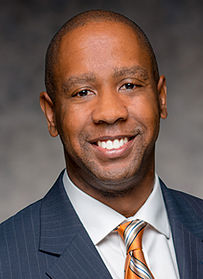
Stephen Clark is a former award-winning journalist who served as a staff writer for the Los Angeles Times and as a politics editor for the Washington, D.C. bureau of FoxNews.com.
Stephen grew up in the suburbs of Philadelphia and now lives in North Jersey with his wife and son. He has a Bachelor’s degree in communications from Arcadia University and a Master’s degree in journalism from Syracuse University.
Connect with Stephen

 About the Book
 About the Author

