#BookReview Kyiv by Graham Hurley @HoZ_Books

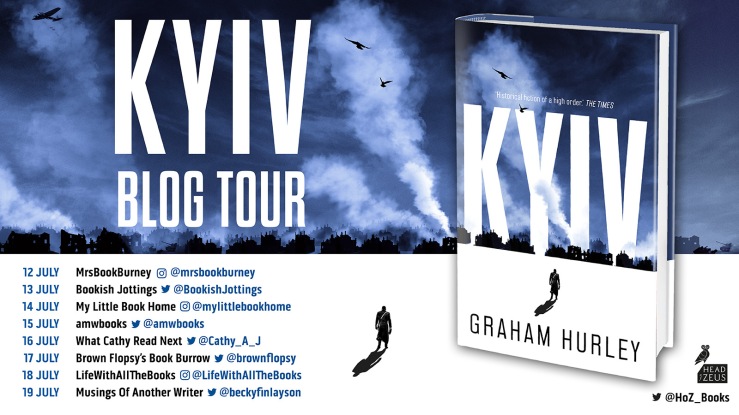
KYIV blog tour banner_V1

Welcome to today’s stop on the blog tour for Kyiv by Graham Hurley, his latest WW2 thriller set against the backdrop of Operation Barbarossa, the German code name for the invasion of Russia. My thanks to Lauren at Head of Zeus for inviting me to take part in the tour and for my digital review copy via NetGalley.
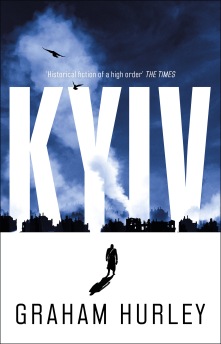

Hurley_KYIV_HBAbout the Book

On Sunday 22nd June 1941 at 03.05, three-and-a-half million Axis troops burst into the Soviet Union along a 1,800-mile front to launch Operation Barbarossa. The southern thrust of the attack was aimed at the Caucuses and the oil fields beyond. Kyiv was the biggest city to stand in their way.

Within six weeks, the city was under siege. Surrounded by Panzers, bombed and shelled day and night, Soviet Commissar Nikita Krushchev was amongst the senior Soviet officials co-ordinating the defence. Amid his cadre of trusted personnel is British defector Bella Menzies, once with MI5, now with the NKVD, the Soviet secret police.

With the fall of the city inevitable, the Soviets plan a bloody war of terror that will extort a higher toll on the city’s inhabitants than the invaders. As the noose tightens, Bella finds herself trapped, hunted by both the Russians and the Germans.

As the local saying has it: life is dangerous – no one survives it.

Format: Hardcover (416 pages) Publisher: Head of Zeus
Publication date: 8th July 2021 Genre: Historical Fiction, Thriller

Find Kyiv on Goodreads

Purchase links
Bookshop.org
Disclosure: If you buy a book via the above link, I may earn a commission from Bookshop.org, whose fees support independent bookshops

Hive | Amazon UK
Links provided for convenience only, not as part of an affiliate programme


My Review

I really enjoyed Last Flight to Stalingrad, the first book in Graham Hurley’s Spoils of War series. Although part of the same series, Kyiv can definitely be read as a standalone.

The setting is the city we today know as Kiev, the capital of Ukraine, and once again the author blends historical fact and fiction into the storyline. For example, Kim Philby, who it’s clear knows how to bowl a googly, makes an early appearance and Guy Burgess turns up soon afterwards. However, the two main characters, Isobel (Bella) Menzies and Tam Moncrieff are fictional.

In alternating chapters, the book charts events over the course of several weeks starting in September 1941. We follow Bella as she travels to Kiev alongside Ilya Glivenko (known as The Pianist) who is overseeing the transport of a mysterious cargo to that city from Britain. And we witness the attempts by Bella’s lover, intelligence officer Tam, to unearth more information about Bella. In the process, he uncovers evidence, in true John le Carré style, about possible moles at the heart of the British intelligence operation.

With the benefit of hindsight, the reader won’t find it hard to identify likely individuals, but for Tam it means following his instincts. There’s a terrific scene that put me in mind of the exploits of Richard Hannay, the hero of John Buchan’s adventure novels, in which Tam attempts to surreptitiously follow a man he suspects may be a traitor through the streets of London. ‘Moncrieff had spent many years stalking deer in the mountains… the subtle arts of staying upwind, of moving carefully from cover to cover, of closing on the prey’. Despite this experience, Tam finds himself outfoxed and, it becomes apparent, in danger.  Indeed, as Bella observes at one point, “The world is always more complicated than you think”.

For Bella, her time in Kyiv is one of new experiences including being hustled from one safe place to another in order to escape the attentions of Stalin’s secret police, and adopting a new identity courtesy of the enigmatic Larissa. Unfortunately, once Russian forces quit the city and are replaced by a German army of occupation, Bella experiences first-hand what the SS are capable of although, to provide balance, the author demonstrates that not every German supported the extreme acts of violence perpetrated by the Nazi regime. There is one scene in particular that, as a woman, I found hard to read and another that is shocking because of its sheer scale. It’s as Yuri, one of Bella’s Ukranian contacts, had warned: “…everything will change. Everything. Here. In the city. Everywhere. We love the Russians going, but we should be careful what we wish for.”

It’s clear the depth of research that has gone into the book, whether that’s recreating the club-like atmosphere of MI5’s Central Registry in St. Albans, the discomfort of an overnight flight aboard a Halifax, or the streets of the besieged Kyiv as German bombs rain down.

In Kyiv, the author has created an unflinching picture of the chaos, confusion and horror of war, and its long legacy – physical, emotional and psychological – for those who live through it.

In three words: Compelling, authentic, powerful

Try something similar: Hitler’s Secret (Tom Wilde #4) by Rory Clements

Follow this blog via Bloglovin


Graham Hurley
Photo credit: Laura Muños

About the Author

Graham Hurley is the author of the acclaimed Faraday and Winter crime novels and an award-winning TV documentary maker. Two of the critically lauded series have been shortlisted for the Theakston’s Old Peculier Award for Best Crime
Novel. The first Wars Within novel, Finisterre, was shortlisted for the Wilbur Smith Adventure Writing Prize.

Connect with Graham
Website | Twitter | Goodreads

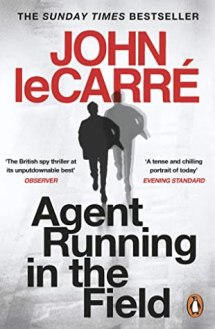
#BookReview Agent Running in the Field by John le Carré

Agent Running in the FieldAbout the Book

Nat, a 47 year-old veteran of Britain’s Secret Intelligence Service, believes his years as an agent runner are over. He is back in London with his wife, the long-suffering Prue. But with the growing threat from Moscow Centre, the office has one more job for him. Nat is to take over The Haven, a defunct substation of London General with a rag-tag band of spies. The only bright light on the team is young Florence, who has her eye on Russia Department and a Ukrainian oligarch with a finger in the Russia pie.

Nat is not only a spy, he is a passionate badminton player. His regular Monday evening opponent is half his age: the introspective and solitary Ed. Ed hates Brexit, hates Trump and hates his job at some soulless media agency. And it is Ed, of all unlikely people, who will take Prue, Florence and Nat himself down the path of political anger that will ensnare them all.

Format: Paperback (384 pages)        Publisher: Penguin
Publication date: 20th August 2020 Genre: Contemporary Fiction, Thriller, Espionage

Find Agent Running in the Field on Goodreads

Purchase links
Bookshop.org
Disclosure: If you buy a book via the above link, I may earn a commission from Bookshop.org, whose fees support independent bookshops

Hive | Amazon UK
Links provided for convenience only, not as part of an affiliate programme


My Review

The author’s decision to include a character with such fervently anti-Brexit and anti-Trump views as Ed Shannon is likely to divide opinion, especially as one suspects they are the barely disguised views of the author himself. But at least Ed’s views are clear and firmly held, or so Nat believes. This is in contrast to the self-serving attitude of many of Nat’s colleagues, who seem more interested in climbing the next rung on the career ladder or securing a lucrative pension. This includes his odious boss, Dominic (the choice of name, replicating that of the Prime Minister’s former chief advisor, is surely no coincidence). Only Nat’s young colleague, Florence, seems driven by her moral convictions.

Although he doesn’t know it at the time, his meeting with Ed will give Nat the opportunity to do what he does best. As he says himself, he’s ‘a field man, not a desk jockey’. Nat definitely isn’t prepared to take a back seat, unless that’s in the rear of a laundry van filled with high-tech surveillence equipment.

Though the book doesn’t quite have the atmosphere of the author’s Cold War thrillers such as The Spy Who Came In From The Cold or A Small Town in Germany (two of my personal favourites), there are scenes which come close. For example, the episode in which Nat travels to Prague to meet former agent, Arkady, or the tense scene in the Control Room as a complex surveillance operation gets underway.

The book contains the “tradecraft” that le Carré fans have come to expect – dead letter drops, encoded messages using one-time pads, abort/go signals for meetings, and invisible writing concealed in seemingly innocuous correspondence. And the job of an agent or handler being what it is, a cover story may be needed even for a game of badminton. However, this being the age of oversight and budgets, the book also demonstrates the often lengthy process of gaining financial and operational approval for surveillance and other covert operations from the various gatekeepers in the Service.

I liked the fact that in this book the author gives the reader a glimpse into Nat’s family life and the strain of having to keep so much about his work secret. For instance, Nat’s struggle to maintain his relationship with his idealistic daughter Steff demonstrates the difficulty of fulfilling the role of caring father whilst at the same time concealing the true nature of his work. Nat’s wife Prue, a human rights lawyer, knows more about Nat’s real role than anyone else but even so still needs to call on her seemingly infinite supply of patience when yet another late night telephone call calls Nat away. And, as Nat acknowledges, when he finds himself into trouble it’s Prue’s resourcefulness that comes to the rescue. ‘At which juncture Prue does what Prue always does, just when I think she has finally run out of patience with me: steps back, takes a second reading of the situation and sets about fixing it.’

The book’s satisfyingly intricate plot encompasses everything from Ukranian oligarchs, double agents and the fallout from Brexit to Anglo-American relations in the age of Donald Trump. There were a few literary tics that grated such as Nat’s repeated use of the term chers collègues when referring to the other employees of the Haven (pretentious, moi?). However, overall I enjoyed my return to the world of espionage conjured up by John le Carré.

Agent Running in the Field is one of the books selected for the current series of the BBC2 programme Between The Covers, the nearest many of us can get to participating in a book club at the moment.

In three words: Assured, suspenseful, detailed

Try something similar: A Legacy of Spies by John le Carre

Follow this blog via Bloglovin


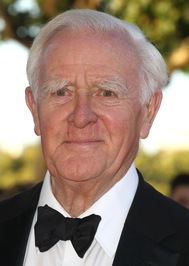
John le CarreAbout the Author

John le Carré was born in 1931. For six decades, he wrote novels that came to define our age. The son of a confidence trickster, he spent his childhood between boarding school and the London underworld. At sixteen he found refuge at the university of Bern, then later at Oxford. A spell of teaching at Eton led him to a short career in British Intelligence (MI5&6).

He published his debut novel, Call for the Dead, in 1961 while still a secret servant. His third novel, The Spy Who Came in from the Cold, secured him a worldwide reputation, which was consolidated by the acclaim for his trilogy Tinker Tailor Soldier Spy, The Honourable Schoolboy and Smiley’s People. At the end of the Cold War, le Carré widened his scope to explore an international landscape including the arms trade and the War on Terror. His memoir, The Pigeon Tunnel, was published in 2016 and the last George Smiley novel, A Legacy of Spies, appeared in 2017.

He died on 12 December 2020. (Bio credit: Publisher author page/Photo credit: Goodreads)