#BookReview End of Summer by Anders de la Motte @ZaffreBooks

End of SummerAbout the Book

You can always go home. But you can never go back…

Summer 1983: Four-year-old Billy chases a rabbit in the fields behind his house. But when his mother goes to call him in, Billy has disappeared. Never to be seen again.

Today: Veronica is a bereavement counsellor. She’s never fully come to turns with her mother’s suicide after her brother Billy’s disappearance. When a young man walks into her group, he looks familiar and talks about the trauma of his friend’s disappearance in 1983. Could Billy still be alive after all this time?

Needing to know the truth, Veronica goes home – to the place where her life started to fall apart. But is she really prepared for the answers that wait for her there?

Format: Paperback (480 pages)        Publisher: Zaffre
Publication date: 19th August 2021 Genre: Crime, Mystery

Find End of Summer on Goodreads

Purchase links
Bookshop.org
Disclosure: If you buy a book via the above link, I may earn a commission from Bookshop.org, whose fees support independent bookshops

Hive | Amazon UK
Links provided for convenience only, not as part of an affiliate programme


My Review

End of Summer was first published in Sweden in 2016 where it was shortlisted for Novel of the Year in the Swedish Crime Writers’ Academy Awards. Now available in English, it’s the second book in the ‘Seasons Quartet’ with Dead of Winter and Deeds of Autumn due out in January and October 2022 respectively, joining Rites of Spring which was published in April 2021, although each book is a standalone story.

End of Summer unfolds in alternating chapters, moving between past and present – the summer of 1983 and the present day. For me this structure really worked as I was constantly wondering what was going to happen next in the other timeline, although later in the book, one of the timelines predominates. Throughout the book the author’s  ability to deliver a teasing last line adds to the suspense, as does the occasional inclusion of a series of letters from an undisclosed correspondent, the significance of which only becomes evident in the closing chapters.

As the mystery of Billy Nilsson’s disappearance remains unresolved, the reader sees played out the disturbing effect it has on the family, the small community of Reftinge in which they live, and the police officer charged with investigating it, Chief of Police Månsson. Unfamiliar with investigating a crime of this magnitude, Månsson feels out of his depth but deeply conscious of his obligation to provide an answer for the Nilsson family. Månsson can’t help imagining what it would be like if it was one of his own sons who had gone missing. At one point he reflects, “I’m doing my best… I’m trying to be a good husband, a good father. A good police officer.” I found him a very empathetic character. The pressure on Månsson only increases when what evidence there is seems to point to a particular individual.

Moving to the present day, Billy’s sister, Vera, has reinvented herself as Veronica. The reasons for this remain tantalizingly unclear for much of the book; all the reader knows is that she seems to have experienced more than one traumatic event in her life. Ironically, Veronica is now working as a bereavement counsellor running grief therapy sessions at which those attending share the impact of their loss. The author shows a deft touch here, one phrase in particular sticking in my mind: the description of the tears shed by a member of the group as being ‘tiny, translucent pearls of grief’. An unxpected arrival at one of Veronica’s sessions triggers disturbing memories and sets in motion a chain of events which increasingly spirals out of control, triggering feelings of panic and paranoia.

When Veronica returns home to the family farm at the urging of her brother Mattias, Reftinge seen through her eyes is rather rundown. However, that feeling is soon replaced by the spine-tingling atmosphere the author creates as Veronica pursues her own investigation into the disappearance of her brother, heedless to the risks she runs in doing so. But how much of what she experiences is imagined, how much is real?

The author lays down plenty of false trails that certainly had me foxed. I developed several theories but the answer to the question ‘Where is Billy?’ when it is finally revealed definitely wrong-footed me. The solution was both more complex and more heartrending than anything I could have come up with.

End of Summer is a compelling mystery but also an absorbing and insightful picture of a family coping with the disappearance of a child: the unanswered questions, the dashed hopes, and the sense of absence. I found it absolutely gripping from start to finish and it’s a book I definitely won’t forget in a hurry.  I must also commend the translator, Neil Smith. If I hadn’t known, I certainly wouldn’t have guessed the book was originally written in Swedish.

My thanks to Clare Kelly at Zaffre for my proof copy of End of Summer. I shall certainly be looking out for future books in the series.

In three words: Gripping, moving, masterful

Try something similar: The Missing Girl by Jenny Quintana

Follow this blog via Bloglovin


Anders de la MotteAbout the Author

Anders de la Motte is the bestselling author of the ‘Seasons Quartet’; the first three of which – End of Summer, Deeds of Autumn and Dead of Winter – have all been number one bestsellers in Sweden and have been shortlisted for the Swedish Academy of Crime Writers’ Award for Best Crime Novel of the Year. Anders, a former police officer, has already won a Swedish Academy of Crime Award for his debut, Game, in 2010 and his second standalone, The Silenced, in 2015.
To date, the first three books in the ‘Seasons Quartet’ have sold over half a million copies, with the fourth, Rites of Spring, publishing in Sweden in 2020. Set in Southern Sweden, all four books can be read as standalone novels.
Connect with Anders

#BookReview Kyiv by Graham Hurley @HoZ_Books

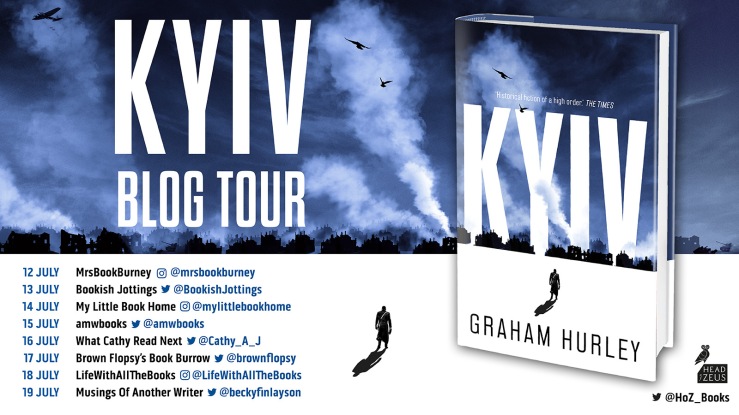
KYIV blog tour banner_V1

Welcome to today’s stop on the blog tour for Kyiv by Graham Hurley, his latest WW2 thriller set against the backdrop of Operation Barbarossa, the German code name for the invasion of Russia. My thanks to Lauren at Head of Zeus for inviting me to take part in the tour and for my digital review copy via NetGalley.


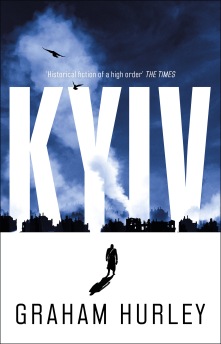
Hurley_KYIV_HBAbout the Book

On Sunday 22nd June 1941 at 03.05, three-and-a-half million Axis troops burst into the Soviet Union along a 1,800-mile front to launch Operation Barbarossa. The southern thrust of the attack was aimed at the Caucuses and the oil fields beyond. Kyiv was the biggest city to stand in their way.

Within six weeks, the city was under siege. Surrounded by Panzers, bombed and shelled day and night, Soviet Commissar Nikita Krushchev was amongst the senior Soviet officials co-ordinating the defence. Amid his cadre of trusted personnel is British defector Bella Menzies, once with MI5, now with the NKVD, the Soviet secret police.

With the fall of the city inevitable, the Soviets plan a bloody war of terror that will extort a higher toll on the city’s inhabitants than the invaders. As the noose tightens, Bella finds herself trapped, hunted by both the Russians and the Germans.

As the local saying has it: life is dangerous – no one survives it.

Format: Hardcover (416 pages) Publisher: Head of Zeus
Publication date: 8th July 2021 Genre: Historical Fiction, Thriller

Find Kyiv on Goodreads

Purchase links
Bookshop.org
Disclosure: If you buy a book via the above link, I may earn a commission from Bookshop.org, whose fees support independent bookshops

Hive | Amazon UK
Links provided for convenience only, not as part of an affiliate programme


My Review

I really enjoyed Last Flight to Stalingrad, the first book in Graham Hurley’s Spoils of War series. Although part of the same series, Kyiv can definitely be read as a standalone.

The setting is the city we today know as Kiev, the capital of Ukraine, and once again the author blends historical fact and fiction into the storyline. For example, Kim Philby, who it’s clear knows how to bowl a googly, makes an early appearance and Guy Burgess turns up soon afterwards. However, the two main characters, Isobel (Bella) Menzies and Tam Moncrieff are fictional.

In alternating chapters, the book charts events over the course of several weeks starting in September 1941. We follow Bella as she travels to Kiev alongside Ilya Glivenko (known as The Pianist) who is overseeing the transport of a mysterious cargo to that city from Britain. And we witness the attempts by Bella’s lover, intelligence officer Tam, to unearth more information about Bella. In the process, he uncovers evidence, in true John le Carré style, about possible moles at the heart of the British intelligence operation.

With the benefit of hindsight, the reader won’t find it hard to identify likely individuals, but for Tam it means following his instincts. There’s a terrific scene that put me in mind of the exploits of Richard Hannay, the hero of John Buchan’s adventure novels, in which Tam attempts to surreptitiously follow a man he suspects may be a traitor through the streets of London. ‘Moncrieff had spent many years stalking deer in the mountains… the subtle arts of staying upwind, of moving carefully from cover to cover, of closing on the prey’. Despite this experience, Tam finds himself outfoxed and, it becomes apparent, in danger.  Indeed, as Bella observes at one point, “The world is always more complicated than you think”.

For Bella, her time in Kyiv is one of new experiences including being hustled from one safe place to another in order to escape the attentions of Stalin’s secret police, and adopting a new identity courtesy of the enigmatic Larissa. Unfortunately, once Russian forces quit the city and are replaced by a German army of occupation, Bella experiences first-hand what the SS are capable of although, to provide balance, the author demonstrates that not every German supported the extreme acts of violence perpetrated by the Nazi regime. There is one scene in particular that, as a woman, I found hard to read and another that is shocking because of its sheer scale. It’s as Yuri, one of Bella’s Ukranian contacts, had warned: “…everything will change. Everything. Here. In the city. Everywhere. We love the Russians going, but we should be careful what we wish for.”

It’s clear the depth of research that has gone into the book, whether that’s recreating the club-like atmosphere of MI5’s Central Registry in St. Albans, the discomfort of an overnight flight aboard a Halifax, or the streets of the besieged Kyiv as German bombs rain down.

In Kyiv, the author has created an unflinching picture of the chaos, confusion and horror of war, and its long legacy – physical, emotional and psychological – for those who live through it.

In three words: Compelling, authentic, powerful

Try something similar: Hitler’s Secret (Tom Wilde #4) by Rory Clements

Follow this blog via Bloglovin


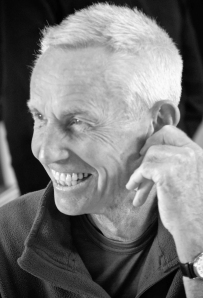
Graham Hurley
Photo credit: Laura Muños

About the Author

Graham Hurley is the author of the acclaimed Faraday and Winter crime novels and an award-winning TV documentary maker. Two of the critically lauded series have been shortlisted for the Theakston’s Old Peculier Award for Best Crime
Novel. The first Wars Within novel, Finisterre, was shortlisted for the Wilbur Smith Adventure Writing Prize.

Connect with Graham
Website | Twitter | Goodreads