
About the Book
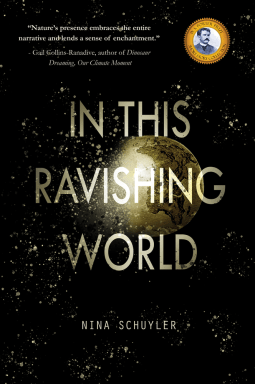
In This Ravishing World is a sweeping, impassioned short story collection, ringing out with joy, despair, and hope for the natural world. Nine connected stories unfold, bringing together an unforgettable cast of dreamers, escapists, activists, and artists, creating a kaleidoscopic view of the climate crisis.
An older woman who has spent her entire life fighting for the planet sinks into despair. A young boy is determined to bring the natural world to his bleak urban reality. A scientist working to solve the plastic problem grapples with whether to have a child. A ballet dancer endeavors to inhabit the consciousness of a rat.
In This Ravishing World is a full-throated chorus— with Nature joining in— marveling at the exquisite beauty of our world, and pleading, raging, and ultimately urging all of its inhabitants toward activism and resistance.
Format: ebook (304 pages) Publisher: Regal House Publishing
Publication date: 2nd July 2024 Genre: Short Stories, Contemporary Fiction
Find In This Ravishing World on Goodreads
Pre-order/purchase In This Ravishing World from Bookshop.org
My Review
The opening story, ‘On The Brink’, introduces us to Eleanor, who has spent her life trying to convince corporations of the economic benefits of sustainability but who now despairs that her efforts have come to nothing. ‘Gloom has crowded into her being and made itself at home.’ When she learns she is to receive an influential environmental award, her instinct is to turn it down because she feels her efforts have come to nothing, that any achievements have been short-lived. ‘The work she did in Mexico, negotiating with DeLittle Lumber to slow the cutting of old-growth trees (stalled for a while, then it went back to its previous ways of clear-cutting); endeless meetings with Connell Metal to stop dumping toxins in the Tijuana River (two years of cleaner water, now one of the most polluted rivers in Mexico).’ At the urging of her daughter Ava, Eleanor attends the ceremony but finds a way to make a stand. Meanwhile Ava is facing her own dilemma, trying to balance her desire to have a child with the knowledge that in doing so she will be placing more pressure on the world’s resources.
In ‘The Object of Dancing’, Eleanor’s son Ed, a ballet dancer, grapples with inhabiting the character of a rat for an avant-garde dance piece demonstrating how humans see themselves as distinct from animals. And in ‘Paradise’, successful businessman Hugh is drawn to the survivalist movement as he becomes increasingly desperate to protect his family from what he sees as the impending threat of civil unrest as people fight over increasingly scare resources.
I liked the fact that characters from one story often turn up in others. For example in ‘Free’, Lincoln encounters Eleanor on one of his nightly forays to scavenge objects no-one else wants and recycle them. And in the final few stories, many of the characters become involved in one way or another in an environmental protest on Golden Gate Bridge: as protesters, as people affected by the protest or as people who unexpectedly magnify its effect. Eleanor’s presence there, enthused by the creativity of a class of school children – ‘the boundless energy, the imagination for what can be, what must be’ – provides an element of optimism for the future.
A striking feature of the book is the prescence of the ‘voice’ of Nature who often comments on the actions of the characters. Always in touch with the rhythms of the planet, Nature recalls the appearance of the first signs of life on the Earth, marvels at the beauty of the world and observes with dismay the degradation of the planet caused by human activity. ‘I’ve been trying to speak to you for years, and despite wildfires, droughts, and floods, I haven’t gotten through.’
In This Ravishing World is a collection of stories that makes you think about all aspects of mankind’s relationship with the planet. It challenges you to think about your own impact on the environment: Am I doing the right thing? Am I making a difference? How do I balance my personal aspirations and the needs of my family with the health of the planet?
I received a digital review copy courtesy of SparkPoint Studio and Regal House Publishing.
In three words: Thought-provoking, insightful, compelling
Try something similar: Villager by Tom Cox
About the Author
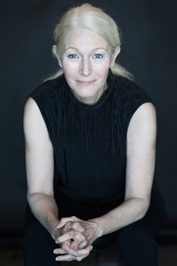
Nina Schuyler is the author of Afterword, winner of the PenCraft Seasonal Book Award for Literary-Science Fiction; a Foreword INDIE Finalist in the categories of Science Fiction and Literary, and a Top 100 Notable Book Unshelved Competition; The Translator, which was a finalist for the William Saroyan International Prize for Writing, and the winner of the Next Generation Indie Book Award, General Fiction; and The Painting, a finalist for the Northern California Book Award. Her nonfiction books, How To Write Stunning Sentences and Stunning Sentences: A Creative Writing Journal are bestsellers.
Connect with Nina
Website | X | Facebook | Instagram


 What Cathy Read Next...