
Book Review: A Tapestry of Tears by Gita V. Reddy

Fascinating stories about Indian culture and society

ATapestryofTearsAbout the Book

Description (courtesy of Goodreads): Set in the early nineteenth century, A Tapestry of Tears is about female infanticide, and the unmaking of tradition. If a woman gives birth to a female child, she must feed her the noxious sap of the akk plant. That is the tradition, parampara. Veeranwali rebels and fights to save her offspring.  The other stories span a spectrum of emotions and also bring to life the varied culture and social spectrum of India. Woven into this collection is the past and the present, despair and hope, and the triumph of the human spirit.

Book Facts

  • Format: ebook
  • No. of pages: 204
  • Publication date: 2nd November 2016
  • Genre: Fiction, Short Stories

To purchase A Tapestry of Tears from Amazon.co.uk, click here (link provided for convenience, not as part of any affiliate programme)

Find A Tapestry of Tears on Goodreads 


My Review

Subtitled ‘Short Stories from India’, A Tapestry of Tears comprises twelve short stories, of varying lengths, which explore different aspects of Indian culture, in particular family relationships.  As is often the case with short story collections, some stories are more compelling than others.

The standout story is the one that gives the collection its title, A Tapestry of Tears. This explores the dreadful tradition or parampara prevalent amongst some families in early 19th century India of killing (or to use the euphemism, ‘putting to sleep’) girl infants, using the sap of the akk plant. To make it even more terrible, a mother was expected to administer the poison herself. Known as kurimaar, this awful practice stemmed from a belief that a wife was for begetting sons.

Daughters weakened the clan. Having a daughter meant bowing one’s head to whoever would wed her. It also meant dowry. Daughters were of no use. You fed them and clothed them, and they went away to serve in another’s house.’

Through the story of one wife and mother, Veeranwali, we see the impact of the custom on the women forced to participate in it.   Their only solace is to record their lost daughters in the form of embroidery on a traditional bagh phulkari chadar, a cotton shawl embroidered with silk. Gradually we see the power of women coming together in mutual support, quiet resistance and solidarity to overturn the practice of female infanticide. In time, the creation of the bagh becomes a celebration not a remembrance of their cherished daughters.  You can see a few examples of phulkari here .

Another story I liked was the deliciously dark ‘The Quizzing Glass’ in which a man who arrogantly believes he has learned to read the minds of others from their gestures and body language – including that of his poor wife – finds it less comfortable when the spotlight is turned on his own character.

I would also single out ‘The Prisoner’, the heart-warming tale of Mira, rejected by her mother because of her disability. Mira has learned to shun social contact despite being bright but finds that not all of the world views her in the same malevolent fashion as her mother.

I really enjoyed reading this collection of stories. The author has a clear, readable style and I liked the fact that explanatory information was provided for some words that might be unfamiliar to readers outside India. Although the stories are situated in Indian culture and society, they address some themes that are universal: family, love and death.

I received a review copy courtesy of the author in return for an honest review.

Follow my blog with Bloglovin

In three words: Moving, thoughtful, tradition

Try something similar…Stay With Me by Ayobami Adebayo


GitaVReddyAbout the Author

Gita V.Reddy is a writer of fiction for middle-graders and adults. She enjoys thinking up tales of different genres. She has written mysteries, adventure, fantasy, science fiction, and even an animal tale for children. She wrote and illustrated her first picture book for kids in August, 2015. She plans to write a few more because the experience was very satisfying. Ms Reddy was born in India, is a post graduate in Mathematics, worked in a bank for twenty-six years, is married to a physics professor, has a son doing research in neuro-electronics, and loves literature. Yes, her life is as mixed up as the multiple genres she writes.  She enjoys painting and spending time with her family, and LOVES walking in the rain. She also writes under the name Heera Datta.

Connect with Gita

Website http://www.gitavreddy.com/
Twitter https://twitter.com/GitaVReddy
Facebook https://www.facebook.com/Gita-Reddy-943528985673288/
Goodreads https://www.goodreads.com/author/show/7023197.Gita_V_Reddy

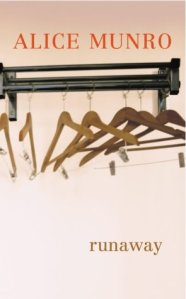
Book Review: Runaway by Alice Munro

runaway Well-crafted short stories about love, guilt and betrayal
About the Book

Synopsis (courtesy of Goodreads): Alice Munro’s bestselling and rapturously acclaimed Runaway is a book of extraordinary stories about love and its infinite betrayals and surprises, from the title story about a young woman who, though she thinks she wants to, is incapable of leaving her husband, to three stories about a woman named Juliet and the emotions that complicate the lustre of her intimate relationships. In Munro’s hands, the people she writes about – women of all ages and circumstances and their friends, lovers, parents, and children – become as vivid as our own neighbours. It is her miraculous gift to make these stories as real and unforgettable as our own.


Book Facts

  • Format: Hardback
  • Pages: 335
  • Publication date: 2005
  • Genre: Literary, Short Stories

My Review (3.5 out of 5)

Runaway is a collection of short stories published in 2005. My review focuses on three linked stories from the collection – ‘Chance’, ‘Soon’ and ‘Silence’ – which were the inspiration for the 2016 film Julieta, which I will be reviewing separately as part of my From Page to Screen Reading challenge. Spoiler alert: Since the stories follow on from one another, it is impossible to summarise them without giving away key events from earlier stories.

Chance’ introduces us to Juliet, a rather introverted young woman, who is travelling to visit a married man, Eric Porteous, she met in a chance encounter on a train six months earlier. Eric is a fisherman who is caring for his wife paralysed as a result of a car accident. Juliet recalls the circumstances of their meeting following a tragic event which occurred on the train. At the time, her response to Eric’s advances had been confused but now, on the basis of a letter he sent her, she believes there is a chance of something more. Arriving at his house, she finds his wife has died and Eric is staying with a female friend, Christa. Against the wishes of his housekeeper, Ailo, Juliet decides to stay until he returns.

Soon’ is set several years later when Juliet has given birth to a daughter, Penelope. On this occasion she is travelling to her parents’ home. Sara, her mother, is in poor health due to heart trouble. Juliet’s father, Sam, an ex-teacher, is now running a market garden business. Juliet is perturbed to find a third person in the household – Irene – employed to help around the house and garden.   Juliet feels discomfited by Irene, who she feels treats her as if she is an ‘intruder’.   Juliet becomes unsettled by her father’s admiration for Irene and Irene’s influence within the household, wondering about the true nature of their relationship. Sara’s physical frailty makes her dependent on Sam and Irene, unwilling or unable to influence whatever is going on: ‘Irene is – he’s careful of her. She’s very valuable to us, Irene.’   Sara’s mental frailty is clear as well: “When it gets really bad for me – when it gets so bad I – you know what I think then? I think, all right. I think – Soon. Soon I’ll see Juliet.’ Heartbreakingly, Juliet turns away without reply and it is only later that she regrets her failure to respond.

Silence’ moves us on almost twenty years. Juliet is again travelling, this time to see her daughter, Penelope, who has been staying on an island retreat for six months. However, when she gets there, Juliet is told her daughter has left and the retreat leader is either unable or unwilling to reveal her whereabouts.   Juliet reflects on what might have caused this breach. She recalls the circumstances of Penelope’s father’s death, which took place while Penelope was at a summer camp. Juliet never revealed the full facts to her daughter – their argument and its causes and his subsequent death in a storm.   Aside from a few birthday cards sent (she presumes by Penelope) on her daughter’s birthday, Juliet hears nothing further from her. However, one day many years later, Juliet runs into one of Penelope’s childhood friends and learns from her that Penelope is living in northern Canada with her five children.

‘She keeps on hoping for a word from Penelope, but not in a strenuous way. She hopes as people who know better hope for underserved blessings, spontaneous remissions, things of that sort.’

Alice Munro is undoubtedly a talented writer and I admired the way these stories were crafted without actually loving them. They have a rather bleak, depressing quality. I also found Juliet a difficult character to empathise or engage with. So much of what happened seemed to stem from her failure to understand and respond to the needs of those around her, such as her daughter, and her guilt at this inaction never provoked her to remedy her omissions.

To buy a copy of Runaway from Amazon, click here

In three words: Insightful, poignant, introspective

Try something similar…In A German Pension: 13 Stories by Katherine Mansfield


munroAbout the Author

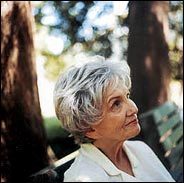
Alice Munro is a Canadian short-story writer who is widely considered one of the world’s premier fiction writers. Munro is a three-time winner of Canada’s Governor General’s Award for fiction. Her stories focus on human relationships looked at through the lens of daily life. She has thus been referred to as “the Canadian Chekhov”. She is the winner of the 2013 Nobel Prize in Literature.