

My Week in Books – 24th October 2021

MyWeekinBooks

On What Cathy Read Next last week

Blog posts

Monday – I shared my review of the atmospheric historical novel, The Mercies by Kiran Millwood Hargrave.

Tuesday – I published my review of the charming illustrated book, The Writer’s Cats by Muriel Barbery.

Wednesday – WWW Wednesday is the opportunity to share what I’ve just read, what I’m currently reading and what I plan to read next… and to have a good nose around what others are reading.

Thursday – I shared my publication day review of Oh William! by Eizabeth Strout. 

Friday – I published my review of historical mystery Black Drop by Leonora Nattrass.

Saturday – I revisited my review of The Gap in the Curtain by John Buchan to mark the forthcoming publication of a new edition of the book by Handheld Press. 

As always, thanks to everyone who has liked, commented on or shared my blog posts on social media.


New arrivals

A quieter week, thank goodness, after last week’s frenzy of activity. 

The Lost Girl in ParisThe Lost Girl in Paris by Jina Bacarr (eARC, Boldwood)

1940, Nazi-occupied Paris. A powerful story of love, tragedy and incredible courage, about one woman whose life is ripped apart by war and risks everything to seek justice. Brand new from the bestselling author of The Resistance Girl.

As Nazis patrol the streets of the French capital, Tiena is alone, desperate and on the run. After defending herself against the force of an officer, she must find a new identity in order to survive. An accidental meeting with members of the Resistance gives her a lifeline, as she is offered the chance to reinvent herself as perfumer Angéline De Cadieux. However Angéline will never forget what happened to her, and will do everything she can to seek revenge. But vengeance can be a dangerous game, and Angeline can only hide her true identity for so long before her past catches up with her, with some devastating consequences…

Paris, 2003. When the opportunity arises for aspiring journalist Emma Keane to interview world renowned perfumer Madame De Cadieux about her life during World War Two, she is determined to take it. There are secrets from her own family history that she hopes Angéline may be able to help unlock. But nothing can prepare Emma for Angéline’s story, and one thing is for certain – it will change her own life forever…
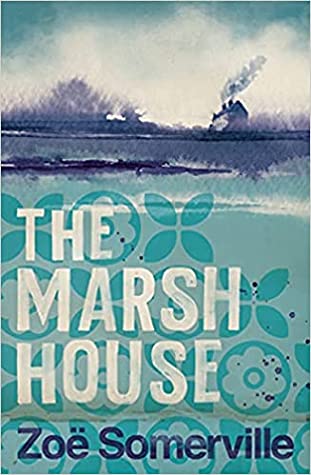
The Marsh HouseThe Marsh House by Zoë Somerville (eARC, Apollo via NetGalley)

Part ghost story, part novel of suspense The Marsh House is the haunting second novel from the author of The Night of the Flood where two women, separated by decades, are drawn together by one, mysterious house on the North Norfolk coast.

December, 1962. Desperate to salvage something from a disastrous year, Malorie rents a remote house on the Norfolk coast for Christmas. But once there, the strained silence between her and her daughter, Franny, feels louder than ever. Digging for decorations in the attic, she comes across the notebooks of the teenaged Rosemary, who lived in the house years before. Though she knows she needs to focus on the present, Malorie finds herself inexorably drawn into the past…

July, 1930. Rosemary lives in the Marsh House with her austere father, surrounded by unspoken truths and rumours. So when the glamorous Lafferty family move to the village, she succumbs easily to their charm. Dazzled by the beautiful Hilda and her dashing brother, Franklin, Rosemary fails to see the danger that lurks beneath their bright façades…

As Malorie reads on, the boundaries between past and present begin to blur, in this haunting novel about family, obligation and deeply buried secrets.


On What Cathy Read Next this week

Currently reading

Planned posts

  • Blog Tour/Book Review: Liberty Terrace by Madeleine D’Arcy
  • Blog Tour/Book Review: Born Of No Woman by Franck Bouysse
  • Blog Tour/Book Review: Sergeant Salinger by Jerome Charyn
  • Book Review: The Vanishing Half by Brit Bennett
  • NetGalley November Reading List 

#BookReview The Gap in the Curtain by John Buchan @KateHandheld

20200716_152736-1

I first shared my review of The Gap in the Curtain by John Buchan as part of my Buchan of the Month project in July 2020. Although I own a first edition of the book (unfortunately without a dustjacket) I couldn’t resist pre-ordering a copy of a new edition to be published by Handheld Press on 9th November 2021, especially since it has an introduction by Kate Macdonald, who has published widely on the life and works of John Buchan.

To pre-order or purchase a copy of The Gap in the Curtain, visit the Handheld Press website, You can read an updated version of my original review below.


The Gap in the CurtainAbout the Book

John Buchan (1875-1940), author of over 100 books including The Thirty-Nine Steps, was a stealth writer of supernatural and Weird fiction. His 1932 novel The Gap in the Curtain was his last full-length work devoted to exploring a supernatural theme: if you were able to see one year into the future, what would you do with that foreknowledge? And what would it do to you?

The novel tells the story of five country-house guests who are trained by the ailing Professor Moe, an Einsteinian mathematician who has devised a way of seeing into the future.  These five guests each gain one piece of knowledge from the experiment, and have to decide how to act on it. The episodes vary from high drama to social comedy, and use Buchan’s skill in writing political intrigue and adventure abroad. He uses the theme of precognition to show how Fate may not be escaped, no matter how we ingeniously we attempt to wriggle past it.

Format: Paperback (248 pages)                       Publisher: Handheld Press
Publication date: 9th November 2021 [1932] Genre: Fiction


My Review

Written between March 1930 and February 1931, The Gap in the Curtain was published in the UK by Hodder & Stoughton on 7th July 1932 and in the US by The Riverside Press on 27th July 1932. The book is dedicated to his friends, Sybil and Lambert Middleton.

The Gap in the Curtain concerns the experiences of a group of guests at a country house party, including lawyer Sir Edward Leithen, who take part in an experiment conducted by the enigmatic Professor Moe. After a period of ‘training’ involving mental exercises and a special diet, they are each given a glimpse of the future by way of an item in The Times newspaper dated a year hence. Being a logical and down-to-earth fellow, Leithen sees nothing but a blank page. However, the other five who take part are profoundly affected by what they see. The different ways in which they react to the foreknowledge they have been granted over the next twelve months are recounted by Leithen.

For two of the guests, David Mayot and Arnold Tavanger, the insights relate to the worlds of politics and finance. The attempts by Mayot (described by Leithen as having ‘not a very generous allowance of brains’ and ‘as much magnetism as a pillar-box’) to second-guess how the political situation he saw might come about involves a good deal of tactical and frankly not very principled behind the scenes manoeuvring. The satirical nature of Buchan’s exposition of the positions of different political factions may have been more obvious to readers of the day.

What keen investor Arnold Tavanger sees in The Times leads him to embark on a journey across continents to secure what he believes will bring him huge financial rewards. His epic trip across Africa sees him take to the air with a pilot ‘who was one-fourth scientist and three-fourths adventurer, and who did not value his on or anybody else’s life at two pins’. They encounter thunderstorms and at one point end up with two lizards and a snake in the fuselage! In the end though, Tavanger’s experiences lead him to conclude ‘Our ignorance of the future has been widely ordained of Heaven. For unless man were to be like God and know everything, it is better that he should know nothing. If he knows one fact only, instead of profiting by it he will assuredly land in the soup’.

Reggie Daker’s insight into what he will be undertaking a year hence takes him completely by surprise, being the last thing on earth he would consider doing. However, over the course of the next few months, the reader witnesses the influence of the attractive Verona Cortal and her family on the rather compliant by nature Reggie. Says Leithen, ‘He had the air of a smallish rabbit caught in a largish trap. But it was a stoical rabbit, for to me he made no complaint’. Eventually, fate lends a hand to provide Reggie with a means of escape.

The final two guests – Robert Goodeve and Captain Charles Ottery – both see articles in The Times concerning themselves that are much more profound in nature. It is in their two stories that Buchan really addresses the notions of predestination and free will. For one of the characters, the fate he is presented with turns him into a haunted man. It confirms a subconscious belief he has always held that his is a family whose lives are destined to end tragically, that ‘They have spirit without fortitude’. For the other, it provokes a courageous response to the hand dealt him, helped by the love of a good woman. “What concerned him was how to pass the next eight months without disgracing his manhood”. It seems clear which of the two responses Buchan admires most. Not only because of the way the last story ends but also because it contains a reference to one of Buchan’s most cherished books, The Pilgrim’s Progress by John Bunyan. “He had come out of the Valley of the Shadow to the Delectable Mountains.”

The book received some warm reviews upon publication, notably from J.B. Priestley who praised Buchan’s ‘gallant versatility’ and recommended it as a book that could be read ‘with excitement and profit’. Janet Adam Smith, Buchan’s first biographer, reports that The Gap in the Curtain had sold 78,000 copies up to 1960.

David Daniell, author of The Interpreter’s House: A Critical Assessment of John Buchan (Nelson, 1975), describes The Gap in the Curtain as a ‘satirical’ book in which Buchan takes aim at the world of international finance and politics. Ursula Buchan, John Buchan’s granddaughter and author of Beyond The Thirty-Nine Steps: A Life of John Buchan (Bloomsbury, 2019), suggests the ‘brilliant, lengthy and disillusioned description of British politics at that time’ reflects Buchan’s own experiences as a Member of Parliament. Andrew Lownie, author of John Buchan: The Presbyterian Cavalier (Constable, 1995), feels that, although the idea of being able to look into the future was not new, Buchan was able to give it a new spin. He also finds it significant that the action of the book takes place at Easter citing its exploration of the redemptive power of love, the nature of Free Will and the concept of predestination.

In her fascinating introduction to the new edition, Kate Macdonald comments that Buchan used the supernatural ‘not to explore other realms, but to agreeably frighten his readers, in highly-skilled entertainment’.

In three words: Inventive, entertaining, thoughtful

Try something similar: The Watcher by the Threshold by John Buchan

Follow this blog via Bloglovin


John BuchanAbout the Author

John Buchan (1875 – 1940) was an author, poet, lawyer, publisher, journalist, war correspondent, Member of Parliament, University Chancellor, keen angler and family man.  He was ennobled and, as Lord Tweedsmuir, became Governor-General of Canada.  In this role, he signed Canada’s entry into the Second World War.   Nowadays he is probably best known – maybe only known – as the author of The Thirty-Nine Steps.  However, in his lifetime he published over 100 books: fiction, poetry, short stories, biographies, memoirs and history.

You can find out more about John Buchan, his life and literary output by visiting The John Buchan Society website.