#BookReview The Manningtree Witches by A. K. Blakemore

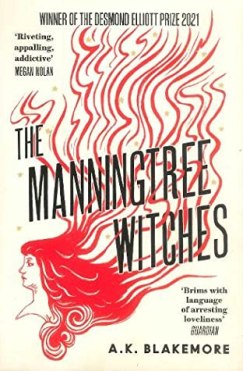
The Manningtree WitchesAbout the Book

England, 1643. Parliament is battling the King; the war between the Roundheads and the Cavaliers rages. Puritanical fervour has gripped the nation, and the hot terror of damnation burns black in every shadow.

In Manningtree, depleted of men since the wars began, the women are left to their own devices. At the margins of this diminished community are those who are barely tolerated by the affluent villagers – the old, the poor, the unmarried, the sharp-tongued. Rebecca West, daughter of the formidable Beldam West, fatherless and husbandless, chafes against the drudgery of her days, livened only by her infatuation with the clerk John Edes. But then newcomer Matthew Hopkins, a mysterious, pious figure dressed from head to toe in black, takes over The Thorn Inn and begins to ask questions about the women of the margins. When a child falls ill with a fever and starts to rave about covens and pacts, the questions take on a bladed edge.

The Manningtree Witches plunges its readers into the fever and menace of the English witch trials, where suspicion, mistrust and betrayal ran amok as the power of men went unchecked and the integrity of women went undefended. It is a visceral, thrilling book that announces a bold new talent.

Format: Paperback (295 pages)          Publisher: Granta
Publication date: 28th October 2021 Genre: Historical Fiction

Find The Manningtree Witches on Goodreads

Purchase links
Bookshop.org
Disclosure: If you buy a book via the above link, I may earn a commission from Bookshop.org, whose fees support independent bookshops

Hive | Amazon UK
Links provided for convenience only, not as part of an affiliate programme


My Review

Based on real events, The Manningtree Witches is a vivid account of the persecution of a group of women by the so-called Witchfinder General, Matthew Hopkins. Told partly from the point of view of one of the young women of the village, Rebecca West, the narrative is interspersed with transcripts of witness testimony and descriptions of Hopkins’ brutal interrogation of the women accused of witchcraft.

Driven by a combination of perverted religious zeal, misogyny and perhaps his own repressed sexual desire, Hopkins plays on the prejudices of the inhabitants of Manningtree, whipping them up into a frenzy of denunciation based on barely credible evidence. It’s notable that the women targeted are largely widows or single women, women regarded as ‘different’ or not conforming to societal norms. At one point, Hopkins observes, ‘When women think alone, they think evil, it is said.’  In a period in which the nation is riven by civil war – ‘the world turned upside down’ – food is scarce and fields lie untilled, it’s perhaps not surprising that people look for someone to blame for otherwise random events. ‘All can agree – things haven’t been right for a while. Our conjoint misfortune has been too rigorous, runs the tattle.’

The excerpt above gives a clue to one of the striking features of the book, the author’s imaginative and distinctive prose which certainly introduced me to words that had me reaching for the dictionary, such as ‘tumesce’ and ‘ceremental’. The author’s love of language can be seen in phrases such as ‘the sanguine wash of the sky’ or ‘the lacteal scum of her eyes’.

The women’s cruel treatment during their interrogation and in the months leading up to the trial is disturbing to read. One can’t help feeling there is a sexual element to the intrusive nature of the examinations they are forced to undergo. ‘Hopkins is excited. Excited in the way men get when they read about wars or Turkish dancing girls.’

The fate of the women accused along with Rebecca is a matter of historical record but the author takes advantage of the fact that nothing is known about Rebecca after the trial in 1645 to imagine what might have become of her.

The story of 17th century witch trials is one I’m familiar with from reading similar books but The Manningtree Witches manages to add a degree of originality to its depiction of events.

In three words: Authentic, dramatic, vibrant

Try something similarWiddershins by Helen Steadman

Follow this blog via Bloglovin


A K BlakemoreAbout the Author

A. K. Blakemore is the author of two full-length collections of poetry: Humbert Summer (Eyewear, 2015) and Fondue (Offord Road Books, 2018), which was awarded the 2019 Ledbury Forte Prize for Best Second Collection. She has also translated the work of Sichuanese poet Yu Yoyo (My Tenantless Body, Poetry Translation Centre, 2019). Her poetry and prose writing has been widely published and anthologised, appearing in the The London Review of BooksPoetryPoetry Review and The White Review, among others.

Connect with A. K. Blakemore
Twitter | Instagram

My Week in Books – 30th January 2022

MyWeekinBooksOn What Cathy Read Next last week

Monday – I published my sign-up post for the When Are You Reading? Challenge 2022 .

Tuesday – This week’s Top Ten Tuesday topic was New Authors I Discovered in 2021. I also shared my review of The Prophets by Robert Jones, Jr.

Wednesday –  WWW Wednesday is my weekly opportunity to share what I’ve just read, what I’m currently reading and what I plan to read next… and to take a peek at what others are reading. 

Thursday – I published my review of Storytellers by Bjørn Larssen as part of the blog tour.

Friday – I shared my review of Late City by Robert Olen Butler as part of the blog tour. 

Saturday – I published my review of historical thriller The Man in the Bunker by Rory Clements.

As always, thanks to everyone who has liked, commented on or shared my blog posts on social media.


New arrivals

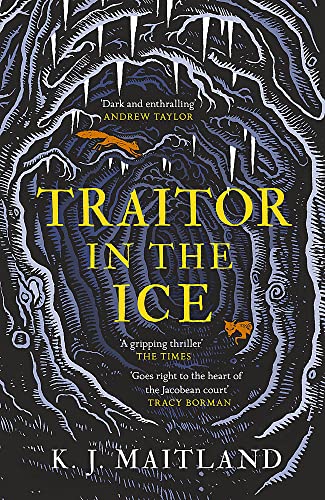
Traitor in the IceTraitor in the Ice by K. J. Maitland (eARC, Headline via NetGalley)

Winter, 1607. A man is struck down in the grounds of Battle Abbey, Sussex. Before dawn breaks, he is dead.

Home to the Montagues, Battle has caught the paranoid eye of King James. The Catholic household is rumoured to shelter those loyal to the Pope, disguising them as servants within the abbey walls. And the last man sent to expose them was silenced before his report could reach London.

Daniel Pursglove is summoned to infiltrate Battle and find proof of treachery. He soon discovers that nearly everyone at the abbey has something to hide – for deeds far more dangerous than religious dissent. But one lone figure he senses only in the shadows, carefully concealed from the world. Could the notorious traitor Spero Pettingar finally be close at hand?

As more bodies are unearthed, Daniel determines to catch the culprit. But how do you unmask a killer when nobody is who they seem? 

Islands of AbandonmentIslands of Abandonment: Life in the Post-Human Landscape by Cal Flyn (William Collins)  

This is a book about abandoned places: ghost towns and exclusion zones, no man’s lands and fortress islands – and what happens when nature is allowed to reclaim its place.

In Chernobyl, following the nuclear disaster, only a handful of people returned to their dangerously irradiated homes. On an uninhabited Scottish island, feral cattle live entirely wild. In Detroit, once America’s fourth-largest city, entire streets of houses are falling in on themselves, looters slipping through otherwise silent neighbourhoods.

This book explores the extraordinary places where humans no longer live – or survive in tiny, precarious numbers – to give us a possible glimpse of what happens when mankind’s impact on nature is forced to stop. From Tanzanian mountains to the volcanic Caribbean, the forbidden areas of France to the mining regions of Scotland, Flyn brings together some of the most desolate, eerie, ravaged and polluted areas in the world – and shows how, against all odds, they offer our best opportunities for environmental recovery.

By turns haunted and hopeful, this luminously written world study is pinned together with profound insight and new ecological discoveries that together map an answer to the big questions: what happens after we’re gone, and how far can our damage to nature be undone?

Final Music of the Night CoverThe Crime Writers’ Association: Music of the Night edited by Martin Edwards (eARC, Flame Tree Press)

Music of the Night is a new anthology of original short stories contributed by Crime Writers’ Association (CWA) members and edited by Martin Edwards, with music as the connecting theme. The aim, as always, is to produce a book which is representative both of the genre and the membership of the world’s premier crime writing association.

The CWA has published anthologies of members’ stories in most years since 1956, with Martin Edwards as editor for over 25 years, during which time the anthologies have yielded many award-winning and nominated stories by writers such as Ian Rankin, Reginald Hill, Lawrence Block, and Edward D. Hoch. Stories by long-standing authors and stellar names sit alongside contributions from relative newcomers, authors from overseas, and members whose work haven’t appeared in a CWA anthology before.

Mouth To MouthMouth To Mouth by Antoine Wilson (ARC, Atlantic Books via Readers First)

A struggling author is stuck at the airport, his flight endlessly delayed. As he kills time at the gate, he bumps into a former classmate of his, Jeff, who is waiting for the same flight. The charismatic Jeff invites the author to drinks in the First Class lounge, and there, swearing him to secrecy, begins telling him the fascinating and disturbing story of his gilded life, starting with a pivotal incident from his youth…

Alone on the beach one morning, Jeff notices a swimmer drowning in the rough surf – and so he rescues and resuscitates the unconscious man, before leaving him to the emergency services. But Jeff can’t let go of the events of that traumatic day, and he begins to feel compelled to learn more about the man whose life he has saved, convinced that their destinies are now somehow entwined.

Upon discovering that the man is the renowned art dealer Francis Arsenault, Jeff begins to surreptitiously visit his Beverley Hills gallery, eventually applying there for a job. Although Francis doesn’t seem to recognize him, he nevertheless casts his legendary eye over Jeff and sees something of worth – and so he initiates him into his world of unimaginable power and wealth, where knowledge, taste and access are currency, and the value of things is constantly shifting, constantly calling into question what is real, and what matters. 

As Jeff finds himself seduced by the lifestyle, he pursue a deeper connection with Francis, until morals become expendable and their relationship becomes ever darker, leaving him to wonder… should he have just let Francis drown?


On What Cathy Read Next this week

Currently reading

Planned posts

  • Book Review: The Manningtree Witches by A. K. Blakemore
  • Book Review: They Both Die At The End by Adam Silvera
  • Book Review: The Silver Wolf by J. C. Harvey 
  • Blog Tour/Book Review: The Language of Food by Annabel Abbs
  • #6 Degrees of Separation