#BookReview Portable Magic by Emma Smith

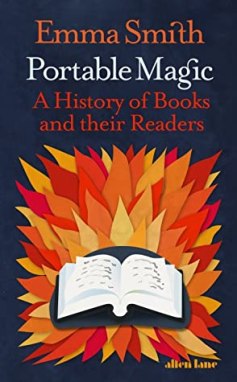
Portable MagicAbout the Book

Most of what we say about books is really about the words inside them: the rosy nostalgic glow for childhood reading, the lifetime companionship of a much-loved novel. But books are things as well as words, objects in our lives as well as worlds in our heads. And just as we crack their spines, loosen their leaves and write in their margins, so they disrupt and disorder us in turn. All books are, as Stephen King put it, ‘a uniquely portable magic’. Here, Emma Smith shows us why.

Portable Magic unfurls an exciting and iconoclastic new story of the book in human hands, exploring when, why and how it acquired its particular hold over humankind. Gathering together a millennium’s worth of pivotal encounters with volumes big and small, Smith reveals that, as much as their contents, it is books’ physical form – their ‘bookhood’ – that lends them their distinctive and sometimes dangerous magic. From the Diamond Sutra to Jilly Cooper’s Riders, to a book made of wrapped slices of cheese, this composite artisanal object has, for centuries, embodied and extended relationships between readers, nations, ideologies and cultures, in significant and unpredictable ways.

Exploring the unexpected and unseen consequences of our love affair with books, Portable Magic hails the rise of the mass-market paperback, and dismantles the myth that print began with Gutenberg; it reveals how our reading habits have been shaped by American soldiers, and proposes new definitions of a ‘classic’ – and even of the book itself. Ultimately, it illuminates the ways in which our relationship with the written word is more reciprocal – and more turbulent – than we tend to imagine.

Format: Hardback (352 pages)      Publisher: Allen Lane
Publication date: 28th April 2022 Genre: Nonfiction

Find Portable Magic: A History of Books and their Readers on Goodreads

Purchase links
Bookshop.org
Disclosure: If you buy a book via the above link, I may earn a commission from Bookshop.org, whose fees support independent bookshops

Hive | Amazon UK
Links provided for convenience only, not as part of an affiliate programme


My Review

Portable Magic is a fascinating, in-depth examination of books as physical objects, from their earliest incarnation as collections of scrolls or wax tablets to modern paperbacks and, yes, ebooks.  The blurb gives you an idea of the breadth of the book’s subject matter and this review would itself be as long as a book if I mentioned everything of interest I found within its pages. Therefore, I’ve confined myself to picking out a few things that caught my eye in various chapters.

  • Precursors to the paperback were softback editions designed especially for the armed forces that would fit neatly into the pocket of a uniform
  • Annuals and highly decorated gift books were the first commercial products designed to be given away by the purchaser
  • Book tokens emerged to alleviate the ‘stress’ of choosing books as gifts
  • ‘Shelfies’ have a long history with figures such as Madame de Pompadour being depicted holding books or with books in the background. Marilyn Monroe was famously photographed holding a copy of James Joyce’s Ulysses that it looks like she’s a fair way through.
  • There is ‘a gestural vocabulary’ associated with handling books, e.g. turning pages from the corner far edge, using a finger or marker to refer to different points, flexing a spine to make it stay open.
  • Book burning has taken place for purposes other than censorship including as part of waste management, at the hands of a book’s author, for publicity or as part of a ritual.
  • As the case of Lady Chatterley’s Lover showed, efforts to ban books are often good for sales.
  • Books can have a talismanic quality. During the First World War, steel covered Bibles designed to be carried in the breast pocket were widely advertised as gifts for servicemen.
  • Bibliomancy is the act of opening a book at random for prophetic wisdom.
  • When we read a book, thousands of microscopic particles of our DNA rub off on its pages. ‘Inside each book, there is a miniscule, uncatalogued but carefully preserved library of its human handlers.’
  • E-readers, the author argues, want to be books. ‘Text is presented in vertical orientation (an e-reader is portrait, rather than landscape, in format), pages are flipped from right to left to move sequentially through the text and there is a facility to bookmark or underline particular passages.’

Those of us for whom books play a significant part in our lives will surely identify with the following passage. ‘We are all made up of the books we have loved and, more, of the books we have owned, gifted, studied, revered, lived by, lost, thrown aside, dusted, argued over, learned by heart, borrowed and never returned, failed to finish and used as doorstops or to raise a computer monitor.’

The fact that nearly fifty pages are taken up with notes and index demonstrates that Portable Magic is the product of extensive research. Although there were one or two points where there was perhaps a little too much detail, I found Portable Magic an absolutely fascinating read.

I received an advance reader copy courtesy of Allen Lane via Readers First.

In three words: Informative, erudite, expansive

Follow this blog via Bloglovin


About the Author

Emma Smith was born and brought up in Leeds, went unexpectedly to university in Oxford, and never really left. She is now Professor of Shakespeare Studies at Hertford College and the author of the Sunday Times bestseller This Is Shakespeare. She enjoys silent films, birdwatching, and fast cars.

Connect with Emma
Twitter

My Week in Books – 5th June 2022

MyWeekinBooksOn What Cathy Read Next last week
Monday – I shared my review of Death and the Penguin by Andrey Kurkov. 

Tuesday – I published my review of Young Women by Jessica Moor as part of the blog tour. 

WednesdayWWW Wednesday is my weekly opportunity to share what I’ve just read, what I’m currently reading and what I plan to read next… and to take a peek at what others are reading. 

Thursday – I published a guest post by Orna Ross, author of the historical novels, After the Rising & Before the Fall as part of the blog tour.  

Friday – I shared my Five Favourite May 2022 Reads

Saturday – I published my review of crime novel, The Fire Killer (DI Barton #5) by Ross Greenwood as part of the blog tour.  I also took part in the monthly #6Degrees of Separation meme forging a chain that began with Sorrow and Bliss by Meg Mason.


New arrivals

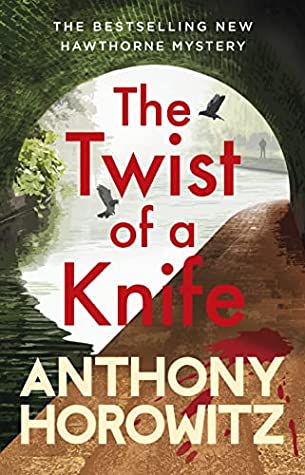
The Twist of a KnifeThe Twist of a Knife (Hawthorne and Horowitz #4) by Anthony Horowitz (eARC, Century via NetGalley)

“I’m sorry but the answer’s no.” 

Reluctant author, Anthony Horowitz, has had enough. He tells ex-detective Daniel Hawthorne that after three books he’s splitting and their deal is over. The truth is that Anthony has other things on his mind. His new play, a thriller called Mindgame, is about to open at the Vaudeville Theater in London’s West End. Not surprisingly, Hawthorne declines a ticket to the opening night.

The play is panned by the critics. In particular, Sunday Times critic Margaret Throsby gives it a savage review, focusing particularly on the writing. The next day, Throsby is stabbed in the heart with an ornamental dagger which turns out to belong to Anthony, and has his fingerprints all over it.

Anthony is arrested by an old enemy . . . Detective Inspector Cara Grunshaw. She still carries a grudge from her failure to solve the case described in the second Hawthorne adventure, The Sentence is Death, and blames Anthony. Now she’s out for revenge.

Thrown into prison and fearing for both his personal future and his writing career, Anthony is the prime suspect in Throsby’s murder and when a second theatre critic is found to have died in mysterious circumstances, the net closes in. Ever more desperate, he realizes that only one man can help him.

But will Hawthorne take the call?

The Sweetheart LocketThe Sweetheart Locket by Jan Gilroy (eARC, Orion via NetGalley)

What if the key to your present lies in the past?

London, 1939. On the eve of the Second World War, Canadian Maggie Wyndham defies her family and stays in England to do her bit for the war effort. Torn between two countries, two men and living a life of lies working for the Special Operations Executive (SOE), Maggie’s RAF sweetheart locket is part of who she is…and who she isn’t.

San Francisco, 2019. Over twenty years after Maggie’s death, her daughter Millie and granddaughter Willow take a DNA test that’s supposed to be a bit of fun but instead yields unexpected results. Willow has always treasured her grandmother’s sweetheart locket, both family heirloom and a symbol of her grandparents’ love story. But now she doesn’t know what to believe. She embarks on a search for the truth, one she doesn’t know will reveal far more about herself…

StorylandStoryland: A New Mythology of Britain by Amy Jeffs (riverrun)

Soaked in mist and old magic, Storyland is a new illustrated mythology of Britain, set in its wildest landscapes.

It begins between the Creation and Noah’s Flood, follows the footsteps of the earliest generation of giants from an age when the children of Cain and the progeny of fallen angels walked the earth, to the founding of Britain, England, Wales and Scotland, the birth of Christ, the wars between Britons, Saxons and Vikings, and closes with the arrival of the Normans.

These are retellings of medieval tales of legend, landscape and the yearning to belong, inhabited with characters now half-remembered. Told with narrative flair, embellished in stunning artworks and glossed with a rich and erudite commentary.

We visit beautiful, sacred places that include prehistoric monuments like Stonehenge, mountains such as Snowdon and rivers including the story-silted Thames in a vivid collection of tales of a land steeped in myth. 

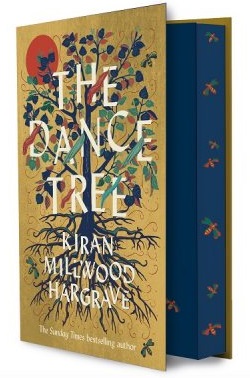
The Dance TreeThe Dance Tree by Kiran Millwood Hargrave (Picador)

In Strasbourg, in the boiling hot summer of 1518, a plague strikes the women of the city. First it is just one – a lone figure, dancing in the main square – but she is joined by more and more and the city authorities declare an emergency. Musicians will be brought in. The devil will be danced out of these women.

Just beyond the city’s limits, pregnant Lisbet lives with her mother-in-law and husband, tending the bees that are their livelihood. Her best friend Ida visits regularly and Lisbet is so looking forward to sharing life and motherhood with her. And then, just as the first woman begins to dance in the city, Lisbet’s sister-in-law Nethe returns from six years’ penance in the mountains for an unknown crime. No one – not even Ida – will tell Lisbet what Nethe did all those years ago, and Nethe herself will not speak a word about it.

It is the beginning of a few weeks that will change everything for Lisbet – her understanding of what it is to love and be loved, and her determination to survive at all costs for the baby she is carrying. Lisbet and Nethe and Ida soon find themselves pushing at the boundaries of their existence – but they’re dancing to a dangerous tune . . .

Lessons in ChemistryLessons in Chemistry by Bonnie Garmus (Doubleday)

Elizabeth Zott is not your average woman. In fact Elizabeth Zott would be the first to point out that there is no such thing.

But it’s the 1960s, and despite the fact that she is a scientist, her male peers are very unscientific when it comes to equality. The only good thing to happen on her road to professional fulfilment is a run-in with famous colleague Calvin Evans, legend and Nobel nominee. He’s also awkward, kind and tenacious. Theirs is true chemistry.

But life is never predictable and three years later Elizabeth Zott is an unwed, single mother and star of America’s best loved cooking show Supper at Six. Her singular approach to cooking – ‘take one pint of H2O and add a pinch of sodium chloride’ – and empowering message prove revolutionary. Because Elizabeth isn’t just teaching housewives how to cook, but how to change their lives.

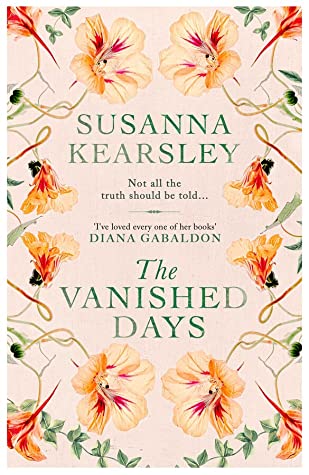
The Vanished DaysThe Vanished Days (Slains #3) by Susanna Kearsley (ARC, Simon & Schuster)

There are many who believe they know what happened, but they do not know the whole of it. The rumours spread, and grow, and take their hold, and so to end them I have been persuaded now to take my pen in hand and tell the story as it should be told…

Autumn, 1707. Old enemies from the Highlands to the Borders are finding common ground as they join to protest the new Union with England, the French are preparing to launch an invasion to carry the young exiled Jacobite king back to Scotland to reclaim his throne, and in Edinburgh the streets are filled with discontent and danger. Queen Anne’s commissioners, seeking to calm the situation, have begun settling the losses and wages owed to those Scots who took part in the disastrous Darien expedition eight years earlier.

When Lily, the young widow of a Darien sailor, comes forward to collect her husband’s wages, her claim is challenged, and one of the men who’s assigned to examine her has only days to decide if she’s honest, or if his own feelings are making him blind to the truth, and if he’s being used as a pawn in an even more treacherous game.

A story of intrigue, adventure, endurance, romance…and the courage to hope.


On What Cathy Read Next this week

Currently reading

Planned posts

  • Book Review: Portable Magic by Emma Smith
  • Blog Tour/Book Review: Villager by Tom Cox
  • Blog Tour/Book Review: How To Save A Life by Clare Swatman
  • Book Review: The Death of Remembrance by Denzil Meyrick 
  • Book Review: News of the Dead by James Robertson