About the Book
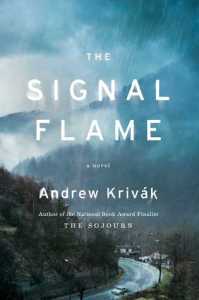
In a small town in Pennsylvania’s Endless Mountains Hannah and her son Bo mourn the loss of the family patriarch, Jozef Vinich. They were three generations under one roof. Three generations, but only one branch of a scraggy tree; they are a war-haunted family in a war-torn century.
Having survived the trenches of World War I as an Austro-Hungarian conscript, Vinich journeyed to America and built a life for his family. His daughter married the Hungarian-born Bexhet Konar, who enlisted to fight with the Americans in the Second World War but brought disgrace on the family when he was imprisoned for desertion. He returned home to Pennsylvania a hollow man, only to be killed in a hunting accident on the family’s land. Finally, in 1971, Hannah’s prodigal younger son, Sam, was reported MIA in Vietnam.
And so there is only Bo, a quiet man full of conviction, a proud work ethic, and a firstborn’s sense of duty. He is left to grieve but also to hope for reunion, to create a new life, to embrace the land and work its soil through the seasons.
Format: Hardcover (272 pages) Publisher: Scribner
Publication date: 24th January 2017 Genre: Historical Fiction
Find The Signal Flame on Goodreads
Purchase The Signal Flame from Amazon
My Review
Covering a period of a few months, we learn, mainly from the point of view of Bo, something of the tragic history of the family and the impact of his brother’s absence on the family and others.
There is some gorgeous writing: “The air smelled of the same candle smoke and slight perfume of frankincense and gardenia that she remembered, and it still sounded even in its silence like every voice uttered was a whisper and that whisper would echo forever if she just sat and listened long enough.”
The book is incredibly sad in parts as tragedies – natural and manmade – come one after another. The toll of grief on some of the characters is sympathetically conveyed: “No, she had come to believe that the only thing one could be certain of was loss. The loss of others as one lived on. Loss as the last thing one left behind.”
What prevents the book becoming too overwhelmingly depressing is the theme of reconciliation. There are some particularly moving and touching scenes between characters in which longstanding differences are set aside. I’m not ashamed to say some moved me to tears. I loved the descriptions of the routine of daily domestic tasks which never become mundane but gave a sense of the rhythm of life in a small, isolated community. The author explores ideas of duty, obligation and continuity through Bo’s sense of connection to the land acquired by and handed down by his grandfather and there is a sense of a real regard for skill and craftsmanship.
The one slight negative is that the absence of speech marks sometimes made it difficult to distinguish conversation between characters from internal monologue.
I received an advance review copy courtesy of Scribner via NetGalley, in return for an honest review.
In three words: Evocative, moving, haunting
Try something similar: The Fortunate Brother by Donna Morrissey.
About the Author

Andrew Krivak is the author of four novels: The Bear, a Mountain Book Competition winner, Massachusetts Book Award winner, LibraryReads selection, and NEA Big Read selection, as well as the freestanding novels of the Dardan Trilogy, which include The Sojourn, a National Book Award finalist and winner of both the Chautauqua Prize and Dayton Literary Peace Prize; The Signal Flame, a Chautauqua Prize finalist; and Like the Appearance of Horses. He is also the author of two poetry collections, Islands, and Ghosts of the Monadnock Wolves, and the memoir A Long Retreat: In Search of a Religious Life. He lives with his wife and three children in Somerville, Massachusetts, and Jaffrey, New Hampshire.
Connect with Andrew
Website