
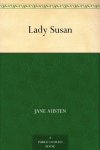
Review: Lady Susan by Jane Austen

lady-susan

Recently widowed Lady Susan Vernon seeks an advantageous second marriage for herself and her daughter and is not afraid to use all her guile to achieve it.

About the Book

Lady Susan is a short epistolary novel thought to have been written in 1794 (when Jane Austen would have been 19) but never submitted for publication by the author and only published in 1871, years after her death. It takes the form of letters between Lady Susan and her friend Mrs Johnson, between Lady Susan’s sister-law, Mrs Vernon, and her mother Lady de Courcy and Mrs Vernon’s brother, Reginald.

My Review

This novel was part of The Classics Club and From Page To Screen challenges.

Although a juvenile work that ends rather abruptly as if the author tired of writing it, Lady Susan has the trademark wit and ability to skewer social foibles one associates with later Jane Austen novels.  Notably, the eponymous heroine is an older woman who is by turns scheming, selfish, unscrupulous and conducting an unsuitable relationship with a married man.  Lady Susan has no compunction about freeloading from relatives, telling falsehoods or manipulating others. Not exactly the typical heroine of a romantic novel! However, Austen manages to make the reader admire Lady Susan, if not for her morals, for her independent spirit and sheer determination to live life to the full.

The one aspect of Lady Susan’s character that gives the reader pause for thought is her awful treatment of her daughter, Frederica, whom she describes as “a stupid girl” with “nothing to recommend her”. In fact, Frederica is a rather charming young girl but suffers in Lady Susan’s eyes because of her “artlessness” when it comes to capturing a man. When Frederica resists her mother’s plan for her to marry the brainless Sir James, Lady Susan congratulates herself on her maternal affection in not insisting on the marriage, remarking that she will merely make Frederica “thoroughly uncomfortable till she does accept him”.

Lady Susan has a fitting partner-in-crime in her friend, Mrs Johnson, who advises Lady Susan to pursue Reginald de Courcy on the grounds that his father is “very infirm, and not likely to stand in your way long”. Mrs Johnson herself has the misfortune to be married to a man “just old enough to be formal, ungovernable, and to have the gout; too old to be agreeable, too young to die.”   Only Mrs Vernon is able to see through Lady Susan’s duplicity: “Her address to me was so gentle, frank, and even affectionate, that, if I had not known how much she has always disliked me for marrying Mr Vernon, and that we had never met before, I should have imagined her an attached friend.”

Lady Susan succeeds in capturing a husband as does Frederica, although one suspects that Frederica will find more happiness in matrimony than her mother.

Although I enjoyed the book, it does end rather abruptly and the limitations of an epistolary novel mean the characters are never fully fleshed out. However, for fans of Jane Austen, it is of interest as a early indicator of her literary potential  You can download a free copy of the Kindle edition here.

Book facts: 82 pages

My rating: 3 (out of 5)

In three words: Witty, engaging, sprightly

About the Author

Jane Austen is one of the most widely read and historically important novelists in English literature famed for her realism, wit and biting social commentary.


Book Review – Lillian Boxfish Takes A Walk by Kathleen Rooney

About the Book

It’s the last day of 1984, and 85-year-old Lillian Boxfish is about to take a walk.

As she traverses a grittier Manhattan, a city anxious after an attack by a still-at-large subway vigilante, she encounters bartenders, bodega clerks, chauffeurs, security guards, bohemians, criminals, children, parents, and parents-to-be—in surprising moments of generosity and grace. While she strolls, Lillian recalls a long and eventful life that included a brief reign as the highest-paid advertising woman in America—a career cut short by marriage, motherhood, divorce, and a breakdown.

A love letter to city life—however shiny or sleazy—Lillian Boxfish Takes a Walk paints a portrait of a remarkable woman across the canvas of a changing America: from the Jazz Age to the onset of the AIDS epidemic; the Great Depression to the birth of hip-hop.

Format: ebook (304 pages) Publisher: St. Martin’s Press
Publication date: 17th January 2017 Genre: Contemporary Fiction

Find Lillian Boxfish Takes A Walk on Goodreads

Purchase Lillian Boxfish Takes A Walk from Bookshop.org [Disclosure: If you buy books linked to our site, we may earn a commission from Bookshop.org, whose fees support independent bookshops]

My Review

Lillian is stylish, witty (even waspish at times), single-minded, successful, generous but also a woman whose life has not followed an untroubled path.  During her walk on New Year’s Eve, we learn about her pioneering career in advertising, her relationships and get hints of darker times that are only fully revealed towards the end of the book.  Lillian takes pride in her ability to use words as tools (whether to craft advertising copy or poetry) but also, on occasions, as weapons. Some of my favourites “Lillianisms” include:

  • “My mother resented Sadie like a stepsister resenting Cinderella, but she was polite. She did her no social violence.”
  • “This time of year is depressing. New Year’s Eve is a bigger thug than any mugger, the way it makes people feel.”
  • (About her colleague and bête noire, Olive): “I marvelled at her mother’s prescience in having named her daughter after a green – with envy – cocktail garnish: hollow and bitter.” Ouch!
  • (About her other bête noire, Julia): “She had a beautiful smile, if you like people who have thousands of teeth and no evident capacity ever to be sad.” Double ouch!

As well as the story of Lillian’s life, the book is a love letter to New York – “Any day you walk down a street and find nothing new but nothing missing counts as a good day in a city you love. People are forever tearing something down, replacing something irreplaceable” – and a celebration of walking and the art of flanerie. “Typically neither closeness nor distance matter much to me on my walks. Neither convenience nor difficulty is my objective.”

Another theme seems to be how bigotry and prejudice can cause people to miss out on potentially fulfilling relationships. I really enjoyed the book but, for me, not all of Lillian’s encounters during her walk were as successful or as meaningful as others. I was interested to learn that Lillian is inspired by a real person – Margaret Fishback, who, like her fictional counterpart, was a poet and the highest-paid female advertising copywriter in the world in the 1930s.  P.S. I love the cover.

I received an advance review copy courtesy of NetGalley and St. Martin’s Press

In three words: Stylish, witty, engaging

About the Author

Kathleen Rooney is a founding editor of Rose Metal Press, a nonprofit publisher of literary work in hybrid genres, as well as a founding member of Poems While You Wait, a team of poets and their typewriters who compose commissioned poetry on demand. She teaches in the English Department at DePaul University, and her recent books include the national best-seller Lillian Boxfish Takes a Walk (St. Martin’s Press, 2017) and the novel Cher Ami and Major Whittlesey (Penguin, 2020). Where Are the Snows, her latest poetry collection, was chosen by Kazim Ali for the X.J. Kennedy Prize and published by Texas Review Press in Fall 2022. In September of 2023, her novel, From Dust to Stardust, based on the life and work of the silent movie star Colleen Moore, came out with Lake Union. With her sister Beth Rooney, she is the author of the picture book Leaf Town Forever, forthcoming in 2026 from University of Minnesota Press.

Her reviews and criticism have appeared in The New York Times Magazine, The Poetry Foundation website, The New York Times Book Review, AllureThe Chicago Review of Books, The Chicago TribuneThe Paris Review, The Los Angeles Review of Books, The Nation and elsewhere.

She lives in Chicago with her spouse, the writer Martin Seay. (Photo/bio: Author website)

Connect with Kathleen
 Website | Bluesky