
About the Book
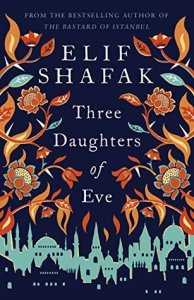
Peri, a wealthy Turkish housewife, is on her way to a dinner party at a seaside mansion in Istanbul when a beggar snatches her handbag.
As she wrestles to get it back, a photograph falls to the ground – an old polaroid of three young women and their university professor. A relic from a past – and a love – Peri had tried desperately to forget.
Format: ebook (383 pages) Publisher: Penguin
Publication date: 2nd February 2017 Genre: Contemporary Fiction
Find Three Daughters of Eve on Goodreads
Purchase Three Daughters of Eve from Bookshop.org [Disclosure: If you buy books linked to our site, we may earn a commission from Bookshop.org, whose fees support independent bookshops]
My Review
When the photograph drops from Peri’s handbag, it triggers memories of her childhood, her parents’ troubled relationship, her time studying in Oxford and the events that took place there with lasting consequences for her and others. These events are recounted in episodic fashion switching between time periods, the full picture only emerging towards the end of the novel. Peri’s encounter with the beggar also unleashes the complex feelings of uncertainty, anger, anxiety and guilt she has tried to suppress all her life, weighed down by family and society expectation: “Sometimes her own mind scared her”.
There is imaginative use of metaphors. For example, on the ambivalence of Turkey’s position on the borders of Europe – as if it “had put one foot through Europe’s doorway and tried to venture forth with all its might – only to find the opening was so narrow that, no matter how much the rest of its body wriggled and squirmed, it could not squeeze itself it.” Or, the need for the women of Istanbul, in their dress and body language, to navigate “a stormy sea swollen with drifting icebergs of masculinity… better to manoeuvre away from them, gingerly and smartly, for one never knew how much danger lay beneath the surface”.
A frequent theme is the conflict between religious belief and atheism/secularism and in particular how this featured in the modern history of Turkey. The novel does not shy away from tackling the turbulent and at times violent and repressive events in its history; the scenes following Peri’s brother’s arrest are especially unsettling. At times, the message becomes a little heavy-handed, approaching didactic. For instance, the dinner party in Istanbul seems really to be a device to include a debate on contemporary Turkey. The other dinner party guests are not named but referred to by their occupation and appear to be there to represent the various ideological viewpoints.
Through Peri’s perpetual uncertainty and Professor Aziz’s lectures, the author poses the question how any person can be certain of the superiority of their beliefs, particularly if they have limited knowledge of other cultures and philosophies? A dialectical approach is evident through the frequent use of oppositions. For example, Peri’s parents inhabit each side of the religion versus atheism/secularism argument. To some extent, Mona and Shirin (who along with Peri make up the “Daughters of Eve”) mirror Peri’s mother and father, with Peri perpetually in the middle. In fact, Peri describes herself and her friends as “the Sinner, the Believer, the Confused”. In spite of the title, only two of the “Daughters of Eve” – Peri and Shirin – seem fully developed characters; Mona is something of a cipher, merely there to represent the devout and to provide an opposite to Shirin.
Despite some reservations, I enjoyed the book, particularly the sections covering Peri’s childhood. At times, bordering on the didactic, it engages with debates which have contemporary relevance for the wider world.
I received an advance review copy courtesy of NetGalley and publishers Penguin UK/Viking in return for an honest review.
In three words: Engrossing, thoughtful, dialectical
About the Author
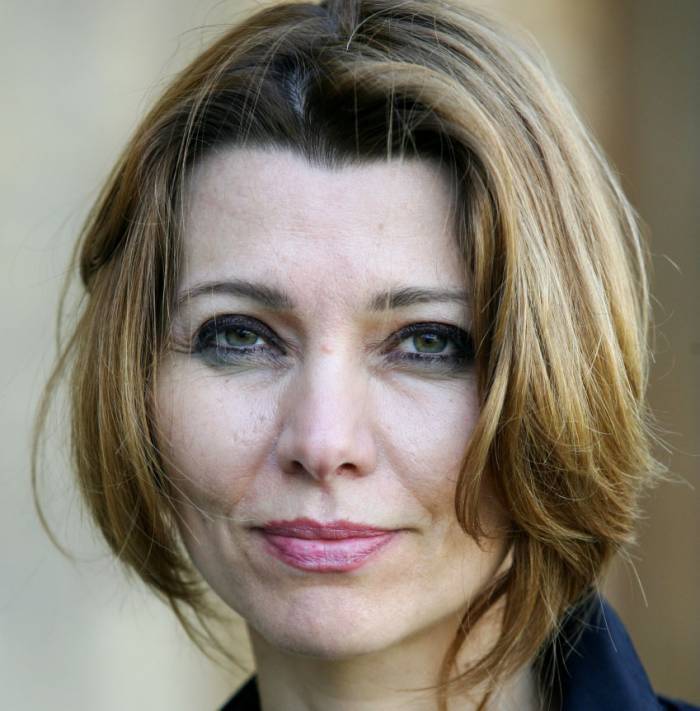
Elif Shafak is an award-winning novelist and the most widely read woman writer in Turkey. Her books have been translated into more than 40 languages and she was awarded the honorary distinction of Chevalier of the Order of Arts and Letters. Shafak has published thirteen books, nine of which are novels and writes fiction in both Turkish and English. Blending Western and Eastern traditions of storytelling, she brings out the myriad stories of women, minorities, immigrants, subcultures, youth and global souls, drawing on diverse cultures and literary traditions, as well as a deep interest in history, philosophy, Sufism, oral culture, and cultural politics. Besides writing fiction, Shafak is an active political commentator, columnist and public speaker.
Connect with Elif
Website | Instagram


 Katherine Mansfield was born in New Zealand in 1888 and is widely considered the best short story writer of the modernist period. She left New Zealand for the UK when she was 19 and then travelled for a time in Europe. She was associated with a “new dawn” in English literature and together with T.S. Eliot, James Joyce and Virginia Woolf made the London of the period the centre of the literary world. Mansfield’s stories were written without a conventional plot but concentrated on one moment, a crisis or turning point rather than a sequence of events. Often very dark, common themes of her stories include human isolation, the conflict between love and disillusionment, idealism and reality. Katherine Mansfield died in 1923 at the age of only 34.
 What Cathy Read Next...