Review: Meeting with my Brother by Yi Mun-yol

meeting

Autobiographical account of the impact on one family of a divided nation

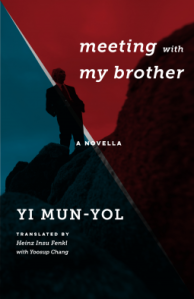
Publisher’s description: A sobering yet hopeful depiction of the volatile relationship between the divided Koreas. Yi, the narrator, is a South Korean university professor searching for his father who defected to the North at the outbreak of war. Instead he finds his half-brother and their tense meeting takes a surprising turn. This semi-autobiographical account upends the West’s assumptions about North Korean life.

My Review

This is my first experience of Korean literature and, although a slim volume, I found it quite a challenging read as it contains a great deal of detail about the history and politics of Korea, notably the separation of North and South Korea and prospects for reunification. There are a lot of allegorical features with characters representing particular aspects of ideological thought, such as Mr Reunification. Similarly the two brothers really represent the two parts of the divided nation. Only a small portion of the book covers the narrator’s meeting with his half-brother and, for me, these were the most successful aspects of the book with some interesting details of Korean tradition and rituals. The other parts I found quite dry. At times I felt the book verged on political essay rather than novel. What does comes across from the two brothers’ sharing of their experiences is that the people of each part of the divided Korea have suffered as a consequence of war, retribution (the law of “guilt by association”) and economic collapse. Ultimately, grief over their father’s death and this commonality of experience brings (albeit limited) reconciliation between the divided families.

I received an advance review copy courtesy of NetGalley and Columbia University Press.

Book facts: Publication date 4th April 2017, translated by Heinz Insu Fenkl with Yoosup Chang

My rating: 3 (out of 5)

In three words: Didactic, autobiographical, informative

About the Author

Yi Mun-yol was born in Seoul, South Korea in 1948 but the outbreak of the Korean War and his father’s defection to North Korea forced his family to move about until they settled in Yeongyang, his family’s ancestral seat.  He has written several novels and more than fifty novellas and short stories.

From Page to Screen: The Light Between Oceans

oceansfrom-page-to-screenoceans-film

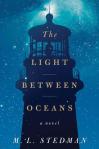
About the Book – The Light Between Oceans by M.L. Stedman

Tom Sherbourne takes up a post as lighthouse keeper on the remote Janus Rock, half a day’s boat ride from the mainland of Australia. During his first shore leave, he meets and falls in love with Isabel. They marry and return to Janus together but their attempts to start a family end in miscarriage and still birth, plunging Isabel into profound grief. One April morning, a small boat washes up on Janus; its occupants are a dead man and a baby girl. Against Tom’s better judgment, he acquiesces to Isabel’s plea to claim the baby as their own. This decision will have devastating consequences for all involved.

Read my review of the book here.

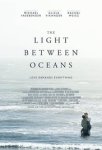
About the Film – The Light Between Oceans (2016)

The Light Between Oceans was adapted and directed by Derek Cianfrance and stars Michael Fassbender and Alicia Vikander as Tom and Isabel. More information about the film can be found here.

Book vs. Film (Some spoilers)

The film follows the book closely but, naturally, has to omit or amend some events and minor characters. Fassbender and Vikander are well cast as Tom and Isabel, although to my mind Fassbender’s Tom appears slightly older than I’d imagined him from the book. The scenes in which Isabel loses her babies are heartrending and Vikander’s depiction of Isabel’s grief at her loss is convincing. The main difference in characterisation I noted was that of the baby’s true mother (played by Rachel Weitz). She is depicted as grief-stricken rather than fixated, almost to the point of madness, with the idea her husband and baby are still alive, as in the book. A great cast of supporting actors bring to life the inhabitants of Point Parteguese.

The cinematography is wonderful, particularly the rendering of the views of sea and sky from Janus Rock.  The wind and waves are an ever-present feature of the soundtrack in the scenes set on the island. Janus Rock in the film is larger than I had imagined from the book but the location captures perfectly the remoteness and raw beauty of the place. Naturally, you learn a lot less about the mechanics of lighthouse keeping from the film than from the book (almost none in fact!).

The Verdict

The film is a lush cinematic experience that dramatizes many of the events in the novel but omits or changes others. Crucially, a lot of Tom’s back story is missing which I think makes it harder to understand and completely accept his actions. The book makes clear his actions are driven by an overwhelming sense of guilt at having survived the First World War when so many of his comrades did not and the legacy of his difficult family background. The reservations I had about the book – whether I could believe in Isabel’s ultimate choice and the sentimental ending – are present in the film as well. However, it is beautiful to look at, it tells the main story well and the acting is excellent. On balance, though, I think book wins out.


What do you think?  If you’ve read the book and seen the film, which did you prefer?