Book Review: A Tapestry of Tears by Gita V. Reddy

Fascinating stories about Indian culture and society

ATapestryofTearsAbout the Book

Description (courtesy of Goodreads): Set in the early nineteenth century, A Tapestry of Tears is about female infanticide, and the unmaking of tradition. If a woman gives birth to a female child, she must feed her the noxious sap of the akk plant. That is the tradition, parampara. Veeranwali rebels and fights to save her offspring.  The other stories span a spectrum of emotions and also bring to life the varied culture and social spectrum of India. Woven into this collection is the past and the present, despair and hope, and the triumph of the human spirit.

Book Facts

  • Format: ebook
  • No. of pages: 204
  • Publication date: 2nd November 2016
  • Genre: Fiction, Short Stories

To purchase A Tapestry of Tears from Amazon.co.uk, click here (link provided for convenience, not as part of any affiliate programme)

Find A Tapestry of Tears on Goodreads 


My Review

Subtitled ‘Short Stories from India’, A Tapestry of Tears comprises twelve short stories, of varying lengths, which explore different aspects of Indian culture, in particular family relationships.  As is often the case with short story collections, some stories are more compelling than others.

The standout story is the one that gives the collection its title, A Tapestry of Tears. This explores the dreadful tradition or parampara prevalent amongst some families in early 19th century India of killing (or to use the euphemism, ‘putting to sleep’) girl infants, using the sap of the akk plant. To make it even more terrible, a mother was expected to administer the poison herself. Known as kurimaar, this awful practice stemmed from a belief that a wife was for begetting sons.

Daughters weakened the clan. Having a daughter meant bowing one’s head to whoever would wed her. It also meant dowry. Daughters were of no use. You fed them and clothed them, and they went away to serve in another’s house.’

Through the story of one wife and mother, Veeranwali, we see the impact of the custom on the women forced to participate in it.   Their only solace is to record their lost daughters in the form of embroidery on a traditional bagh phulkari chadar, a cotton shawl embroidered with silk. Gradually we see the power of women coming together in mutual support, quiet resistance and solidarity to overturn the practice of female infanticide. In time, the creation of the bagh becomes a celebration not a remembrance of their cherished daughters.  You can see a few examples of phulkari here .

Another story I liked was the deliciously dark ‘The Quizzing Glass’ in which a man who arrogantly believes he has learned to read the minds of others from their gestures and body language – including that of his poor wife – finds it less comfortable when the spotlight is turned on his own character.

I would also single out ‘The Prisoner’, the heart-warming tale of Mira, rejected by her mother because of her disability. Mira has learned to shun social contact despite being bright but finds that not all of the world views her in the same malevolent fashion as her mother.

I really enjoyed reading this collection of stories. The author has a clear, readable style and I liked the fact that explanatory information was provided for some words that might be unfamiliar to readers outside India. Although the stories are situated in Indian culture and society, they address some themes that are universal: family, love and death.

I received a review copy courtesy of the author in return for an honest review.

Follow my blog with Bloglovin

In three words: Moving, thoughtful, tradition

Try something similar…Stay With Me by Ayobami Adebayo


GitaVReddyAbout the Author

Gita V.Reddy is a writer of fiction for middle-graders and adults. She enjoys thinking up tales of different genres. She has written mysteries, adventure, fantasy, science fiction, and even an animal tale for children. She wrote and illustrated her first picture book for kids in August, 2015. She plans to write a few more because the experience was very satisfying. Ms Reddy was born in India, is a post graduate in Mathematics, worked in a bank for twenty-six years, is married to a physics professor, has a son doing research in neuro-electronics, and loves literature. Yes, her life is as mixed up as the multiple genres she writes.  She enjoys painting and spending time with her family, and LOVES walking in the rain. She also writes under the name Heera Datta.

Connect with Gita

Website http://www.gitavreddy.com/
Twitter https://twitter.com/GitaVReddy
Facebook https://www.facebook.com/Gita-Reddy-943528985673288/
Goodreads https://www.goodreads.com/author/show/7023197.Gita_V_Reddy

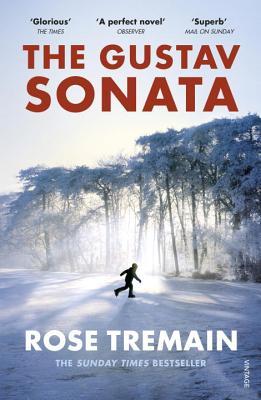
Book Review: The Gustav Sonata by Rose Tremain

Powerful tale of love and friendship

TheGustavSonataAbout the Book

Description (courtesy of Goodreads): What is the difference between friendship and love? Or between neutrality and commitment? Gustav Perle grows up in a small town in ‘neutral’ Switzerland, where the horrors of the Second World War seem a distant echo. But Gustav’s father has mysteriously died, and his adored mother Emilie is strangely cold and indifferent to him. Gustav’s childhood is spent in lonely isolation, his only toy a tin train with painted passengers staring blankly from the carriage windows. As time goes on, an intense friendship with a boy of his own age, Anton Zwiebel, begins to define Gustav’s life. Jewish and mercurial, a talented pianist tortured by nerves when he has to play in public, Anton fails to understand how deeply and irrevocably his life and Gustav’s are entwined.

Book Facts

  • Format: Paperback
  • Publisher: Vintage
  • No. of pages: 308
  • Publication date: 26th January 2017
  • Genre: Historical Fiction

To purchase The Gustav Sonata from Amazon.co.uk, click here (link provided for convenience, not as part of any affiliate programme)

Find The Gustav Sonata on Goodreads


My Review

The Gustav Sonata is one of the novels on the 2017 shortlist for The Walter Scott Prize for Historical Fiction. You can find a list of all the shortlisted novels here.

For two thirds of the book I thought this was absolutely stunning. Themes of sadness, betrayal and disappointment pervade the book and Tremain is particularly good at observing the humdrum, at times sordid, details of everyday life: the kitchen shelf that substitutes for a table, the freezing water pump in the yard, the cigarette butts that litter the floor. ‘He thinks how shabby the world is and how tired and old and full of discarded things.’ On the other hand, at times, there is striking descriptive writing:

‘Europe is moving, slowly, almost blindly, like a sleepwalker, towards catastrophe. But in the villages of Mittelland, the calendar of feast days and festivals unrolls through a fine untroubled summer. The valleys, with their plainchant of cowbells, lie half sleeping in the sun. The rivers, fed by snow melt and spring rain, bubble innocently along, in their eternal, gossipy conversations.’

In Part 1, covering the years 1948 and 49, we meet young Gustav Perle, living in shabby poverty with his mother, Emilie. Gustav seems to have done nothing to earn the coldness shown to him by his mother. For her, an important lesson of life is the need to ‘master oneself’. This is linked to the concept of Switzerland’s jealously guarded neutrality. As Gustav’s tutor tells him, ‘It means we believe in ourselves. We protect our own’.   This lesson is touchingly brought to life as Gustav tries to live ‘a mastered life’ as he has been taught while his mother, Emilie, is in hospital.

At school, Gustav meets Anton and, from the beginning, there is an intensity to their friendship that sets it apart from the ordinary. This is manifested in the strangely unnerving game they play during their holiday in Davos – ‘We thought we really had power over life and death” – and during which we first perceive the depth of Anton’s reliance on Gustav.

Part 2 takes the reader back to 1937 where we witness Emilie’s first meeting with Erich, Gustav’s father, and their ensuing relationship. When war comes to Europe, tragic consequences ensue from Erich’s decision to follow his conscience rather than the requirements of the law – the expected Swiss way – when carrying out his police duties. As this section of the book unfolds, we learn everything we need to know about why Emilie later acts as she does towards Gustav (the ‘peculiar chemistry of alienation’ noted by Erich) and her antipathy to Gustav’s friendship with Anton and his family.

Unfortunately, I felt the third and final part of the book was the weakest. The story skips forward over fifty years from Part 1 and I missed being able to observe the development of Anton and Gustav’s relationship in the intervening years. The introduction of other characters, such as Colonel Ashley-Norton, seemed somewhat of a distraction. The focus does return to the bond between Anton and Gustav towards the end of Part 3 but the change in their relationship, although not completely unexpected, seemed hastily rendered to my mind.   On the plus side, Gustav’s discovery of the truth behind his father’s death provides resolution to questions raised earlier in the book.

If I‘d felt the same way about the final part as I did about the first two this would have been a worthy winner for me but I find myself preferring other shortlisted novels.

Follow my blog with Bloglovin

In three words: Intense, emotional, tender

Try something similar…A Place Called Winter by Patrick Gale


RoseTremainAbout the Author

Rose Tremain’s best-selling novels have won many awards, including the Orange Prize, the Whitbread Novel of the Year, the James Tait Black Memorial Prize and the Prix Femina Etranger. Restoration, the first of her novels to feature Robert Merivel, was shortlisted for the Booker Prize. She lives in Norfolk and London with the biographer Richard Holmes.

Follow Rose on Goodreads