
About the Book
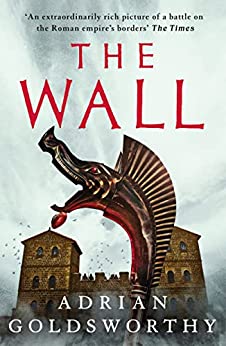
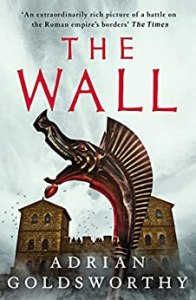
Britannia, AD 117: Roman centurion Flavius Ferox is trying to live a quiet life of dignified leisure, overseeing his wife’s estate and doing his best to resist the urge to murder an annoying neighbour – until someone else does it for him. Dragged back into a life of violence, Ferox finds himself chasing raiders, fighting chieftains and negotiating with kings, journeying far into the north just as war breaks out.
With the new emperor, Hadrian, sending agents from Rome, the whole world seems to be changing: old friends become enemies, enemies claim they are friends, and new and deadly threats lurk in the shadows.
When, five years later, Hadrian himself comes to Britannia to inspect his great wall, a new war erupts suddenly, dividing tribes and families. Ferox is the only one who can save the emperor – but with his family, and his own life, in danger, Ferox must first decide whose side he is on…
Format: eARC (480 pages) Publisher: Head of Zeus
Publication date: 8th June 2023 Genre: Historical Fiction
Find The Wall (City of Victory #3) on Goodreads
Purchase links
Bookshop.org
Disclosure: If you buy a book via the above link, I may earn a commission from Bookshop.org, whose fees support independent bookshops
Hive | Amazon UK
Links provided for convenience only, not as part of an affiliate programme
My Review
The Wall is the chunky but absorbing final book in the City of Victory series, the follow-up to The Fort, which I read when it was first published in 2021, and The City, published in 2022 which has been on my wishlist ever since then. Although The Wall can be read as a standalone, I found I missed not having witnessed the exploits of Flavius Ferox in the previous book so my recommendation would be to read the series from the beginning. (I suspect the author would like that as well.) If you want to go back even further, Ferox first appeared in the author’s earlier ‘Vindolanda’ trilogy comprising Vindolanda, The Encircling Sea and Brigantia. True to form I’ve only read the first one, have the second one in my TBR pile and the third on my wishlist.
As a renowned historian of Ancient Rome, it will come as no surprise that the book is crammed full of detail about Roman army structure, weaponry and military strategy that just oozes authenticity. (An extensive glossary is provided for those who don’t know their spatha from their pilum, or want to learn some Roman army slang.) I would also recommend reading the Historical Note in which the author sets out the many gaps in the historical record which he has filled with a combination of invention and reasoned speculation based on his extensive knowledge of the period.
The Wall has everything that fans of Roman age historical fiction could desire. There are intense, bloody and bone-crunching battle scenes. ‘Shield thumped against shield. There were grunts of effort, rage and fear, rare clashes of sword on sword, more of iron biting into flesh.’ As usual, Ferox is often one step ahead of everyone else thanks to that instinct for which he has become renowned, but even he can sometimes be caught napping and there are some narrow escapes. An element of mystery – and mysticism – is introduced by means of a fanatical warrior who has a very personal vendetta. And there are those who, for reasons of personal gain, aim to create havoc by pitting one tribe against the other or disrupt the fragile peace that has existed between some tribes and Rome. There are also those who are just plain deluded about their own abilities which might not be so bad if it weren’t for the fact they’re responsible for the lives of thousands of others.
The book is set after the death of Trajan as the new Emperor Hadrian is consolidating his position, involving some strategic getting rid of people, and settling into the role of governing an empire whose borders are fraying at the edges. Although supreme power has its rewards, Hadrian learns it’s also a burden, ‘an endless task, like Sisyphus and his boulder’. The scenes involving the building of Hadrian’s Wall are absolutely fascinating and the author manages to weave in some exciting skirmishes alongside the technical detail of its construction, which, as he acknowledges in the Historical Note, are still the subject of discussion among historians.
Characters from previous books return, including Vindex, Ferox’s faithful companion. I loved that we get an insight into the personal relationship between Ferox and the woman who is now his wife, and mother of his children, Claudia Enica, who also happens to be Queen of the Brigantes and a skilled warrior in her own right. Having your sleep disturbed by someone who hogs the bed covers or snores is possibly something we can all identify with. As perhaps befits the last book in a series, there’s plenty of settling of scores in often bloody ways, and quite a few of the characters won’t make it to the last page.
The Wall is a terrific finale to a hugely enjoyable series.
I received an advance review copy courtesy of Head of Zeus via NetGalley.
In three words: Authentic, assured, action-packed
Try something similar: The Emperor’s Shield by Gordon Doherty
About the Author

Adrian Goldsworthy studied at Oxford, where his doctoral thesis examined the Roman army. He went on to become an acclaimed historian of Ancient Rome. He is the author of numerous works of non-fiction, including Caesar, Pax Romana, Hadrian’s Wall and Philip and Alexander. He is also the author of the Vindolanda series, set in Roman Britain, which first introduced readers to centurion Flavius Ferox.
Connect with Adrian
Website





 What Cathy Read Next...