#BookReview Unnatural Ends by Christopher Huang @Inkshares

About the Book

Sir Lawrence Linwood is dead. More accurately, he was murdered – savagely beaten to death in his own study with a mediaeval mace. The murder calls home his three adopted children: Alan, an archeologist; Roger, an engineer; and Caroline, a journalist. But his heirs soon find that his last testament contains a strange proviso – that his estate shall go to the heir who solves his murder.

To secure their future, each Linwood heir must now dig into the past. As their suspicion mounts – of each other and of peculiar strangers in the churchless town of Linwood Hollow – they come to suspect that the perpetrator lurks in the mysterious origins of their own birth.

Format: eARC (402 pages) Publisher: Inkshares
Publication date: 20th July 2023 Genre: Historical Fiction, Crime

Find Unnatural Ends on Goodreads

Purchase links 
Bookshop.org 
Disclosure: If you buy a book via the above link, I may earn a commission from Bookshop.org, whose fees support independent bookshops

Hive | Amazon UK 
Links provided for convenience only, not as part of an affiliate programme


My Review

A new author to me, Christopher Huang is described as a fan of ‘Golden Age’ detective fiction and that’s easy to see because Unnatural Ends has many of the features you’d expect in a classic crime novel – a murder victim found in a locked room, a will, a series of suspicious deaths – plus a touch of the Gothic in the ancient and forbidding Linwood Hall with its stone walls and towers, and servants’ passageways.

To say the contents of their father’s will comes as a surprise to Lord Linwood’s three grown-up children – Alan, Roger and Caroline – is an understatement. They had not expected to be pitted against one another in a contest whose prize is inheritance of the entire Linwood estate. Having said that, perhaps it shouldn’t have come as that much of a surprise given their upbringing was more a series of tests by their stern, exacting father than a conventional childhood.

The story alternates between the points of view of the three children so we see how they approach – both separately and together – the search for clues to the identity of the murderer, the means by which the murder was carried out and its motivation. But we also get occasional glimpses of recent events in their lives and recollections of growing up at Linwood Hall, a place dominated by their father. ‘Father himself was like the prelude to a storm, a gathering darkness.’ As the story unfolds and they discover more, these recollections take on a very different complexion. And what they discover is distinctly unsettling and quite unexpectedly dark.

Unnatural Ends is a really cleverly constructed crime mystery with the customary helping of red herrings, sleights of hands and unexpected reveals. But what particularly stood out for me is how the author incorporates into the motivation for the dastardly deeds a philosophy – a quite distasteful one, actually – that was surprising prevalent at the time. Plus a bit of Nietzsche for good measure. And at one point, Caroline read my mind by commenting, “This is King Lear, isn’t it?”. (I do love a bit of intertextuality.)

I usually include a ‘try something similar’ recommendation along with my reviews but in this case it could have been pretty much anything from the oeuvre of Agatha Christie, Dorothy L Sayers, Margery Allingham or Ngaio Marsh because Unnatural Ends pays homage to all of them without being a slavish copy. In the end, I came up with something slightly off-the-wall.

I really enjoyed Unnatural Ends for its ingenious plot and clever evocation of ‘Golden Age’ detective fiction.

My thanks to Adam at Inkshares for my digital review copy.

In three words: Clever, engrossing, intriguing

Try something similarHouse of Tigers by William Burton McCormick


About the Author

Christopher Huang was born in Singapore, where he lived out the first seventeen years of his life. He moved to Canada in the expectation of cooler weather, returning to Singapore the following year to serve his two years of National Service in the Singapore Army. He studied architecture at McGill University, and lived the next twenty-odd years in Montreal. He now lives in Calgary, Alberta, where he has yet to find a proper jar of real, actual Bovril. (Photo: Author website)

Connect with Christopher
Website | Twitter

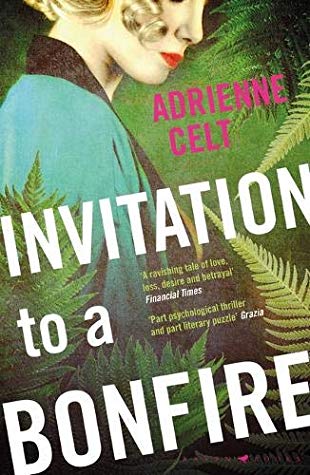
#BookReview Invitation to a Bonfire by Adrienne Celt #20BooksOfSummer23

About the Book

Zoya Andropova, a young Russian refugee, finds herself in an elite New Jersey boarding school. Having lost her family, her home and her sense of purpose, Zoya struggles to belong, a task made more difficult by her new country’s paranoia about Soviet spies.

When she meets charismatic fellow Russian émigré Leo Orlov – whose books Zoya has obsessed over for years – everything seems to change. But she soon discovers that Leo is bound by the sinister orchestrations of his brilliant wife, Vera, and that their relationship is far more complex than Zoya could ever have imagined.

Format: Paperback (256 pages) Publisher: Raven Books
Publication date: 27th June 2019 Genre: Historical Fiction

Find Invitation to a Bonfire on Goodreads

Purchase links 
Bookshop.org 
Disclosure: If you buy a book via the above link, I may earn a commission from Bookshop.org, whose fees support independent bookshops

Hive | Amazon UK 
Links provided for convenience only, not as part of an affiliate programme


My Review

I received this as part of a Reading Heels book subscription back in 2019. (Reading in Heels is no longer in business.) For me it was a ‘curate’s egg’, i.e. good in parts.

It’s apparently loosely inspired by the marriage of Vladimir and Vera Nabokov and supposedly set in the 1920s and 1930s, although it didn’t feel much like that to me, of which more later. The story is told by way of letters between Leo Orlov (for whom read Nabokov) and his wife Vera, occasional other official documents such as police witness statements but mainly through the journal of Zoya, a young Russian orphan sent to the United States as part of a refugee programme. Yes, that well-worn narrative structure, the journal; written by someone with an amazing memory, who can reproduce conversations verbatim and recall scenes from when they were in the crib.

The author achieves a good variation of styles between the different narrative structures, especially in the letters between Lev and Vera. Other reviewers have commented on how cleverly Celt mimcs Nabokov’s style but since I’ve never read anything by Nabokov this rather passed me by. I think this was one of my problems with the book in that I was missing allusions to Nabokov’s life and work.

For me, the first section of the book was rather slow and, frankly, lacked credibility. I found it difficult to believe that a Russian refugee would be placed in ‘an elite New Jersey boarding school’. If the intention was to contrast Zoya’s situation with that of the girls from privileged families who attend the school then that at least succeeded as Donne School comes across as a sort of toxic Mallory Towers. Zoya is ostracised and bullied mercilessly with the staff seemingly having no duty of care. This section, which accounts for about half the book, feels distinctly anachronistic with references to ‘bobby socks’ and the like which I don’t think were prevalent in the 1920s! Eventually Zoya is put to work in the greenhouse of the school, on the strength of having grown some lilacs from seed brought from her homeland. She’s obviously a horticultural genius because lilac is a shrub which takes at least three years to bloom and doesn’t seem the sort of thing you’d grow on your windowsill.

Over the years Zoya has become obsessed with the books of Leo Orlov so depending on your point of view it’s either convenient, fate or incredible coincidence when he arrives at Donne School. To borrow from the film Casablanca, it’s not so much “Of all the gin joints, in all the towns, in all the world, she walks into mine” as “Of all the schools, in all the towns, in all the world, he becomes a teacher at mine”. They embark on a passionate affair, their sexual encounters being intensely sensual, erotic but at the same time slightly disturbing.

I can’t say I was a fan of Leo, but then again perhaps I wasn’t intended to be. He’s completely untrustworthy, manipulative and self-centered. I couldn’t buy into the whole ‘I’m a literary genius so I must be allowed to get away with anything’. Zoya is the perfect victim; she’s needy and, apart from John her workmate, friendless. Lev attempts to convince Zoya that Vera is the villain of the piece, a controlling woman who has suppressed an early work of genius. At the same time, he’s professing his undying love to Vera in passionate letters whilst simultaneously plotting to get rid of her. ‘He was a writer. He could come up with the right set of circumstances to forestall any serious suspicion.’ Too right.

The publisher describes the book as ‘a gripping psychological thriller’ and there is a definite change of tone in the final quarter of the book as the Lev-Vera-Zoya triangle plays out in a quite unexpected way. This was the part of the book I enjoyed the most.

Invitation to a Bonfire is the second book from my 20 Books of Summer 2023 reading list.

In three words: Intimate, sensual, slow-moving


About the Author

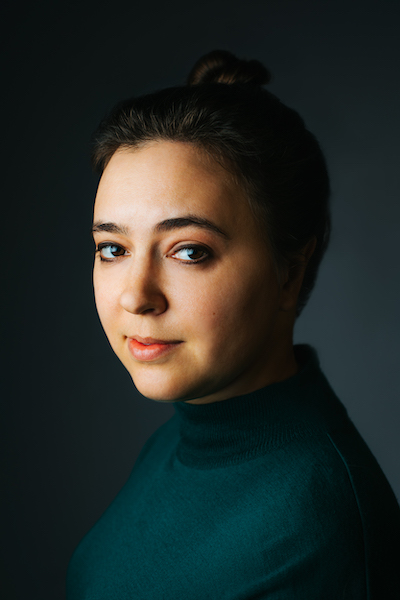
Adrienne Celt’s debut novel, The Daughters, won the PEN Southwest Book Award for Fiction and was an NPR Best Book of the Year. Her story ‘Temples’ was included in The O. Henry Prize Stories 2016 after originally appearing in Epoch. Celt’s short fiction appears or is forthcoming in Zyzzyva, Ecotone, the Kenyon Review, Prairie Schooner, Esquire, Electric Literature, and Carve Magazine, among others; her nonfiction has appeared in the Rumpus, Tin House‘s ‘OpenBar’, Lit Hub, the Toast, Catapult, the Millions, and elsewhere.

Adrienne has an MFA in fiction from Arizona State University, draws weekly web comics at loveamongthelampreys.com, and lives in Tucson, Arizona. (Photo: Author website)

Connect with Adrienne
Website | Twitter