Summer’s officially over and therefore so is the 20 Books of Summer reading challenge for another year. Thanks to Annabel at AnnaBookBel for being our host for the event.
I usually try to stick to my original list and not take advantage of the option to swap books in and out. Invariably it ends in failure. This year I allowed myself the option, swapping in eight books most of which were August and September publishing ARCs or book club picks I needed to read. In hindsight, I should have put them on my list from the beginning. I’m pleased that I actually managed to read twenty-seven books over the period of the challenge. Let’s not talk about how many reviews I still need to write though…
Links from the titles will take you to the book description on Goodreads or my review.
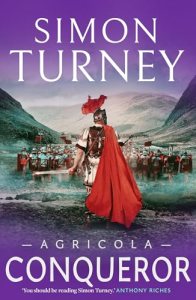
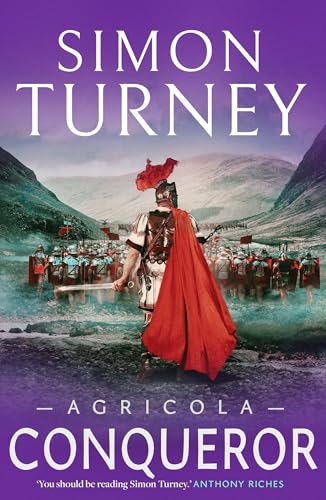
Following years of distinguished military and political exploits, Agricola has been rewarded with control of Aquitania by the Emperor Vespasian.
But Agricola’s greatest glories have always come in that rainy northern corner of the Empire: Britannia. When Vespasian sends him back to Britannia, this time as governor, he has a chance to cement his place in Roman history.
To conquer Britannia completely Agricola must overcome its many Celtic tribes. The Ordovices have massacred a Roman cavalry unit. The Selgovae and Damnonii resist Imperial rule fiercely. And he must take them on with ever fewer troops due to a series of changes at the heart of Roman power.
Failure will mean disgrace or death, but if he should succeed, Agricola will be forever lauded among the pantheon of Rome’s heroes.
Format: Paperback (416 pages) Publisher: Head of Zeus Publication date: 27th August 2026 Genre: Historical fiction
Purchase Conqueror (Agricola #4) from Bookshop.org [Disclosure: If you buy books linked to this site, I may earn a commission from Bookshop.org, whose fees support independent bookshops]
My Review
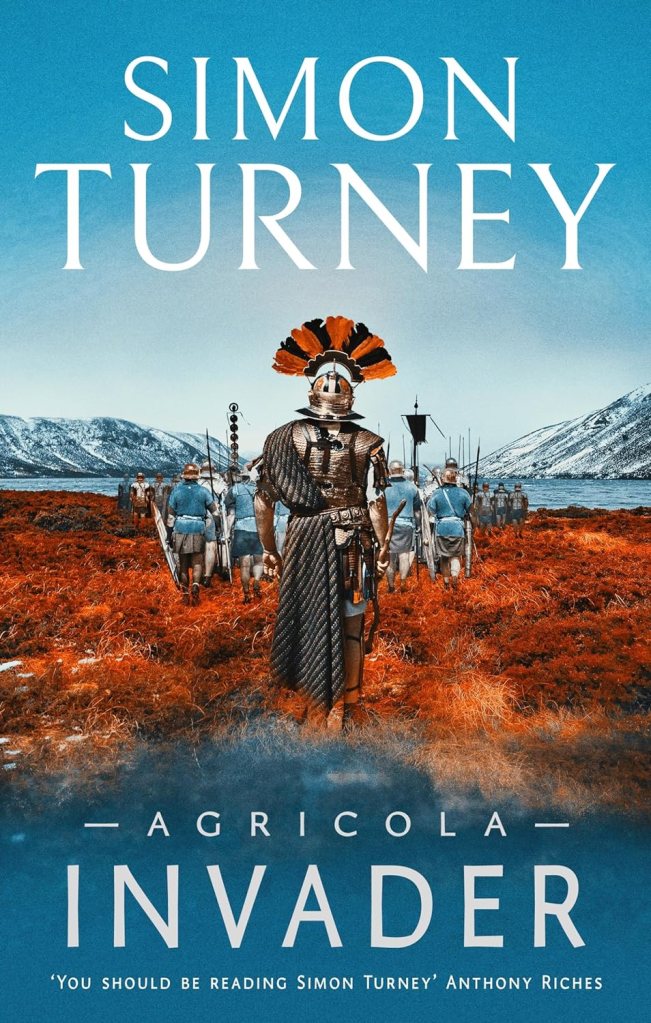
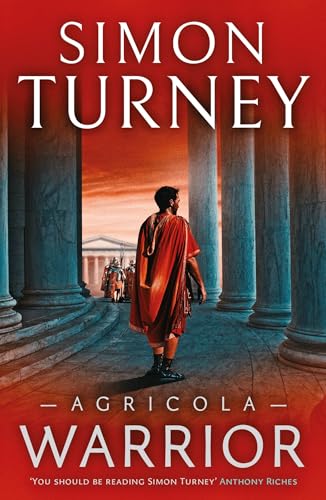
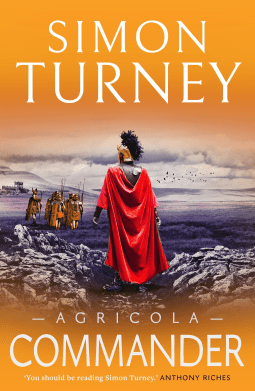
Conqueror is the fourth and final book in the series depicting the life of Roman statesman and general Gnaeus Julius Agricola. Links from each title will take you to my reviews of the previous three books in the series – Invader, Warrior and Commander.
As with the earlier books, the events in Conqueror are based on available historical sources, including Tacitus’s biography of Agricola (Tacitus was Agricola’s son-in-law) and the author’s own in-depth knowledge of the period. However, like the previous books, Conqueror is very much a picture of Agricola the man not just the historical figure.
Appointed its governor, Agricola returns to Britannia charged by the Emperor Vespasian with conquering the whole of the island and placing it under Roman control. It’s a huge task made even more challenging by being accompanied by a time limit, the withdrawal of legions to protect other parts of the Empire and, being Britannia, the weather. The pressure to complete the task, likely to be the defining moment of Agricola’s career, is always uppermost in his mind. It informs his tactics, the deployment of forces and increasingly requires a change of mindset. As the pressure to complete the task builds, we see a more ruthless side of Agricola, latterly influenced by tragic events in his personal life.
Agricola was ever the tactician but his relentless progress northwards, quelling the various tribes either through negotiation or direct engagement, really demonstrates his ability to innovate. For example, combining his land forces with the Roman fleet, which at the time was separately commanded. He never quite loses his desire to be at the heart of the action, fighting alongside his men, although now resigned to the fact that, as governor, he can only sit and watch. Well, for a time…
Some of the tribes Agricola encounters prove particularly hostile, seemingly preferring death over defeat. This leads to epic battle scenes including the climactic encounter with the Caledonii at Mons Graupius. It is a bloody affair leaving Agricola, even at the moment of conquest, feeling hollow at the loss of life. ‘All around him, a whole generation of humanity lay strewn in their own blood and gore.’
Being the final book in the series, it’s a time of partings, one especially poignant, and the end of longstanding relationships. As the author notes, history provides a bittersweet ending. As Tacitus records, ‘Perdomita Britannia et statim omissa‘ [Britain was conquered and immediately lost].
Conqueror brings to a close a series which combines fascinating historical detail with the immersive ‘cacophony of battle’. If you have a desire to learn more about Agricola, Simon’s biography of Agricola was published in 2022. And Simon has just embarked on a new series about Constantine, the last Emperor of Rome. The first book in the series, Prince, was published by Canelo on 16th July.
I received an advance reader copy courtesy of Head of Zeus via NetGalley.
In three words: Gripping, authentic, fascinating Try somethig similar: Agrippa by Robert Harris
About the Author
Simon Turney is from Yorkshire and, having spent much of his childhood visiting historic sites, fell in love with the Roman heritage of the region. His fascination with the ancient world snowballed from there with great interest in Rome, Egypt, Greece and Byzantium. His works include the Marius’ Mules and Praetorian series, the Tales of the Empire and The Damned Emperor series, and the Rise of Emperors books with Gordon Doherty. He lives in North Yorkshire with his family.