
About the Book
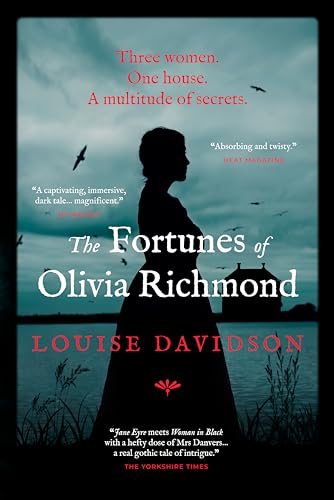
1891 Norfolk. After a terrible tragedy, governess Julia Pearlie finds herself with no job, home, or references. When she’s offered a position as companion to Miss Olivia Richmond, her luck appears to be turning. But Mistcoate House is full of secrets.
Olivia has a sinister reputation. The locals call her the Mistcoate Witch, thanks to her tarot readings, and her insistence that she can speak to the dead. Her father, Dr Richmond, believes this to be girlish fantasy and is looking to Julia to put a stop to it.
Determined to prove herself and shake off her own murky history, Julia sets to work trying to help Olivia become a proper young lady. However, as she becomes a fixture at Mistcoate, it is soon clear that there may be more to Olivia’s stories than Dr Richmond would have Julia believe – not least because somehow, Olivia seems to know something of the darkness that Julia desperately hoped she had left behind.
As the danger grows, and the winter chill wraps around the dark woods surrounding Mistcoate, Julia will have to fight to uncover the truth, escape her past – and save herself.
Format: Paperback (350 pages) Publisher: Moonflower Books
Publication date: 12th September 2024 Genre: Historical Fiction
Find The Fortunes of Olivia Richmond on Goodreads
Purchase The Fortunes of Olivia Richmond from Bookshop.org [Disclosure: If you buy books linked to our site, we may earn a commission from Bookshop.org, whose fees support independent bookshops]
My Review
If your reading taste at this time of the year is for a chilling mystery with a hint of the supernatural then The Fortunes of Olivia Richmond may be just what you’re looking for.
A remote, slightly rundown house surrounded by thick forest, a girl with intensely pale skin who has been largely shut away from the world because she seems able to see glimpses of individuals’ future (or their pasts), a housekeeper who could give Mrs Danvers from Daphne du Maurier’s Rebecca a run for her money when it comes to sinister malice, and in Julia Pearlie a young woman haunted (literally) by recent tragic events.
There are moments of melodrama, some distinctly unpleasant Victorian attitudes to women, a hint of romance, the obligatory secret diary, and plenty of things to send chills up your spine. ‘A dark figure was creeping across the lawn…When I looked again, the lawn was empty.‘
Each chapter is associated with a different Tarot card and there is a list at the end of the book that gives the meanings of the cards. I confess I didn’t have the time to look back and see their relevance to each chapter’s events.
The Fortunes of Olivia Richmond is the perfect read for a dark October evening, although I suggest you check your doors are locked and your windows closed before settling down to read. Hang on, are you sure that’s a dripping tap and not something more sinister? And what was that scratching sound? Sleep well.
My thanks to Amanda at Moonflower Books for my digital review copy.
In three words: Chilling, suspenseful, intriguing
Try something similar: Bone China by Laura Purcell
About the Author

Louise Davidson was born in Belfast and has always worked in the creative arts in some capacity – from assistant to theatre directors to teaching scriptwriting classes in prisons to teaching English and drama to A-Level students. Growing up in Northern Ireland backgrounded by the Troubles led to a fascination with history, and this combined with her love of all things gothic inspired her to write her first book, a dark Victorian thriller set in a neglected and isolated mansion. Louise lives in London with her husband and step-son, and in her spare time is working on fulfilling her ambition to visit every museum in the city. The Fortunes of Olivia Richmond is her debut novel. (Photo: Goodreads author page/Bio: Publisher author page)
Connect with Louise
X | Goodreads



 What Cathy Read Next...