
About the Book
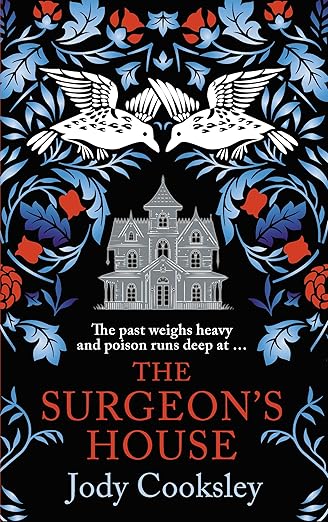
London, 1883. The brutal murder of Rose Parmiter seems, at first glance, to be a random and senseless act. Rose was the beloved cook at Evergreen House, a place of refuge for women and children, a place from which they can start their lives afresh.
Proprietor Rebecca Harris is profoundly shocked by the death of her dear friend and alarmed at the mysterious events which begin to unfold shortly afterwards. Could the past be casting a shadow on the present? The malign legacy of the Everley family who called Evergreen home, cannot be ignored.
After two further deaths it becomes clear there is an evil presence infecting their sanctuary, and Rebecca must draw out the poison of the past so the Evergreen residents can finally make peace with the darkness in their lives.
Format: Hardcover (352 pages) Publisher: Allison & Busby
Publication date: 22nd May 2025 Genre: Historical Fiction
Find The Surgeon’s House on Goodreads
Purchase The Surgeon’s House from Bookshop.org [Disclosure: If you buy books linked to our site, we may earn a commission from Bookshop.org, whose fees support independent bookshops]
My Review
The Surgeon’s House is the follow-up to The Small Museum. If you haven’t read the earlier book never fear because there is a generous amount of detail about previous events. On the other hand, if you have read the earlier book you’ll either find the lengthy exposition a useful recap or think, as I did, I already know all this.
The narrative alternates between Rebecca as she attempts to discover the person responsible for Rose’s murder, as well as safeguard the future of Evergreen, and Grace, confined to a mental institution for ten years now and saved from the gallows only by the evidence of her father’s assistant and one time protegee, Edward Threlfall.
In my review of The Small Museum, I likened Grace to Mrs Danvers in Daphne du Maurier’s Rebecca. In this book she’s more like Miss Havisham in Dickens’s Great Expectations, consumed by a desire to wreak revenge on those who have wronged her. Grace prides herself on her ability to manipulate others and sees her daughter Eloise, who was sent abroad to be adopted, as the vehicle for delivering vengeance. She also retains a perverted obsession with proving her father’s theories correct, something that would mean continuing his vile experiments. And she is coldly indifferent to the fate of her two sons.
Rebecca has worked to make Evergreen a place where women can leave their unhappy pasts (abuse, prostitution, children out of wedlock) behind and learn skills that might enable them to gain employment. It’s a community that has become more like a family and Evergreen’s cook, Rose, was a key part of this. Her loss is keenly felt, especially by Rebecca. Unfortunately, not everyone shares Rebecca’s enlightened views. They believe women such as those who live at Evergreen to be degenerate and sinful, deserving only of being put to work in laundries and having their children sent away.
The story also explores the prejudiced views held at the time about women’s predisposition to mental breakdown. Dr Threlfall is an ‘alienist’ (what we’d now call a psychiatrist) who although using ‘talking therapies’ to treat female patients also clings to unproven concepts. ‘Women are closer to madness than men, and it’s easier for their minds to fall ill because their bodies are weak; they cannot hold up. Women also suffer in the mind from the nature of their physiognomy, it is constantly changing.’ There are unsettling descriptions of young women being forcibly bundled into Threlfall’s consulting rooms by male relatives.
I pretty much worked out where things were going as soon as a particular character turned up and as events unfolded my feeling I was right became even stronger. In fact, I thought it was so obvious I wondered if the author had creating a huge red herring and I’d fallen for it hook, line and sinker.
I would have liked Rebecca’s husband George to feature more prominently, although he does make a crucial intervention at one point. However, this is really Rebecca and Grace’s story. They’re both exceptionally determined women but their motivations couldn’t be more different: evil in Grace’s case and generosity of spirit in Rebecca’s.
For me, The Surgeon’s House lacked the compelling Gothic element of The Small Museum but it will, I’m sure, be a hit with many historical fiction fans.
I received a review copy courtesy of Allison & Busby via NetGalley.
In three words: Engaging, dramatic, assured
Try something similar: The Household by Stacey Halls
About the Author
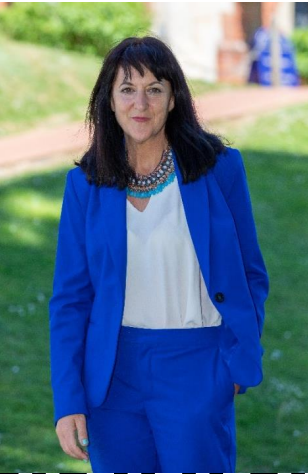
Jody Cooksley studied literature at Oxford Brookes University and has a Masters in Victorian Poetry. Her debut novel The Glass House is a fictional account of the life of nineteenth-century photographer, Julia Margaret Cameron. The Small Museum, Jody’s third novel, won the 2023 Caledonia Novel Award. Jody is originally from Norwich and now lives in Cranleigh, Surrey.
Connect with Jody
Website | X/Twitter | Instagram




 What Cathy Read Next...