About the Book
The Path of the King offers a tapestry of historical episodes, from the Vikings through centuries of Norman and French, Flemish, English, Scottish and American social, economic and political life.
Format: Hardcover (283 pp.) Publisher: Thomas Nelson & Son
Published: [1921] Genre: Historical Fiction
Purchase Links*
Amazon.co.uk ǀ Amazon.com
*links provided for convenience, not as part of any affiliate programme
Find The Path of the King on Goodreads
My Review
The Path of the King is the third book in my Buchan of the Month reading project for 2019. You can find out more about the project and my reading list for 2019 here. You can also read my spoiler-free introduction to The Path of the King here.
Kate Macdonald, author of John Buchan: A Companion to the Mystery Fiction (McFarland, 2009) describes The Path of the King as a ‘connected sequence of short stories’ and I think that is a very apt description. The book certainly reads more like a collection of short stories than a novel but there is a thread that runs through all the stories, embodied in a gold ring handed down through the generations. Beginning with a Viking’s son lost in a raid, the book traces the line of descent through the centuries to American President, Abraham Lincoln. It is essentially a series of historical vignettes, featuring characters who are often participants in or witnesses to great events and who rub shoulders with important individuals from history including Sir Walter Raleigh, Oliver Cromwell (both the subject of essays and biographies by Buchan), Daniel Boone and the aforementioned Abraham Lincoln.
In his biography of John Buchan, The Presbyterian Cavalier (Constable, 1995), Andrew Lownie argues that the novel reflects Buchan’s interest in the chance encounters in history and in kingship, noting that the latter would later be explored further in The Blanket of the Dark (September’s Buchan of the Month). Two stories from the book were subsequently dramatised by John Buchan’s wife, Susan – ‘The Maid’ (published in 1933 under the title, The Vision at the Inn: A Play in One Act) and ‘The Wife of Flanders’ (published in The Bookman in 1934). These happen to be the two stories in the book that most stood out for me.
Janet Adam Smith, author of John Buchan: A Biography (OUP, 1985 [1965]) describes The Path of the King as historical fantasy and there is certainly a mystical, spiritual element to many of the stories. This is particularly evident in ‘The Maid’ in which a young noblewoman, plagued with doubt about her demand to her lover to make a choice between her or his support for Joan of Arc, has an encounter with another young woman facing her own moral dilemma. There are some lovely touches in the description of the meeting between the two young woman. As it turns out, it may not be their final meeting.
In ‘The Wife of Flanders’, Buchan shows his ability to create atmosphere as he describes the chamber in which the wife of a Flemish burgomaster lies dying. ‘The small-paned windows of the great upper-room were filled with oiled vellum, but they did not keep out the weather, and currents of cold air passed through them to the doorway, making the smoke of the four charcoal braziers eddy and swirl… Hanging silver lamps, which blazed blue and smoky, lit it in patches, sufficient to show the cleanness of the rush-strewn floor, the glory of the hangings of cloth-of-gold and damask, and the burnished sheen of the metal-work.’ Spurning the ministrations of priests and doctors, the woman finds comfort in the thought that her son will achieve greatness only to find that fate intervenes in an unexpected way.
Those who have followed my reviews of previous books in my Buchan of the Month project will note that an appearance by John Bunyan’s The Pilgrim’s Progress can never be ruled out in a John Buchan book. In the case of The Path of King it arrives in the story ‘The Last Stage’, also notable for giving the reader a glimpse of a young Abraham Lincoln. He will reappear in the last story in the book, ‘The End of the Road’ and in the book’s epilogue.
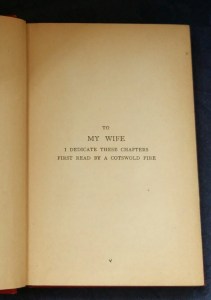 Although not all of the stories had equal appeal for me, The Path of the King is an interesting insight into Buchan’s use of the short story form and an indication of his interest in history, especially American history, at this point in his life. I’m also touched by the dedication of the book to his wife, Susan.
Next month’s Buchan of the Month is another historical novel, Midwinter. Look out for my spoiler free introduction to the book shortly and my review towards the end of April.
In three words: Well-crafted, atmospheric, insightful
Try something similar: Beautiful Star & Other Stories by Andrew Swanston (read my review here)
 About the Author
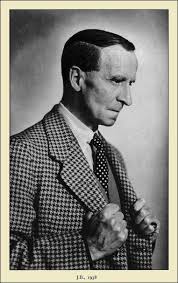
John Buchan (1875 – 1940) was an author, poet, lawyer, publisher, journalist, war correspondent, Member of Parliament, University Chancellor, keen angler and family man. He was ennobled and, as Lord Tweedsmuir, became Governor-General of Canada. In this role, he signed Canada’s entry into the Second World War. Nowadays he is probably best known – maybe only known – as the author of The Thirty-Nine Steps. However, in his lifetime he published over 100 books: fiction, poetry, short stories, biographies, memoirs and history.
You can find out more about John Buchan, his life and literary output by visiting The John Buchan Society website.