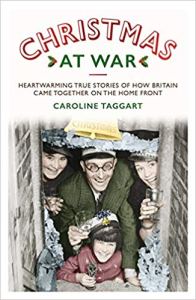
 About the Book
No turkey. No fruit to make a decent pudding. No money for presents. Your children away from home to keep them safe from bombing; your husband, father and brothers off fighting goodness knows where. How in the world does one celebrate Christmas?
That was the situation facing the people of Britain for six long years during the Second World War. For some of them, Christmas was an ordinary day: they couldn’t afford merrymaking – and had little to be merry about. Others, particularly those with children, did what little they could.
These first-hand reminiscences tell of making crackers with no crack in them and shouting ‘Bang!’ when they were pulled; of carol-singing in the blackout, torches carefully covered so that no passing bombers could see the light, and of the excitement of receiving a comic, a few nuts and an apple in your Christmas stocking. They recount the resourcefulness that went into makeshift dinners and hand-made presents, and the generosity of spirit that made having a happy Christmas possible in appalling conditions.
From the family whose dog ate the entire Christmas roast, leaving them to enjoy ‘Spam with all the trimmings’, to the exhibition of hand-made toys for children in a Singapore prison camp, the stories are by turns tragic, poignant and funny. Between them, they paint an intriguing picture of a world that was in many ways kinder, less self-centered, more stoical than ours. Even if – or perhaps because – there was a war on.
Format: Paperback, ebook (304 pp.) Publisher: John Blake
Published: 1st November 2018 Genre: Nonfiction, History
Purchase Links*
Amazon.co.uk ǀ Amazon.com ǀ Hive.co.uk (supporting UK bookshops)
*links provided for convenience, not as part of any affiliate programme
Find Christmas at War on Goodreads
My Review
Subtitled ‘True Stories of How Britain Came Together on the Home Front’, Christmas at War is an interesting collection of firsthand accounts and excerpts from contemporary articles, journals and letters about people’s recollections of Christmas during the years of the Second World War.
I liked the the way the author used phrases from the reminiscences as chapter headings, such as ‘You’ll Have to Have Shop Butter From Now On’. I also loved the photographs in the book. My particular favourite was one of an Anderson shelter decorated for Christmas which really epitomises the spirit of the contributions to the book. One small niggle was what seemed like inconsistent formatting of the text. However, I eventually worked out that verbatim accounts were shown in normal text and excerpts from letters or diaries shown in italics.
The book commences with evacuees’ recollections of Christmas away from their families, with some better than those they’d experienced previously and others just different. For example, Christmas in the country versus in the city with one contributor remarking that ‘out in the country in the 1940s you were still pretty much in the nineteenth century’. Evacuees recall new experiences – different Christmas food and traditions, for example – but also loneliness, cruelty, even physical abuse. I was surprised to learn of the lack of government pre-planning for evacuation with organisers in some cases knocking on doors to find people willing to take in evacuees.
In the chapter entitled ‘Thank Goodness…Now We Can Get Some Sleep’, contributors recall nights spent in public shelters when, contrary to what you might expect, they found they slept better once the air raid warning had sounded because the uncertainty was over. Sharing a shelter with so many other people didn’t provide much privacy. ‘There was an Elsan toilet pan surrounded only by a heavy hessian curtain. People used to time their bodily functions to coincide with bomb or gunfire or aircraft flying overhead…’ However, many recall the so-called ‘Second Great Fire of London’, the night of 29th December 1940, when a hundred thousand incendiary bombs and twenty-four thousand high-explosive bombs (yes, you read those numbers right) were dropped on London.
Much of the book is given over to reminiscences about the shortage of luxury goods and foodstuffs typically associated with Christmas and the ingenuity required to conjure up anything resembling festive fare. Hence the many recipes for ‘mock’ something or other that prevailed at the time. Similar ingenuity was required when it came to Christmas decorations and presents with much use of recycled items, hand-me-downs, homemade presents and gifts courtesy of ‘bring and buy’ sales. That was unless you had useful contacts who could obtain goods in short supply or were fortunate enough to benefit from the generosity of strangers. And, of course, with television off air for the duration of the war, with the exception of the radio, entertainment had to be of the homemade variety too: sing-a-longs round the piano, card games, board games and charades.
What really came home to me reading the book was how many of the things we now associate with Christmas were absent from people’s lives. For example, all the church bells were silenced, only to be rung if invasion was imminent. Gatherings of family and friends were necessarily limited by petrol rationing, evacuation, people serving overseas, loved ones confined as prisoners-of-war and restrictions on leave. Despite all of this, people continued to make a valiant effort to celebrate Christmas in whatever way they could. Whether in hospitals, on active service overseas or even confined as prisoners-of war, people tried their best to create some festive spirit.
The book ends on a more sombre note, acknowledging that the last Christmas of the war (1944) was one of contradictions. There was optimism that Germany was close to defeat. On the other hand, 1944 had seen the most devastating bombardment of London, including with the dreaded ‘Doodlebugs’, killing and injuring many and resulting in the destruction of homes, businesses and infrastructure.
Christmas at War was one of the books from my NonFictionNovember reading list. It made the perfect literary companion to a historical fiction book I read shortly before – A Ration Book Christmas (see the ‘Try Something Similar’ section below). I believe Christmas at War would make an ideal Christmas gift for anyone with an interest in social history or the Second World War and how it affected the daily lives of ordinary people.
I received a review copy courtesy of publishers, John Blake, and Readers First.
Follow my blog with Bloglovin
In three words: Fascinating, authentic, inspiring
Try something similar…A Ration Book Christmas by Jean Fullerton (read my review here)
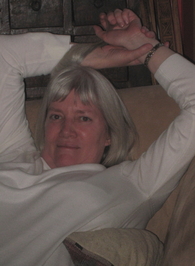 About the Author
Caroline writes: ‘I was an editor for 30 years before Michael O’Mara Books asked me to write what became I Used to Know That. I think its success took everyone by surprise – it certainly did me – but it led to my writing a lot of other books and finally, after about three years, feeling able to tell people I was an author. It’s a nice feeling.
Until recently the book I was most proud of was The Book of London Place Names (Ebury), partly because I am passionate about London and partly because, having written ten or so books before that, I finally felt I was getting the hang of it.
Now I have to confess I’m really excited by my first venture into continuous narrative. For A Slice of Britain: Around the Country by Cake (AA) I travelled the country investigating, writing about and eating cake. From Cornish Saffron Cake to Aberdeen Butteries, I interviewed about 25 people who are baking cakes, biscuits and buns that are unique to their region, part of their heritage – and pretty darned delicious. The Sunday Times reviewed it and described me as ‘engaging, greedy and droll’, which pleased me enormously.’ (Photo credit: Goodreads author page)
Connect with Caroline
Website ǀ Twitter ǀ Goodreads

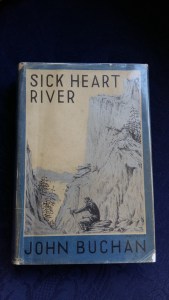 What follows is an introduction to Sick Heart River. It is also an excuse to show a picture of my lovely edition of the book complete with dust jacket. I will be posting my review of the book later in the month.

 What Cathy Read Next...