
It’s what lovers of historical fiction have been waiting for – the publication yesterday of the longlist for the 2019 Walter Scott Prize for Historical Fiction. The organisers and judges have treated us again this year because there are twelve titles on a longlist of great variety, including a couple of books that are completely new to me (which is always a surprise to someone who prides herself as being up on the latest historical fiction).
Congratulations to all the authors and publishers of the longlisted books.
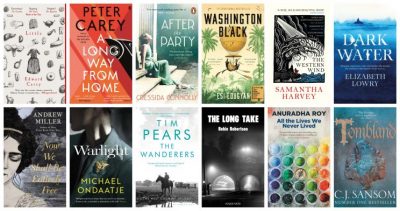
Little by Edward Carey (Gallic Books) – in my TBR pile
A Long Way From Home by Peter Carey (Faber)
After The Party by Cressida Connolly (Viking) – Read and reviewed
Washington Black by Esi Edugyan (Serpent’s Tail)
The Western Wind by Samantha Harvey (Jonathan Cape) – in my TBR pile
Dark Water by Elizabeth Lowry (riverrun)
Now We Shall Be Entirely Free by Andrew Miller (Sceptre) – in my TBR pile
Warlight by Michael Ondaatje (Jonathan Cape) – in my TBR pile
The Wanderers by Tim Pears (Bloomsbury)
The Long Take by Robin Robertson (Picador)
All The Lives We Never Lived by Anuradha Roy (Maclehose Press)
Tombland by C J Sansom (Mantle) – in my TBR pile
I’m not going to promise to read the entire longlist before the short list is announced in April but I’ll have a go. Visit The Walter Scott Prize for Historical Fiction page on my blog for links to my reviews or the book description on Goodreads. I’ll be updating the links as I read and review them.
I recently shared my thoughts on contenders for the longlist and I suppose I should congratulate myself that I got any right. In fact, there were two I tipped that appear on the longlist – Warlight by Michael Ondaatje and Now We Shall Be Entirely Free by Andrew Miller – although I haven’t read either of them yet. Four more of my predictions made it on to the Academy Recommends list, a list of twenty recommended books supplementary to the longlist: Love is Blind by William Boyd and All Among The Barley by Melissa Harrison (which I’m currently reading) plus The Black Earth by Philip Kazan and The Angel’s Mark by S.W. Perry, both of which I loved.
Are there books you’re surprised to see on the list? Are there favourites you’re sad didn’t make it? Are you planning to read some or all of the longlisted books? Do you have any early predictions for the shortlist or even the eventual prize-winner?


 The Path of the King was published in the UK in March 1921 by Hodder & Stoughton and in the United States on 15th June 1921 by George H. Doran, Buchan’s American publisher. It also appeared in periodical form in Outward Bound magazine from October 1920 to October 1921 and in Adventure magazine from February to March the same year.
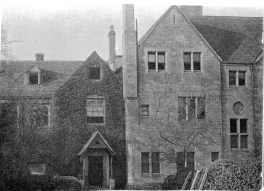 It was the first historical novel Buchan wrote at Elsfield Manor, the country house in Oxfordshire he had purchased in 1919 and which became the family home. So devoted to the place was he that, on his death in Canada in 1940, his ashes were brought home to be buried in Elsfield churchyard. (You can find out more information about Elsfield and the Buchan family’s life there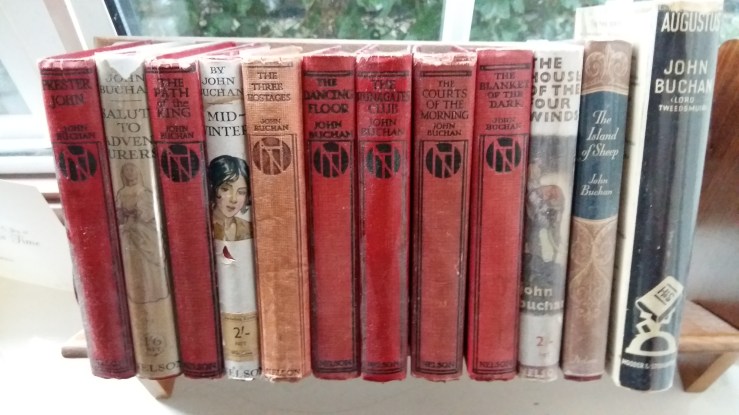

 What Cathy Read Next...