
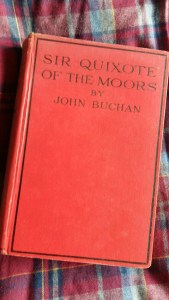
#BookReview Buchan of the Month: Sir Quixote of the Moors by John Buchan

20200118_131258About the Book

In the mid-sixteenth century, Jean de Rohaine, a middle-aged French nobleman, journeys to Scotland in search of adventure and a new beginning. In Scotland he meets up with his old friend, Quentin Kennedy, who informs him of a great battle to be waged. Yet what is the Frenchman’s horror when he rides with Kennedy’s men in search of honour, but finds instead that the “war” is with unarmed religious dissidents, “Covenanters,” whom he watches massacred.

Disgusted, he sets off alone across the barren moors, where he wanders until he comes to a cottage containing a beautiful and unprotected young woman, Anne. Rohaine promises to be her protector, but his ideals of honour and duty will be put to the test when he finds himself gradually falling in love with her….

Format: Hardcover (182 pages) Publisher: T Fisher Unwin
Publication date: 1924 [1895]   Genre: Historical fiction, romance

Find Sir Quixote of the Moors on Goodreads


My Review

Buchan’s first published novel, Sir Quixote of the Moors is described in one edition as ‘A Charming Narrative of the Scottish Moors depicting the Tragic Love Story of a Gallant Gentleman’. In the book’s prologue, Buchan presents what follows as an account written by a French knight, Jean de Rohaine, even going so far as to invent an explanation for why it is in English and pointing out changes he has made in an editorial capacity. The structural device of discovered papers would recur in later Buchan novels.

The book’s title clearly references Cervantes’ Don Quixote and both heroes share an aspiration to embody in their actions the highest levels of chivalry. The majority of Buchan’s novel is taken up with de Rohaine’s moral dilemma about his growing attraction to Anne, the young woman he pledges to protect when her father and her betrothed are forced into hiding because of their religious views. The fact he arrived at their door lost and near to exhaustion and was shown great hospitality weighs on his conscience.

As mentioned in my earlierblog post introducing the book, Buchan’s first biographer Janet Adam Smith reports he was annoyed his US publisher changed the ending. Having now read the book and compared the two endings, I can see why he was upset. Without giving anything away, the alternative endings to Charles Dickens’ Great Expectations spring to mind.

Although rather a slight story and probably largely of interest due to being his first novel, Sir Quixote of the Moors shows early signs of the literary craftsmanship for which Buchan would become known. In particular, the Scottish landscape is vividly described even if poor Jean experiences it predominantly in the cold, the wind and the rain.
Follow my blog via Bloglovin


John BuchanAbout the Author

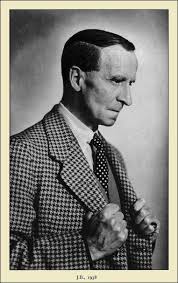
John Buchan (1875 – 1940) was an author, poet, lawyer, publisher, journalist, war correspondent, Member of Parliament, University Chancellor, keen angler and family man.  He was ennobled and, as Lord Tweedsmuir, became Governor-General of Canada.  In this role, he signed Canada’s entry into the Second World War.   Nowadays he is probably best known – maybe only known – as the author of The Thirty-Nine Steps.  However, in his lifetime he published over 100 books: fiction, poetry, short stories, biographies, memoirs and history.

You can find out more about John Buchan, his life and literary output by visiting The John Buchan Society website.


#BookReview The Lady of the Ravens by Joanna Hickson #HistFic

The Lady of the RavensAbout the Book

“My baptismal name may be Giovanna but here in my mother’s adopted country I have become plain Joan; I am not pink-cheeked and golden-haired like the beauties they admire. I have olive skin and dark features – black brows over ebony eyes and hair the colour of a raven’s wing…”

When Joan Vaux is sent to live in the shadow of the Tower of London, she must learn to navigate the treacherous waters of this new England under the Tudors. Like the ravens, Joan must use her eyes and her senses, if Henry and his new dynasty are to prosper and thrive.

Format: ebook (400 pages)                  Publisher: Harper Collins
Publication date: 9th January 2020  Genre: Historical fiction

Purchase links*
Amazon.co.uk | Hive (supporting UK bookshops)
*links provided for convenience, not as part of any affiliate programme

Find The Lady of the Ravens on Goodreads


My Review

The Lady of the Ravens is a fictionalized account of the life of Joan Vaux, lady-in-waiting to Elizabeth, wife of Henry VII. Through Joan’s privileged access, the reader gets a glimpse into the marriage of the King and Queen and of life at Court.

Opening shortly after the Battle of Bosworth and early in the reign of Henry VII, it’s apt that the collective term for a gathering of ravens is a ‘conspiracy’ for it’s a time of unrest, shifting allegiances, the threat of revolt and pretenders to the throne. It’s no wonder that Joan should set such store by the welfare of the ravens who make the Tower of the London their home given the legend that their presence ensures the nation’s security. Joan is also drawn to the ravens for their cleverness and the beauty of their sleek plumage. With her dark hair and olive skin, that sets her apart from other ladies of the Court, she feels an affinity with them as “fellow misfits”.

The book will appeal to readers who like their historical fiction well populated with historical fact. I confess that, whilst appreciating the depth of research, I found the first half of the book a teeny bit slow. I was also a little distracted by the occasional use of modern phrases such as ‘dress to impress’, ‘super-intelligent’, ‘top-security secrets’ and ‘kept under wraps’. However, once the action moved to Kent and Joan’s life was centre stage, I found myself falling under the book’s spell and eager to find out what lay in store for Joan and those close to her.

The book ends at the point of Prince Arthur’s marriage to Katharine of Aragon and before significant events in Joan’s own life, including her part in what would come to be referred to as Henry VIII’s “great matter”, leaving open the prospect of a follow-up book.

The Lady of the Ravens is a well-crafted historical novel set in an interesting period in England’s history. I received an advance review copy courtesy of Harper Collins via NetGalley.

In three words: Detailed, well-researched, authentic

Try something similar: The White Princess by Philippa Gregory

Follow my blog via Bloglovin


About the Author

Joanna Hickson spent twenty five years presenting and producing News and Arts programmes for the BBC. Her first published book was a children’s historical novel Rebellion at Orford Castle but more recently she has turned to adult fiction, concentrating on bringing fifteenth century English history and some of its fascinating principal characters to life.

She is married with a large family and gets inspiration from her Wiltshire farmhouse home, which dates back to her chosen period.

Connect with Joanna

Website | Twitter