 About the Book
From his years serving in British Intelligence during the Cold War to a career as a writer, John le Carré has lived a unique life.
In this, his first memoir, le Carré is as funny as he is incisive – reading into the events he witnesses the same moral ambiguity with which he imbues his novels. Whether he’s interviewing a German terrorist in her desert prison or watching Alec Guinness preparing for his role as George Smiley, this book invites us to think anew about events and people we believed we understood.
Best of all, le Carré gives us a glimpse of a writer’s journey over more than six decades, and his own hunt for the human spark that has given so much life and heart to his fictional characters.
Format: ebook (310 pages) Publisher: Penguin
Publication date: 6th September 2016 Genre: Memoir
Find The Pigeon Tunnel: Stories From My Life on Goodreads
Purchase links
Bookshop.org
Disclosure: If you buy a book via the above link, I may earn a commission from Bookshop.org, whose fees support independent bookshops
Hive | Amazon UK
Links provided for convenience only, not as part of an affiliate programme
My Review
I’m a long-time fan of John le Carré’s novels, having read just about every novel he’s written, with the exception of Silverview which is in my TBR pile. The Pigeon Tunnel (the inspiration for the title is explained in his introduction to the book) is less a memoir than a series of essays in which he muses on the people he’s met and the places he’s travelled to, with some anecdotes thrown in for good measure.
The stories are written with all the literary eloquence you’d expect from a bestselling author but I particularly enjoyed learning about the inspiration for some of the characters in his books and how he went about researching the different storylines and settings during which he demonstrates he is a master of observation. Although he refers to his time working for British intelligence, he refrains from giving much away about the work he did although it clearly informed the plots of many of his novels.
The book covers a range of subject matter from the amusing, the informative to the thought-provoking. Rather than try to cover them all I’ll just pick out a few of my favourites.
- ‘Official visit’ in which he recalls a visit to London by a group of young Germans. ‘All they knew about London in the sixties was that it was swinging, and they were determined to swing with it.’ In an attempt to be the perfect host and meet their request for late night female company, he seeks advice from the hotel concierge. ‘Halfway up Curzon Streets on your left-hand side, sir, and there’s a blue light in the window says “French Lessons Here”.’
- ‘Theatre of the Real: dances with Arafat’ in which he recalls travelling to a 1982 meeting with Yasser Arafat in Beirut surrounded by armed fighters. ‘We are racing through a smashed city in pouring rain with a chase Jeep on our tail. We are changing lanes, we are changing cars, we are darting down side streets, bumping over the central reservation of a busy dual carriageway.’
- ‘Lost masterpieces’ in which he reflects humourously on the films of his books that were never made despite initial interest by famous directors including Fritz Lang, Stanley Kubrick and Francis Ford Coppola.
- Observing Alec Guinness prepare for his role as George Smiley in the BBC adaptation of Tinker, Tailor, Soldier, Spy: ‘Watching him putting on an identity is like watching a man set out on a mission into enemy territory. Is the disguise write for him? (Him being himself in his new persona). Are his spectacles right? – No, let’s try those. His shoes are they too good, two new, will they give him away? And this walk, this thing he does with his knee, this glance, this posture – not too much, you think?’ (If you’ve ever watched the series, you’ll know Alec Guinness nailed George Smiley.)
I also enjoyed the insights into le Carré’s personal approach to the art of writing.
- ‘Spying and writing are made for each other. Both call for a ready eye for human transgression and the many routes to betrayal.’
- ‘To the creative writer, fact is raw material, not his taskmaster but his instrument, and his job is to make it sing.’
- ‘Cameras don’t work for me. When I write a note my memory stores the thought. When I take a photograph, the camera steals my job.’
- ‘The celebrity game has nothing whatever to do with writing… A theatrical performance, yes. An exercise in self-projection, certainly. And from the publishers’ point of view, the best promotional free ticket in town.’
In the book, John le Carré comes across as a humanitarian, a philantropist, a sympathetic listener, a loyal friend and someone with a self-deprecating and wry sense of humour. I got the sense that recent political and global events had left him a little disillusioned. A notoriously private man, he reveals little about his personal life, the exception being the chapter in which he talks about his difficult relationship with his father, Ronnie. Describing him as a conman, fantasist, and occasional jailbird, by the end of the chapter the reader understands exactly what an apt description of his father this is.
Towards the end of the book, he writes ‘Today, I have no god but landscape, and no expectation of death but extinction. I rejoice constantly in my family and the people who love me, and whom I love in return. Walking the Cornish cliffs, I am overtaken with surges of gratitude for my life.’ What a remakable life it was.
The Pigeon Tunnel made fascinating reading as well as providing the final book I needed to finish the Bookbloggers Fiction Challenge 2021 hosted by Lynne at Fictionophile. Okay, so the book is non-fiction but it’s the season of goodwill so I’m sure Lynne will make an exception.
In three words: Fascinating, insightful, authentic
Try something similar: An Orderly Man by Dirk Bogarde
Follow this blog via Bloglovin
 About the Author
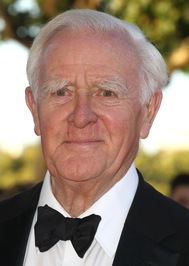
John le Carré was born in Poole, Dorset in England on 19 October, 1931. He went to Sherborne School and, later, studied German literature for one year at University of Bern. Later, he went to Lincoln College, Oxford and graduated in Modern Languages. From 1956 to 1958, he taught at Eton and from 1959 to 1964, he was a member of the British Foreign Service as second secretary at British Embassy in Bonn, and then, as Politician Consul in Hamburg. His first novel was written in 1961 and, by the time of his death in December 2020, he had published nearly 30. His books took many prizes, and inspired numerous films. (Bio: Wikipedia/Photo: Goodreads)
Twitter | Website

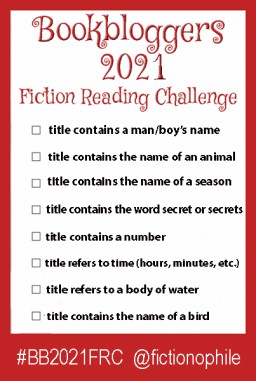 I came across this reading challenge on Lynne’s Fictionophile blog earlier this year and I’ve been looking out for books I’ve read that match the categories ever since. And I’ve finally made it, with just a few days to spare. Links from the titles will take you to my reviews.


