Nonfiction November 2020: My Year in Nonfiction #NonficNov

nonficnov1_smallNonfiction November 2020 runs from 2nd to 30th November 2020.  This year it’s hosted by Katie at DoingDewey, Rennie at What’s Nonfiction, Julz of JulzReads and Leann at Shelf Aware.

As in previous years, they’ll be posting a discussion question and link-up on the Monday of each week.  Check out this post for the full schedule and proposed prompts. You can read my response to the first week’s prompt below.


My Year in Nonfiction

Leann asks: Take a look back at your year of nonfiction and reflect on the following questions – What was your favorite nonfiction read of the year? Do you have a particular topic you’ve been attracted to more this year? What nonfiction book have you recommended the most? What are you hoping to get out of participating in Nonfiction November?

Here are the nonfiction books I’ve read since last year’s Nonfiction November, grouped roughly by subject matter. Links from the titles will take you to my reviews. I would say my favourite was The Salt Path, Raynor Winn’s account of her journey along the South West Coast Path with her husband, Moth. I have also read a number of Holocaust memoirs. They never make easy reading but are invariably incredibly inspiring.

Memoir
The Salt Path by Raynor Winn
The Wild Silence by Raynor Winn
One Hundred Miracles: A Memoir of Music and Survival by Zuzana Ruzickova & Wendy Holden
Living Among the Dead: My Grandmother’s Holocaust Survival Story of Love and Strength by Adena Bernstein Astrowsky

History
Adrift: How Our World Lost Its Way by Amin Maalouf
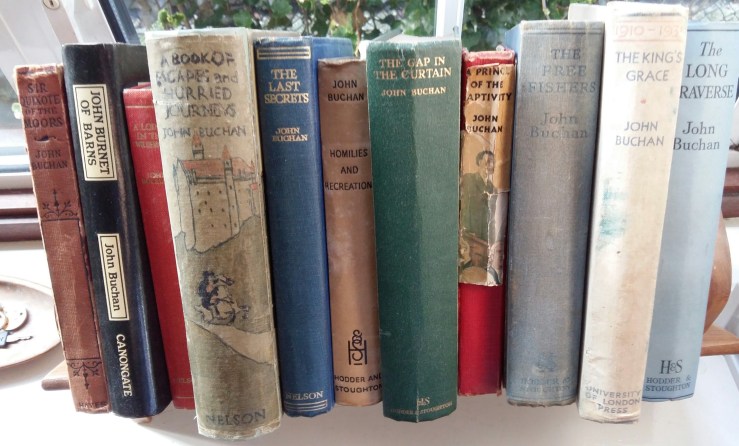
A Book of Escapes and Hurried Journeys by John Buchan
Homilies and Recreations by John Buchan
The Last Secrets: The Final Mysteries of Exploration by John Buchan


Here are the nonfiction books I hope to read in November. It will be good to get them off my TBR pile and Nonfiction November gives me the perfect push to do that!  Click on the title to view the full book description on Goodreads.

In A Time of Monsters: Travels Through A Middle East in Revolt by Emma Sky – won in a Readers First giveaway, this has been on my shelf for way too long.  It promises to make ‘a complex region more comprehensible’.  I shall look forward to that.

The King’s Grace by John Buchan – his portrait of Britain during the reign of George V published in 1935 to mark the 25th anniversary of the King’s accession.

It Was Different At The Time by Inez Holden – published by Handheld Press alongside the author’s novella Night Shift (so perfect for next week’s book pairing prompt), It Was Different At The Time is Holden’s account of wartime life from April 1938 to August 1941, drawn from her own diary.

Are you taking part in Nonfiction November?

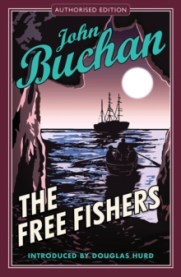
#BookReview The Free Fishers by John Buchan #ReadJB2020

The Free FishersAbout the Book

When Anthony Lammas, minister of the Kirk and Professor of Logic at St Andrews University, leaves his home town for London on business, he little imagines that within two days he will be deeply entangled in a web of mystery and intrigue.

But he’s no ordinary professor. His boyhood allegiance to a brotherhood of deep-sea fishermen is to involve him and handsome ex-pupil, Lord Belses, with a beautiful but dangerous woman. Set in the bleak Yorkshire hamlet of Hungrygrain during the Napoleonic Wars, this is a stirring tale of treason and romance.

Format: Hardcover (320 pages)              Publisher: Hodder & Stoughton
Publication date: January 1936 [1934] Genre: Historical Fiction

Find The Free Fishers on Goodreads


My Review

My Buchan of the Month for October is The Free Fishers which was published in the UK by Hodder & Stoughton on 24th October 1932. You can read my earlier blog post introducing the book here.

The Free Fishers of the title is a secret brotherhood of the sea-folk of Fife akin to a masonic order, of which the book’s hero, Anthony Lammas, is an honorary member. As he explains, its full name was the Free Fishers of Forth ‘but its name was not often spoken. To be a member was to have behind one, so long as one obeyed its rules, a posse of stalwart allies’. Like the secret groups in other Buchan novels, The Free Fishers have means of covert and rapid communication.

The plot of The Free Fishers follows a familiar Buchan theme, that of the ordinary man taken out of his normal sphere and catapulted into a world of adventure.  Nanty (as he is known to his friends) finds himself pitted against a villain described as ‘the most dangerous man now alive on earth’ whose evil intention is eventually revealed as murder and the ruining of the reputation of an innocent lady.

As Nanty notes, “In two days he had stepped out of order and routine into a world of preposterous chances. He had been hunted by those who sought to do him a mischief; he was endeavoring to wrest a malign secret from a moorland fortress; he was trying to save a friend from death; and now in the dark of the moon he was tramping the high hills with an unknown lady.

Along with some companions he encounters along the way, Nanty sets out to try to foil the dastardly plot involving breakneck journeys by His Majesty’s Mail and by carriage across England. These are thrillingly described and really conjure up the experience – and perils – of travel by highspeed coach in the Regency period.

The villain himself is more spoken about than seen until he and Nanty finally confront each other during the book’s dramatic climax.  Anthony Lammas, the man of letters proves himself a man of deeds as well and gets a glimpse of the romance his life has so far missed.

As those familiar with Buchan’s writing might expect, there are some great descriptions of landscape.

The rooks were wheeling over the plough-lands and snipe were calling in every meadow. The hawthorn bushes were a young green, every hedge-root had its celandines and primaries, and there were thickets of sloe, white as if with linen laid out to bleach.” (Fife, Scotland).

The reedy watercourses were ablaze with marsh marigolds, the wayside banks were white with marguerites, the fat pastures between the dykes were gay with daisies and butterflies… At the turn of the road the sails of a huge old windmill were slowly turning, and he heard the chack-chack of the pump.” (Norfolk Fens)

I can’t say if Ursula Buchan’s likening of The Free Fishers to ‘a Georgette Heyer novel, but written by a man’ is a fair one as I have never read a book by Georgette Heyer.  However, I can completely agree with her description of The Free Fishers as ‘a rollicking, exuberant story’ that I really enjoyed.

Next month’s Buchan of the Month is his portrait of Britain during the reign of King George V, The King’s Grace, published to celebrate the twenty-fifth anniversary of the King’s accession to the throne.

In three words: Fast-paced, dramatic, adventure

Try something similar: Huntingtower by John Buchan

Follow this blog via Bloglovin


John BuchanAbout the Author

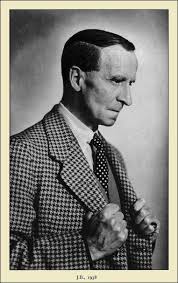
John Buchan (1875 – 1940) was an author, poet, lawyer, publisher, journalist, war correspondent, Member of Parliament, University Chancellor, keen angler and family man.  He was ennobled and, as Lord Tweedsmuir, became Governor-General of Canada.  In this role, he signed Canada’s entry into the Second World War.   Nowadays he is probably best known – maybe only known – as the author of The Thirty-Nine Steps.  However, in his lifetime he published over one hundred books: fiction, poetry, short stories, biographies, memoirs and history.

You can find out more about John Buchan, his life and literary output by visiting The John Buchan Society website.

Buchan of the Month 2020