
 I’m delighted to be celebrating publication day of The Porcelain Doll by Kristen Loesch by sharing my review of this captivating historical novel. My thanks to Christina at Allison & Busby for my review copy.
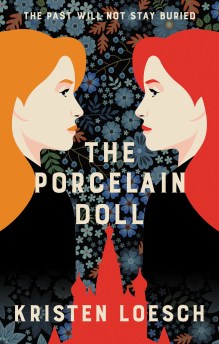 About the Book
‘She was called Kukolka,’ he says. Little doll. It’s an unwelcome reminder of Mum’s porcelain prisoners back in London. Of all the things we could have brought with us from Russia – and we weren’t able to bring very much – she chose them.
Rosie’s only inheritance from her reclusive mother is a book of Russian fairy tales. But there is another story lurking between the lines.
Not so long ago, Rosie lived peacefully in Moscow and her mother told fairy tales at bedtime. But one summer night, all that came abruptly to an end when her father and sister were gunned down. Years later, Rosie is a doctoral student at Oxford, with a fiancé who knows nothing of her former life and an ailing, alcoholic mother lost to a notebook full of eerie, handwritten little stories.
Desperate for answers to the questions that have tormented her, Rosie returns to her homeland and uncovers a devastating family history which spans the 1917 Revolution, the siege of Leningrad, Stalin’s purges and beyond. At the heart of those answers stands a young noblewoman, Tonya, as pretty as a porcelain doll, whose actions reverberate across the century.
Format: Hardcover (384 pages) Publisher: Allison & Busby
Publication date: 17th February 2022 Genre: Historical Fiction
Find The Porcelain Doll on Goodreads
Purchase links
Bookshop.org
Disclosure: If you buy a book via the above link, I may earn a commission from Bookshop.org, whose fees support independent bookshops
Publisher | Hive | Amazon UK
Links provided for convenience only, not as part of an affiliate programme
My Review
I often find that in novels with a dual time structure one of the timelines – usually the earlier one – is more engaging than the other. This was definitely not the case in The Porcelain Doll because the author has managed to create two equally compelling storylines that blend past and present in a deliciously satisfying way. The structure works because the connections between the two stories are so strong that one never seems secondary to the other. Indeed, it feels that one could not exist without the other.
Starting in Russia in 1915, Tonya’s story spans decades encompassing the Revolution of October 1917, the Russian Civil War, the Stalinist purges of the 1930s, the siege of Leningrad during World War 2 and beyond. All of these events impact on Tonya and those close to her in dramatic ways, forcing her to make almost impossible choices to protect herself and those she cares for. As she observes at one point, ‘the choice in this country is not between right and wrong. It is between life and death’. Hers is a powerful, often harrowing, story of betrayal, loss, sacrifice and the sheer will to survive, often against seemingly insurmountable odds. It’s also a heart-breaking love story that brought to mind elements of Dr. Zhivago by Boris Pasternak.
Rosie’s story takes place in 1991, an equally pivotal time in Russian history. It’s the era of perestroika and glasnost that would ultimately result in the collapse of the Soviet Union. But a new regime does not mean that old wounds can be forgotten. Far from it. The turbulent events in the country of Rosie’s birth reflect that in her own life. She continues to be haunted by memories of events earlier in her life, events that have left her with unanswered questions and a kind of survivor’s guilt. At one point Rosie is warned, ‘There is no enlightenment to be found in the past. No healing. No solace. Whatever we are looking for will not be there’. However, that warning doesn’t stop Rosie trying to find out more about her family history and to decode the answers she believes lie hidden in her mother’s stories. What she discovers will change everything she thinks she knows and thought she wanted.
As the two storylines interweave, nothing is quite what it seems – and often no-one is quite what they seem either. The way the author has crafted the multi-layered plot is akin to a Rubik’s Cube where you think you’ve just about arrived at the solution only to find there’s a piece out of place. There are some moments of breathtaking revelation and twists that I certainly didn’t see coming.
Storytelling is an underlying theme of the book whether that’s stories created to entertain, to pass on cultural myths and legends, to record for posterity life experiences, to act as propaganda or set out a vision for the future. Storytelling itself may even be a means of survival. And sometimes stories are the only way traumatic events can be processed and communicated.
I absolutely loved The Porcelain Doll. It kept me enthralled until the very last page.
In three words: Dramatic, emotional, captivating
Follow this blog via Bloglovin
 About the Author
Kristen Loesch grew up in San Francisco. She holds a BA in History, as well as a Master’s degree in Slavonic Studies from the University of Cambridge. Her debut historical novel, The Porcelain Doll, was shortlisted for the Caledonia Novel Award and longlisted for the Bath Novel Award. After a decade living in Europe, she now resides in the Pacific Northwest with her husband and children.
Connect with Kristen
Website | Twitter | Instagram

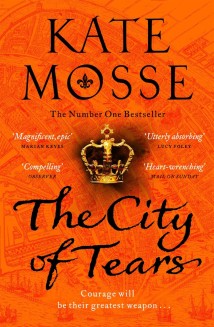
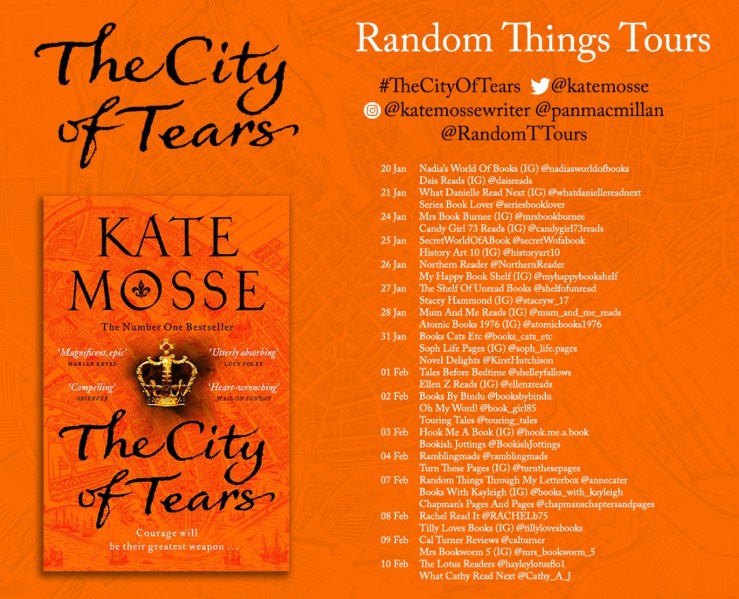 Welcome to the final stop on the blog tour for The City of Tears by Kate Mosse, which was published in paperback on 20th January 2022. My thanks to Anne at Random Things Tours for inviting me to take part in the tour and to Pan Macmillan for my digital review copy. Do check out the post by my tour buddy for today, Hayley at
  About the Book
 About the Author

