
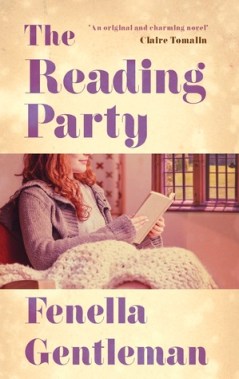
 About the Book
It is the 1970s and Oxford’s male institutions are finally opening their doors to women…
Sarah Addleshaw – young, spirited and keen to prove her worth – begins term as the first female academic at her college. She is, in fact, its only female ‘Fellow’.
Impulsive love affairs – with people, places and the ideas in her head – beset Sarah throughout her first exhilarating year as a don, but it is the Reading Party that has the most dramatic impact.
Asked to accompany the first mixed group of students on the annual college trip to Cornwall, Sarah finds herself illicitly drawn to the suave American Tyler. Torn between professional integrity and personal feelings, she faces her biggest challenge yet.
Format: Paperback (352 pages) Publisher: Muswell Press
Publication date: 14th June 2018 Genre: Contemporary Fiction
Find The Reading Party on Goodreads
Purchase links
Bookshop.org
Disclosure: If you buy a book via the above link, I may earn a commission from Bookshop.org, whose fees support independent bookshops
Hive | Amazon UK
Links provided for convenience only, not as part of an affiliate programme
My Review
I hosted a guest post by Fenella as part of the blog tour when The Reading Party was first published and having said at the time I was looking forward to reading it I’m disappointed (and a little ashamed) it’s taken me so long to pick up my copy.
I was at university in the late 1970s but one which had never been single sex and where the academic staff included plenty of women, so the situation Sarah Addleshaw finds herself in when she arrives at her Oxford college was not one I recognised. Oxford has its own rather individual customs and vocabulary so the glossary at the back of the book will prove useful for those who’ve not come across them before. Having watched plenty of episodes of Inspector Morse I was familiar with some of them.
Although Sarah’s appointment as the college’s first female Fellow might seem like reason for celebration, she suffers from a degree of ‘imposter syndrome’ fearing that if she is unable to achieve what is expected of her it will demonstrate that the ‘experiment’ of admitting women to the college has been a failure. She certainly encounters some rather outdated views about women from her male colleagues. (Interestingly Sarah’s male academic colleagues are often referred to by their specialisms, such as ‘the Medievalist’, rather than by name.)
Sarah’s diffidence and constant worry about what others will think of her made it a little difficult for me to warm to her, even more so given the rather unwise decisions she makes in her personal life. Prominent amongst the academic staff are the Dean who’s a bit of a lothario and reminded me of Howard Kirk from Malcolm Bradbury’s The History Man, and Hugh Loxton, the Senior Fellow who has led the Reading Party for many years (of whom more later).
I confess I struggled a bit with the whole concept of the Reading Party which seemed to be more about outdoor activities and socialising than preparation for Final exams. Besides Sarah and Hugh, I found there were few members of the party I really got to know in any detail, the exception being Priyam who finds herself weighed down by the expectations of her family to achieve academic success. Even Tyler, who Sarah finds herself drawn to, seemed a rather remote figure, always on the periphery. Having said that, I liked the way the author explored the dynamics of the group: the alliances, the disagreements, the contrast between the passive and the dominant characters, the risk-takers and the more hesitant. Even where the various members of the Reading Party choose to sit to pursue their reading – alongside others or in a room on their own – gave little hints about their character. Sarah finds herself having to tread the fine line between being ‘in charge’ of the group or being one of them. It’s a particularly difficult line when it comes to her relationship with Tyler.
I enjoyed seeing Sarah gradually warm to Hugh, recognising that he is not the stuffy old man stuck in his ways and hidebound by tradition she’d thought he was initially. In fact, Hugh became much the most interesting character for me, especially when the discovery of a journal suggests that many of Sarah’s assumptions about him are completely wrong.
Those of us who lived through the 1970s will be taken back in time by the references to singing along to music on a cassette player, eating Bird’s Eye custard, listening to the album Rumours by Fleetwood Mac, and celebrating Virginia Wade winning Wimbledon. The very scholarly discussion about the nomenclature of the dish ‘toad-in-the-hole’ made me chuckle. I was also struck by the analogy between refining an academic paper and pruning roses. First trimming new shoots and snipping off dead wood to see the shape of the whole better, then removing old branches or stems that are too close together and then finally standing back to assess the result. I think this could easily apply to writing book reviews as well!
For readers who’ve grown attached to the characters in the book, the Epilogue acts as a ‘Where Are They Now?’ potted history of their post-university lives.
The Reading Party is a gently paced novel that contains some interesting insights into the development of women’s equality in academic institutions and illustrates how women’s behaviour has often been judged to different (higher) standards than that of men. There are also some wonderful descriptions of the landscape of Cornwall, the location of the Reading Party. You can find a reading guide on the website of the author’s publisher, Muswell Press.
In three words: Insightful, gentle, eloquent
Try something similar: The Glittering Prizes by Frederic Raphael
Follow this blog via Bloglovin
 About the Author
Fenella Gentleman studied PPE at Wadham College, Oxford, when it became mixed. She participated in two reading parties in Cornwall. After graduating she worked in publishing before moving into marketing and communications in the professions. She lives in London and North Norfolk. The Reading Party is her first novel.
Connect with Fenella
Twitter

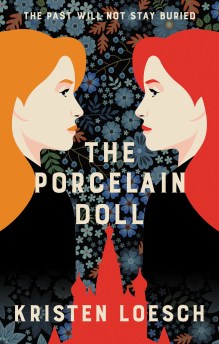
 I’m delighted to be celebrating publication day of The Porcelain Doll by Kristen Loesch by sharing my review of this captivating historical novel. My thanks to Christina at Allison & Busby for my review copy.
 About the Book
 About the Author
 What Cathy Read Next...