#BookReview The Women of the Castle by Jessica Shattuck

The Women of the CastleAbout the Book

Bavaria, Germany. June 1945. The Third Reich has crumbled. The Russians are coming.

Amid the ashes of Nazi Germany’s defeat, Marianne von Lingenfels returns to the once-grand castle of her husband’s ancestors, an imposing stone fortress now fallen into ruin following years of war. The widow of a resister murdered in the failed 20th July 1944 plot to assassinate Adolf Hitler, Marianne plans to uphold the promise she made to her husband’s brave conspirators: to find and protect their wives, her fellow resistance widows.

Marianne assembles a makeshift family from the ruins of her husband’s resistance movement, rescuing her dearest friend’s widow, Benita, from sex slavery to the Russian army, and Ania from a work camp for political prisoners. She is certain their shared past will bind them together.

But as Benita begins a clandestine relationship and Ania struggles to conceal her role in the Nazi regime, Marianne learns that her clear-cut, highly principled world view is infinitely more complicated now, filled with secrets and dark passions that threaten to tear them apart.

All three women must grapple with the realities they now face, and the consequences of decisions each made in the darkest of times…

Format: Hardback (368 pages)     Publisher: Zaffre
Publication date: 18th May 2017 Genre: Historical Fiction

Find The Women of the Castle on Goodreads

Purchase links
Bookshop.org
Disclosure: If you buy a book via the above link, I may earn a commission from Bookshop.org, whose fees support independent bookshops

Hive | Amazon UK
Links provided for convenience only, not as part of an affiliate programme


20-books-of-summerMy Review

The Women of the Castle is the third book from my list for the 20 Books of Summer 2022 reading challenge. Yes I know, we’re already over half way through August. Like all the other books on my list, it’s been in my TBR pile for way too long.

Firstly the things I liked about the book. I thought the way the author uses the prologue to contrast the glamorous atmosphere within the castle with events elsewhere in Germany was very powerful. ‘But outside, beyond the walls, terrible things were happening.’ Even more so once we realise the party is taking place on what will come to be known as Kristallnacht. I also liked the fact the book focuses on Germans who were opposed to the Nazi regime, including those such as Marianne’s husband who made the difficult choice to take direct action to oppose Hitler. I found the stories of Ania and Benita especially powerful (even if I never quite worked out how Ania ended up on Marianne’s list of the wives of resisters).

As the book progressed I didn’t mind the changes in point of view from one woman to another but the frequent moving back and forth in time left me frustrated and often confused.  At one point the book jumps back to 1923 and a rather unnecessary (to my mind) final part sees us in 1991. Often there are brief references to quite significant events in the past but it is many chapters before we learn the full details of them.  At times, I felt the book glossed over some events while dealing with others in painstaking detail.

Marianne is the dominant character in the book, or perhaps domineering would be more appropriate. So many of the events in the lives of the other two women are influenced by the decisions Marianne makes. On a number of occasions they are wrong, even fateful decisions. As Benita observes at one point, ‘It was so much like Marianne to act first and then think.’ I had to agree with Ania’s first impression of Marianne as a woman ‘accustomed to giving orders.’ Although I could admire Marianne’s determination to fulfil the promise made to her husband to be ‘the commander of wives and children’ and rescue the families of his co-conspirators, I found her rather contradictory. For example, she is effortlessly multi-lingual but can’t acquite basic cookery skills.

Focussing on the positives once again, I felt the book was particularly successful in demonstrating how difficult it can be to lay to rest the events of the past, to heal the divisions caused by war, and to repair, both physically and mentally, the damage that has been done. Benita exemplifies this well. ‘History was horrible, a long, sloppy tail of grief. It swished destructively behind the present, toppling everyone’s own personal understanding of the past.’

In the Acknowledgments, Jessica Shattuck reveals that it took her seven years to write this book, much of it inspired by her own family history. The depth of historical detail in the book is evidence of her painstaking research. However, although I found much to admire about The Women in the Castle, the back and forth structure of the book didn’t quite work for me.

I received a review copy courtesy of Zaffre.

In three words: Powerful, detailed, expansive

Try something similar: People Like Us by Louise Fein


Jessica ShattuckAbout the Author

Jessica Shattuck is the award-winning author of The Hazards of Good Breeding, a New York Times Notable Book and finalist for the PEN/Winship Award, and of Perfect Life. Her writing has appeared in the New York Times, The New Yorker, Glamour, Mother Jones, Wired, and The Believer, among others. A graduate of Harvard University, she received her MFA from Columbia University. Shattuck now lives with her husband and three children in Brookline, MA.

Connect with Jessica
Website | Twitter | Facebook

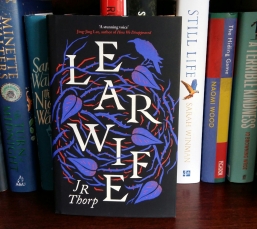
#BookReview Learwife by JR Thorp

LearwifeAbout the Book

“I am the queen of two crowns, banished fifteen years, the famed and gilded woman, bad-luck baleful girl, mother of three small animals, now gone. I am fifty-five years old. I am Lear’s wife. I am here.”

Word has come. Care-bent King Lear is dead, driven mad and betrayed. His three daughters too, broken in battle. But someone has survived: Lear’s queen. Exiled to a nunnery years ago, written out of history, her name forgotten. Now she can tell her story.

Though her grief and rage may threaten to crack the earth open, she knows she must seek answers. Why was she sent away in shame and disgrace? What has happened to Kent, her oldest friend and ally? And what will become of her now, in this place of women? To find peace she must reckon with her past and make a terrible choice – one upon which her destiny, and that of the entire abbey, rests.

Format: Paperback (368 pages) Publisher: Canongate
Publication date: 7th July 2022 Genre: Historical Fiction

Find Learwife on Goodreads

Purchase links
Bookshop.org
Disclosure: If you buy a book via the above link, I may earn a commission from Bookshop.org, whose fees support independent bookshops

Hive | Amazon UK
Links provided for convenience only, not as part of an affiliate programme


My Review

I bought a copy of this book when it was included in the longlist for the Walter Scott Prize for Historical Fiction 2022 in February this year and it has been sitting on my bookshelf ever since. A readalong of the book organised by Canongate Books to coincide with its publication in paperback last month gave me the impetus I needed to finally read it.

I can immediately see why it has captured so much attention because the writing is extraordinarily lush, imaginative and poetic in nature. As a result, it requires some concentration; it is definitely not a book to rush through, rather to immerse yourself in. For me that meant reading it rather slowly, a couple of chapters at a time. In fact, the author has encouraged readers to ‘give into the slowness a little’. There is a plot but it builds slowly and the book is more about the reader gradually discovering the woman who was Lear’s queen and her own discovery of why she has been banished and confined within the abbey. ‘My crime, we call it, my vice; the unknown offence that led to my sentence, here.’

A question I asked myself early on was whether it was necessary to be familiar with Shakespeare’s King Lear to appreciate, or even understand, the book. Although I know the vague outlines of the play I can’t really say I recall much about the part played by Lear’s wife, despite the publishers describing her as ‘the most famous woman ever written out of literary history’. Actually, hers is more a ‘non-part’. As the book commences with news of events at the end of the play, I came to the conclusion the answer to my question was no, it doesn’t matter as just about all of the events Lear’s queen gradually reveals to us – both past and present – derive from the author’s imagination.

The book’s first person narrator is never named; all we know is that she was Lear’s wife and his queen. ‘Nobody has called my name to me, not for fifteen years; perhaps I have none.’  Her identity is completely tied up in her status as the wife of a king. ‘Even unnamed I am queen, still.’  For the first part of the book, as well as being confined within the walls of the abbey, she is also unseen by the nuns who reside there, veiled when in public, viewing the religious services through a screen.

Having learned of the death of Lear and her three daughters, the queen becomes obsessed with the desire to escaping from the abbey to tend their graves. Despite her preparations, obstacles are continually placed in her path: a harsh winter, an outbreak of sickness that sees the abbey quarantined from the outside world, gentle persuasion that turns into outright refusal.

The abbey becomes her kingdom, as it were, and we are constantly reminded of her ability to exercise power over others, whether that’s through revealing the story of her life in tantalising snippets to nuns starved of other forms of entertainment, gaining influence with the Abbess or later being given a role in the choice of the Abbess’s successor. When it comes to the latter there is just as much intrigue and jostling for favour as in any royal court and we witness the queen embracing the opportunity to wield her power and use the wiles she learned there, not least the often unseen power of women. ‘Men always think they are the architects of women’s actions, when we can slip under their demands and flee, away.’

As the book progresses we see the queen’s power and status within the abbey gradually wane, along with her grip on reality, echoing Lear’s descent into madness. Increasingly she lives in the past – ‘I am profuse with past selves’ – haunted by visions of the dead. ‘The ghosts whisper. One could listen to them sing all night… Things are loose, are unstitching.’

Although it’s not my favourite of the books longlisted for the Walter Scott Prize (that was The Fortune Men), there’s no doubt Learwife is a remarkable book. In the author’s own words, it contains ‘threads of love and power and hate, threads of motherhood and friendship and violence’.

In three words: Lyrical, imaginative, intense

Try something similar: Matrix by Lauren Groff


JR ThorpAbout the Author

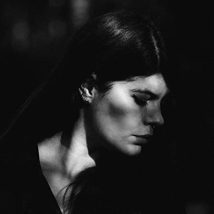
JR Thorp is a writer, lyricist and librettist. She won the London Short Story Award in 2011 and was shortlisted for the BBC Opening Lines Prize, and has had work published in the Cambridge Literary Review, Manchester Review, Wave Composition and elsewhere. She wrote the libretto for the highly acclaimed modern opera Dear Marie Stopes and has had works commissioned by the Arts Council, the Wellcome Trust and St Paul’s Cathedral. She was picked as an Observer Best Debut Novelist of 2021.

Born in Australia, she now lives in Cork, Ireland. Learwife is her first novel. (Photo: Amazon author page)

Connect with Jennifer
Website | Twitter