#6Degrees of Separation: From How To Do Nothing to The Illumination of Ursula Flight

It’s the first Saturday of a new month which means it’s time for 6 Degrees of Separation!

Here’s how it works: a book is chosen as a starting point by Kate at Books Are My Favourite and Best and linked to six other books to form a chain. Readers and bloggers are invited to join in by creating their own ‘chain’ leading from the selected book.

Kate says: Books can be linked in obvious ways – for example, books by the same authors, from the same era or genre, or books with similar themes or settings. Or, you may choose to link them in more personal or esoteric ways: books you read on the same holiday, books given to you by a particular friend, books that remind you of a particular time in your life, or books you read for an online challenge. Join in by posting your own six degrees chain on your blog and adding the link in the comments section of each month’s post.   You can also check out links to posts on Twitter using the hashtag #6Degrees


This month’s starting book is How To Do Nothing: Resisting the Attention Economy by Jenny Odell. I certainly can’t have been paying attention because I confess I’d never heard of this book before it was mentioned by Kate. From the blurb, I gather it’s a critique of the forces vying for our attention in the modern world of social media. Unfortunately, I can’t say it’s likely to draw my attention away from the books I already have on my shelves waiting to be read.

Taking a rather literal approach, my first link is to The Nothing Man by Catherine Ryan Howard, a thriller with a book-within-a-book structure.

A numerical train of thought took me from ‘nothing’ to Towards Zero by Agatha Christie in which connections must be discovered between a seemingly random series of events.

Also by Agatha Christie, The ABC Murders concerns a series of murders that seem to have no connection besides the alphabetical sequence of their location. Hercule Poirot must put his “little grey cells” to work.

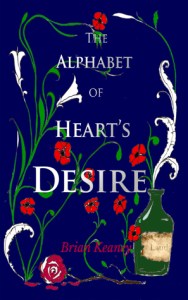
Back to my literal approach and The Alphabet of Heart’s Desire by Brian Keaney. It involves the meeting of three people from very disparate backgrounds, one of whom is Thomas de Quincey.

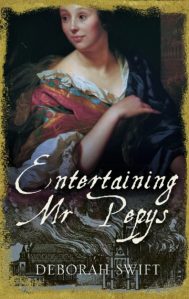
Another writer, diarist Samuel Pepys, is the main character in Entertaining Mr Pepys by Deborah Swift. Set in 1666, the book features the dazzling world of Restoration theatre.

Another book set in the 17th century and involving the theatre is The Illumination of Ursula Flight by Anna-Marie Crowhurst. The titular heroine of the book harbours an ambition to become a playwright.

So this month we’ve travelled from our always on, 24/7 world via numbers and letters to the smell of the greasepaint and the roar of the crowd. Although in the 17th century, perhaps it was likely to be less the smell of the greasepaint and more the smell of the crowd… mitigated a little, perhaps, by the scent of Nell Gwynne’s oranges.

Where did your chain take you this month?
The Alphabet of Heart's DesireEntertaining Mr PepysThe Illumination of Ursula Flight

#BookReview The Gap in the Curtain by John Buchan #ReadJB2020

20200716_152736-1About the Book

Guests at a country house party are enabled by an eccentric scientist to see a glimpse of an issue of The Times newspaper dated a year hence.

Format: Hardcover (320 pages)    Publisher: Hodder & Stoughton
Publication date: July 1932   Genre: Fiction


My Review

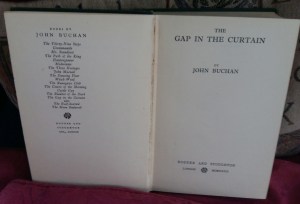
20200716_152751-1My Buchan of the Month for July is The Gap in the Curtain which was published in 1932 by Hodder & Stoughton.  My copy is a first edition but unfortunately without a dust jacket. You can read my earlier blog post introducing the book here.
The Gap in the Curtain concerns the experiences of a group of guests at a country house party, including lawyer Sir Edward Leithen, who take part in an experiment conducted by the enigmatic Professor Moe. After a period of “training” involving mental exercises and a special diet, they are each given a glimpse of the future by way of an item in The Times newspaper dated a year hence. Being a logical and down-to-earth fellow, Leithen sees nothing but a blank page. However, the other five who take part are profoundly affected by what they see. The different ways in which they react to the foreknowledge they have been granted over the next twelve months are recounted by Leithen.

For two of the guests, David Mayot and Arnold Tavanger, the insights relate to the worlds of politics and finance. The attempts by Mayot (described by Leithen as having “not a very generous allowance of brains” and “as much magnetism as a pillar-box”) to second-guess how the political situation he saw might come about involves a good deal of tactical and frankly not very principled behind the scenes manoeuvring. I have to say I found this a little dull with way too much discussion of the positions of the different political factions. The satirical nature of the description of politics may have been more recognisable to readers of the day.

What keen investor Arnold Tavanger sees in The Times leads him to embark on a journey across continents to secure what he believes will bring him huge financial rewards. His epic trip across Africa sees him take to the air with a pilot “who was one-fourth scientist and three-fourths adventurer, and who did not value his on or anybody else’s life at two pins”. They encounter thunderstorms and at one point end up with two lizards and a snake in the fuselage! In the end though, Tavanger’s experiences lead him to conclude “Our ignorance of the future has been widely ordained of Heaven. For unless man were to be like God and know everything, it is better that he should know nothing. If he knows one fact only, instead of profiting by it he will assuredly land in the soup”.

Reggie Daker’s insight into what he will be undertaking a year hence takes him completely by surprise, being the last thing on earth he would consider doing. However, over the course of the next few months, the reader witnesses the influence of the attractive Verona Cortal and her family on the rather compliant by nature Reggie. Says Leithen, “He had the air of a smallish rabbit caught in a largish trap. But it was a stoical rabbit, for to me he made no complaint.” Eventually, fate lends a hand to provide Reggie with a means of escape.

The final two guests – Robert Goodeve and Captain Charles Ottery – both see articles in The Times concerning themselves that are much more profound in nature. It is in their two stories that Buchan really addresses the notions of predestination and free will. For one of the characters, the fate he is presented with turns him into a haunted man. It confirms a subconscious belief he has always held that his is a family whose lives are destined to end tragically, that “They have spirit without fortitude.”

For the other, it provokes a courageous response to the hand dealt him, helped by the love of a good woman. “What concerned him was how to pass the next eight months without disgracing his manhood”. It seems clear which of the two responses Buchan admires most. Not only by the way in which the last story ends but also by the fact it contains a reference to one of Buchan’s most cherished books, The Pilgrim’s Progress by John Bunyan. “He had come out of the Valley of the Shadow to the Delectable Mountains.”

Essentially a collection of short stories exploring the psychological impact of foreknowledge, The Gap in the Curtain is a mixed bag with some stories I enjoyed and others less so. Next month’s Buchan of the Month is A Prince of the Captivity.

In three words: Inventive, entertaining, thoughtful

Try something similar: The Watcher by the Threshold by John Buchan

Follow this blog via Bloglovin


John BuchanAbout the Author

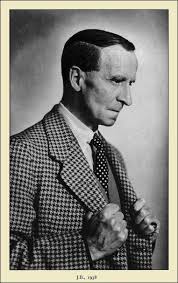
John Buchan (1875 – 1940) was an author, poet, lawyer, publisher, journalist, war correspondent, Member of Parliament, University Chancellor, keen angler and family man.  He was ennobled and, as Lord Tweedsmuir, became Governor-General of Canada.  In this role, he signed Canada’s entry into the Second World War.   Nowadays he is probably best known – maybe only known – as the author of The Thirty-Nine Steps.  However, in his lifetime he published over 100 books: fiction, poetry, short stories, biographies, memoirs and history.

You can find out more about John Buchan, his life and literary output by visiting The John Buchan Society website.