#WWWWednesday – 3rd February 2021

WWWWednesdays

Hosted by Taking on a World of Words, this meme is all about the three Ws:

  • What are you currently reading?
  • What did you recently finish reading?
  • What do you think you’ll read next?

Why not join in too?  Leave a comment with your link at Taking on a World of Words and then go blog hopping!


Currently reading

A book from my Classics Club list and two ARCs
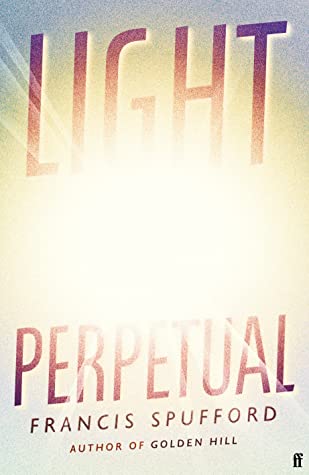
Light PerpetualLight Perpetual by Francis Spufford (eARC, courtesy of Faber & Faber via NetGalley)

November 1944. A German rocket strikes London, and five young lives are atomised in an instant.

November 1944. That rocket never lands. A single second in time is altered, and five young lives go on – to experience all the unimaginable changes of the twentieth century. Because maybe there are always other futures. Other chances.

From the best-selling, prize-winning author of Golden Hill, Light Perpetual is a story of the everyday, the miraculous and the everlasting.

A Tree Grows in BrooklynA Tree Grows in Brooklyn by Betty Smith (paperback)

The beloved American classic about a young girl’s coming-of-age at the turn of the century, Betty Smith’s A Tree Grows in Brooklyn is a poignant and moving tale filled with compassion and cruelty, laughter and heartache, crowded with life and people and incident.

The story of young, sensitive, and idealistic Francie Nolan and her bittersweet formative years in the slums of Williamsburg has enchanted and inspired millions of readers for more than sixty years. By turns overwhelming, sublime, heartbreaking, and uplifting, the daily experiences of the unforgettable Nolans are raw with honesty and tenderly threaded with family connectedness — in a work of literary art that brilliantly captures a unique time and place as well as incredibly rich moments of universal experience. 

The Diplomat's WifeThe Diplomat’s Wife by Michael Ridpath (ARC, courtesy of Corvus and Readers First)

1936: Devastated by the death of her beloved brother Hugh, Emma seeks to keep his memory alive by wholeheartedly embracing his dreams of a communist revolution. But when she marries an ambitious diplomat, she must leave her ideals behind and live within the confines of embassy life in Paris and Nazi Berlin. Then one of Hugh’s old comrades reappears, asking her to report on her philandering husband, and her loyalties are torn.

1979: Emma’s grandson, Phil, dreams of a gap-year tour of Cold War Europe, but is nowhere near being able to fund it. So when his beloved grandmother determines to make one last trip to the places she lived as a young diplomatic wife, and to try to solve a mystery that has haunted her since the war, he jumps at the chance to accompany her. But their journey takes them to darker, more dangerous places than either of them could ever have imagined…


Recently finished

Links from the titles will take you to my reviews

To The Dark (Simon Westow #3) by Chris Nickson (eARC, courtesy of Severn House)

The Dead of Winter by S.J. Parris

A Prince and a Spy by Rory Clements

Mint by S. R. Wilsher

Dublin’s Girl by Eimear Lawlor

When The World Was Ours by Liz Kessler

Saving the World: Women – The Twenty-First Century’s Factor For Change by Paola Diana 

A passionate call for international gender equality by a leading entrepreneur; this smart, accessible and inspiring book makes the case for why all nations need more women at the top of politics and economics.

“The status of women is a global challenge; it touches every human being without exception. How is it possible that countries where women have achieved political, economic and social rights after exhausting struggles remain seemingly indifferent to the egregiousness of other nations where the status of women is still tragic? The time has come to help those left behind.” (Review to follow)


What Cathy (will) Read Next

The Girl at the Back of the BusThe Girl at the Back of the Bus by Suzette D. Harrison (eARC, courtesy of Bookouture via NetGalley)

Montgomery, Alabama, 1955. On a cold December evening, Mattie Banks packs a suitcase and leaves her family home. Sixteen years old and pregnant, she has already made the mistake that will ruin her life and disgrace her widowed mother. Boarding the 2857 bus, she sits with her case on her lap, hoping that the driver will take her away from disaster. Instead, Mattie witnesses an act of bravery by a woman named Rosa Parks that changes everything. But as Mattie strives to turn her life around, the dangers that first led her to run are never far away. Forging a new life in a harsh world at constant risk of exposure, Mattie will need to fight to keep her baby safe.

Atlanta, Georgia, present day. Ashlee Turner is going home. Her relationship in ruins, her career held back by prejudice, she is returning to the family who have always been her rock. But Ashlee’s home is not the safe haven she remembers. Her beloved grandmother is dying and is determined to share her story before she leaves…

When Ashlee finds a stack of yellowing letters hidden in her nana’s closet, she can’t help the curiosity that compels her to read, and she uncovers an old secret that could wreak havoc on her already grieving family. As she tries to make sense of what she has learned, Ashlee faces a devastating choice: to protect her loved ones from the revelations, or honor her grandmother’s wishes and follow the path to the truth, no matter where it may lead.

#BookReview When The World Was Ours by Liz Kessler @simonkids_UK @BagsofBooks

WTWWO-blog-tour-twitter

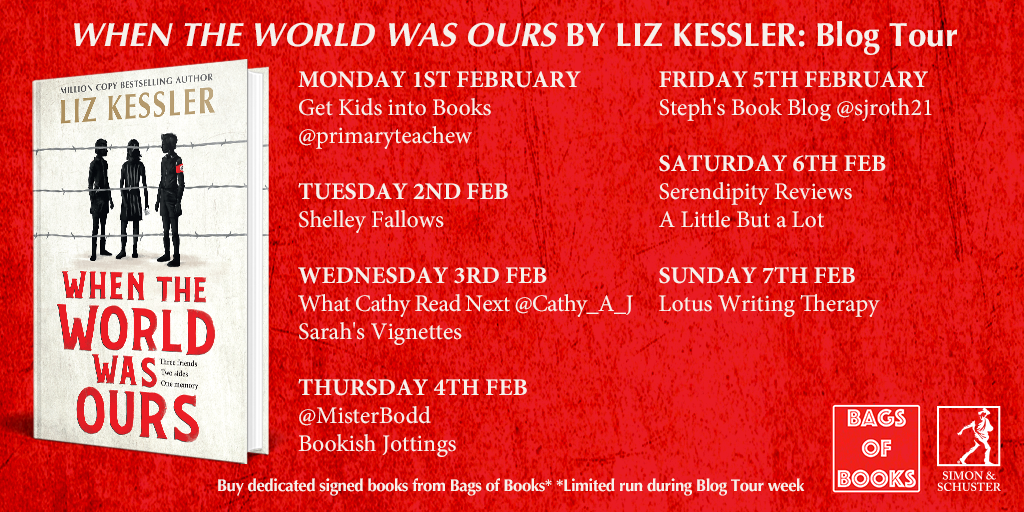
Welcome to today’s stop on the blog tour for When The World Was Ours by Liz Kessler. My thanks to Eve at Simon & Schuster for inviting me to take part in the tour and for my review copy. Do check out the post by my tour buddy for today, Sarah at Sarah’s Vignettes.

For the duration of the blog tour, you can purchase signed copies of When The World Was Ours from independent children’s bookshop, Bags of Books.


When The World Was OursAbout the Book

Three friends. Two sides. One memory.

Vienna, 1936. Leo, Elsa and Max have been best friends for years. Since the day they met they’ve been a team of three. But then the Nazis come, and their lives, once so tightly woven together, take very different paths.

Leo must rely on the kindness of strangers to escape the rising threat to the Jewish people.

Elsa, like Leo, is hated for simply being who she is. To be safe, she must run.

Max suddenly finds that he is the danger his friends are trying so desperately to escape as his father rises through the Nazi ranks.

Format: Hardcover (320 pages)          Publisher: Simon & Schuster
Publication date: 21st January 2021 Genre: Historical Fiction

Find When The World Was Ours on Goodreads

Purchase links
Bookshop.org
Disclosure: If you buy a book via the above link, I may earn a commission from Bookshop.org, whose fees support independent bookshops

Hive | Amazon UK
Links provided for convenience only, not as part of an affiliate programme


My Review

Inspired by the true story of her father’s escape from Nazi-occupied Europe, in When The World Was Ours the author takes the reader on a journey from Vienna in 1936 to the outbreak of the Second World War and beyond in the company of three childhood friends – Leo, Max and Elsa. Since Leo and Elsa are Jewish, the lives of the three children, and their families, are destined to take very different paths.

Given their youth, the friends don’t always understand, at least to begin with, the full import or implications of the things they see or hear their parents discussing. Only gradually do the youngsters become aware of the consequences of Leo and Elsa’s Jewish faith when anti-Jewish sentiment becomes more widespread and is followed by legal restrictions, and worse. It results in the three friends being separated, unsure if they will ever see one another again.

The author really captures the emotional and psychological toll of their experiences on the three children and the insidious nature of Nazi indoctrination. This is especially evident in the case of Max, who emerges as the most complex character and the only one of the three children whose thoughts are communicated in the third person. His mental contortions as he tries to reconcile what his conscience is telling him about his friends with the anti-Semitic hatred he is being fed by his father and the authorities is hard to witness. “Before long Max had convinced himself Leo and Elsa weren’t Jewish at all. They couldn’t have been. And if they weren’t Jewish then Max didn’t have a problem.”

Max’s fourteenth birthday evokes memories of an earlier birthday shared with Elsa and Leo – captured in a precious photograph – and a rare moment of self-awareness. “In an instant, nothing of his current life was real. He saw it for what it was: a vain, superficial attempt to fit in. To be loved. To be praised by his father…”. Unfortunately, it’s short-lived thanks to the intervention of his father who forces Max to demonstrate his loyalty to the Nazi regime in the cruelest of tests. It is not the last time he will face such a test.

Amidst the heartbreak and tragedy, there are small moments of joy. For example, Elsa’s delight in acquiring a best friend, Greta, and their joint adoption of a cat they feed with scraps. Or Leo’s pride at overcoming the obstacles to getting himself and his mother to safety. These provide a counterpoint to some of the truly chilling scenes in the book: the school assembly at which Jewish children are singled out; the day Max accompanies his father to work and its location is revealed; and, later, Max’s feeling that it is “his destiny” when found a job at his father’s new posting.  It’s difficult not to get a sense of foreboding also at Elsa’s hope that the outbreak of war against Germany means, “Everything is going to be all right. I can feel it in my bones and in my heart”.

The fact the book is written from the perspective of the three children makes it both accessible and educational for teenage readers. But it also has much to offer for older readers like myself. As we look around the world today, Elsa’s reflection should provide us all with food for thought. “How rapidly something unthinkable can become commonplace. How easily we let the inconceivable become a new normal. How quickly we learn to stop questioning these things…”

In war, there are rarely happy endings and books, even if works of fiction, that recount the events of the Holocaust are often difficult to read. At the same time, books like When The World Was Ours are an inspiring testament to the resilience of the human spirit and the kindness of strangers.

In three words: Moving, heartbreaking, powerful

Try something similar: The Young Survivors by Debra Barnes or People Like Us by Louise Fein

Follow this blog via Bloglovin


Liz Kessler © Jillian Edelstein

About the Author

Liz Kessler has written more than twenty books for children and young people, including the internationally bestselling Emily Windsnap series. She has an MA in Novel Writing and has been a full-time writer for the past twenty years. When The World Was Ours has been brewing in her heart for at least half of that time.  Liz lives in the north west of the UK with her wife, Laura, and their dog, Lowen.

Connect with Liz
Website | Twitter | Facebook | Instagram

image009