#WWWWednesday – 26th November 2025

Hosted by Taking on a World of Words, this meme is all about the three Ws:

  • What are you currently reading?
  • What did you recently finish reading?
  • What do you think you’ll read next?

Why not join in too?  Leave a comment with your link at Taking on a World of Words and then go blog hopping!


I’m reading Benbecula for Novellas in November, Small Acts of Resistance from my NetGalley shelf, and Ravenglass from my TBR pile.
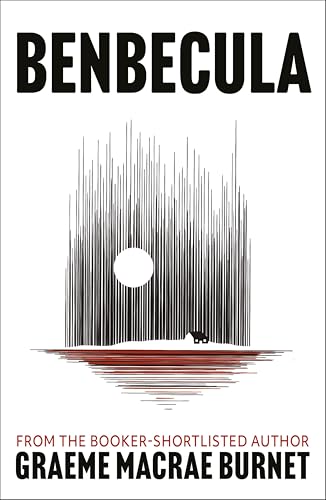
Benbecula by Graeme Macrae Burnet (Polygon)

 On 9 July 1857, Angus MacPhee, a labourer from Liniclate on the island of Benbecula, murdered his father, mother and aunt. At trial in Inverness he was found to be criminally insane and confined in the Criminal Lunatic Department of Perth Prison.

Some years later, Angus’s older brother Malcolm recounts the events leading up to the murders while trying to keep a grip on his own sanity. Malcolm is living in isolation, ostracised by the community and haunted by this gruesome episode in his past.

Small Acts of Resistance by Anita Frank (HQ via NetGalley)

May 1915. When his aircraft crashes in Northern France, British airman Henry finds himself stranded behind enemy lines. His survival depends on the courage and compassion of a local family who risk everything by hiding him in their farmhouse.

With her village already suffering under Occupation, Marie knows sheltering Henry will put her in family in grave danger, and that peril only increases when two German officers are unexpectedly billeted with them. Forced to live cheek by jowl with their occupiers, it takes all their cunning to keep their deadly secret.

As the shadow of war spreads, loves blooms, offering a glimmer of hope amidst the darkness.

But before long love is put to the test as everyone’s loyalty is called into question. The ramifications of the choices they must now make will be felt long after the war is over.
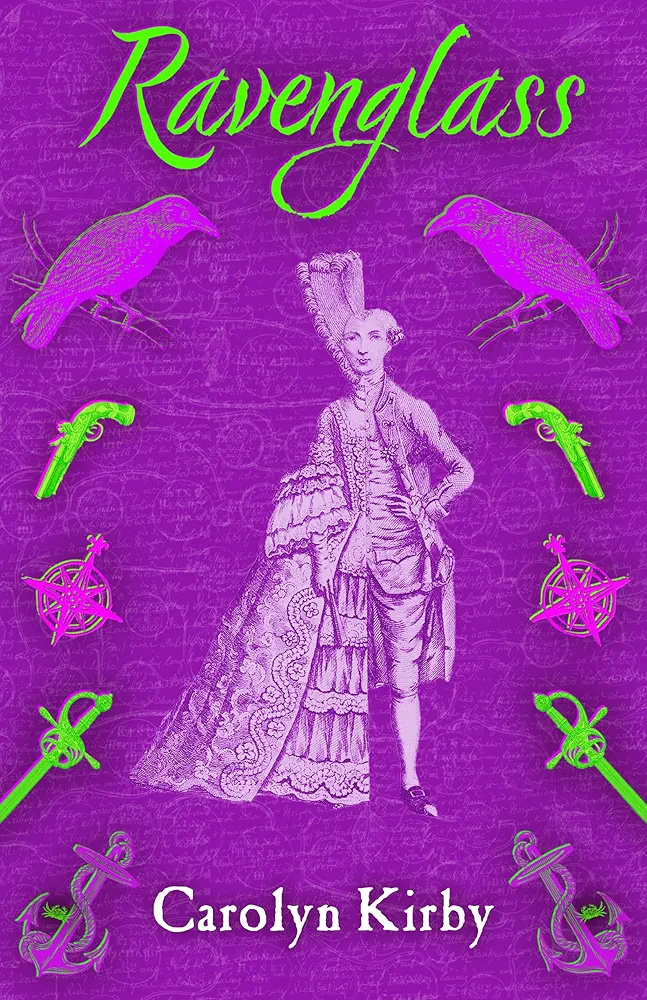
Ravenglass by Carolyn Kirby (Northodox Press)

In 18th century Whitehaven, Kit Ravenglass grows up in a house of secrets. A shameful mystery surrounds his mother’s death, and his formidable, newly rich father is gambling everything on shipping ventures. Kit takes solace in his beloved sister Fliss, and her sumptuous silks, although he knows better than to reveal his delight in feminine fashion. As the family’s debts mount, Kit’s father turns to the transatlantic slave trade – a ruthless and bloody traffic to which more than a fortune might be lost.

At a private Naval Academy, Kit is jolted into unruly boyhood and scandal before his first taste of life at sea. Adventures will see Kit turn fugitive and begin living as ‘Stella,’ before being swept into the heady violence of Bonnie Prince Charlie’s rebellion. Driven by love, revenge and a desire to live truly and freely, Kit must find a way to survive these turbulent times – and to unravel the tragic secrets of the Ravenglass family.

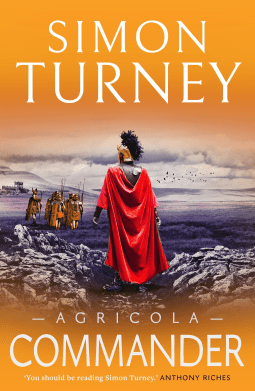
Agricola: Commander by Simon Turney (Head of Zeus)

The Cracked Mirror by Christopher Brookmyre (Abacus)

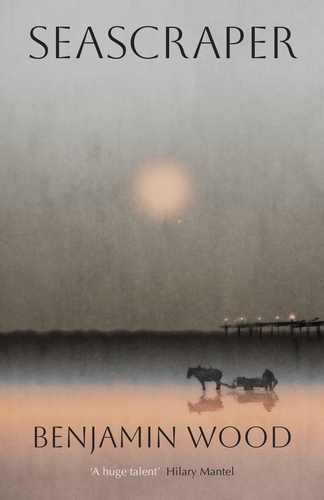
Seascraper by Benjamin Wood (Viking)

Thomas lives a slow, deliberate life with his mother in Longferry, working his grandpa’s trade as a shanker. He rises early to take his horse and cart to the grey, gloomy beach and scrape for shrimp, spending the afternoon selling his wares, trying to wash away the salt and scum, pining for Joan Wyeth down the street, and rehearsing songs on his guitar. At heart, he is a folk musician, but it remains a private dream.

When a striking visitor turns up, bringing the promise of Hollywood glamour, Thomas is shaken from the drudgery of his days and begins to see a different future. But how much of what the American claims is true, and how far can his inspiration carry Thomas?

Haunting and timeless, this is the story of a young man hemmed in by his circumstances, striving to achieve fulfilment far beyond the world he knows. (Review to follow)
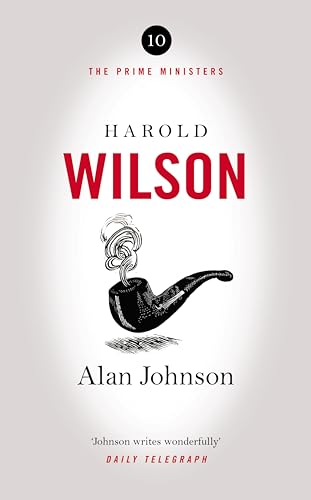
Harold Wilson by Alan Johnson (Swift Press)

 Harold Wilson was one of the most successful politicians of the twentieth century. Prime Minister from 1964-70, and again from 1974-76, he won four elections as well as a referendum on UK membership of the European Community.

The achievements of the Wilson era – from legalising homosexuality to protecting ethnic minorities, from women’s rights to the Open University – radically improved ordinary people’s lives for the better.

In Harold Wilson, former Labour cabinet minister and bestselling author Alan Johnson presents a portrait of a truly twentieth-century man, whose ‘white heat’ speech proclaimed a scientific and technological revolution – and who was as much a part of the sixties as the Beatles and the Profumo scandal.

Book Review – Agricola: Commander by Simon Turney @HoZ_Books @AriesFiction

About the Book

In the aftermath of Rome’s civil war, Agricola returns to Britannia in command of his own legion.

This is not the honour it seems at first. Agricola’s new legion threatens mutiny and the frontier province has suffered under troublesome governors. And the Brigantes, a powerful Celtic tribe in Britannia, are ready to make war against Rome.

To stabilise Roman rule and bring peace, Agricola must use all his political and military skills. But when a new commander is posted to Britannia, Agricola’s efforts have counted for nothing.

For General Petilius Cerialis wants to completely destroy the Brigantes. With the tribe roused to throw off the Roman yoke for good, Agricola must prepare for the greatest war yet in Britannia… one which few will survive.

Format: Paperback (400 pages) Publisher: Head of Zeus
Publication date: 5th December 2025 Genre: Historical Fiction

Find Agricola: Commander on Goodreads

Purchase Agricola: Commander from Bookshop.org [Disclosure: If you buy books linked to our site, we may earn a commission from Bookshop.org, whose fees support independent bookshops]

My Review

Commander is the third in the author’s historical fiction series depicting the exploits of Roman general and statesman, Gnaeus Julius Agricola. As the book opens Agricola has been posted back to Britannia and given command of the Twentieth legion. His first job is to ensure they take the military oath to Emperor Vespasian, something they have failed to do up until now. Agricola achieves this with a combination of acknowledgement of their concerns and persuasive rhetoric, eschewing more coercive methods.

This done, the Twentieth join the other legions commanded by the current Governor of Britannia, Marcus Vettius Bolanus, to put down a revolt by the Brigantes, a warlike tribe headed by Venutius. It involves a march north into enemy territory with the risk of ambush at every turn. Bolanus is eager to secure a victory that will impress the new Emperor meaning he’s prepared to throw caution to the wind. A well-defended fortress? No problem, we’ll just storm it. A seemingly impassible river? No problem, we’ll just build some boats or swim across it.

Agricola, being more of a tactician, tries to rein in Bolanus’s more reckless approach only to find Bolanus replaced by Petilius Cerialis, a general even more determined to put down the revolt, and to ensure the tribes of Britannia never rise up again.

Commander is what you might describe as a ‘military procedural’ with the Twentieth’s progress through Britannia based on meticulous research by the author drawn from available historical sources as well as his own extensive knowledge of the period. (Read the Historical Note to see just what I mean.)

But although the story may be full of authentic historical detail, it doesn’t make it any less of a page-turner. Commander is full of exciting, full-on battle scenes, whether that’s the storming of a hilltop fortress, one-to-one combat, or the sheer chaos of open warfare on the battlefield. ‘The fight was a meat grinder, each side determined simply to kill more of the enemy than the other.’

Agricola is a man who eschews the trappings of his rank, prepared to live – and on occasions, fight – alongside his soldiers. His tendency to want to be in the heart of the action is a constrant frustration to Luci, the Silurian warrior who was once Agricola’s slave but is now his trusted companion. Indeed, Agricola has some close shaves and only the selfless courage of his bodyguard ensures his safety.

Agricola doesn’t have the reckless attitude of either Bolanus or Cerialis, but that still means he has to watch men under his command fall in their hundreds as they seek to overcome the Brigantes who are prepared to fight to the death. What Agricola does have on his side, alongside his well-drilled legionnaries, are the Batavi, a force of exceptionally skilled Germanic horsemen who are ferocious in battle and have a liking for a particularly gruesome form of battle souvenir.

Commander is a story of comradeship, the challenges of leadership – and working with a difficult boss! Posted far from home, Agricola’s domestic life with his wife and son is something that has to be carried out at a distance through infrequent exchange of letters, Agricola himself admitting he is a lax correspondent. That may change in the next – and final book – in the series.

My thanks to Head of Zeus for my review copy via NetGalley.

In three words: Authentic, action-packed, intense
Try something similar: Death to the Emperor by Simon Scarrow

About the Author

Simon Turney author of Bellatrix and The Capsarius

Simon Turney is from Yorkshire and, having spent much of his childhood visiting historic sites, fell in love with the Roman heritage of the region. His fascination with the ancient world snowballed from there with great interest in Rome, Egypt, Greece and Byzantium. His works include the Marius’ Mules and Praetorian series, the Tales of the Empire and The Damned Emperor series, and the Rise of Emperors books with Gordon Doherty. He lives in North Yorkshire with his family.

Connect with Simon
Website | Bluesky | Facebook