Hosted by Taking on a World of Words, this meme is all about the three Ws:
- What are you currently reading?
- What did you recently finish reading?
- What do you think you’ll read next?
Why not join in too? Leave a comment with your link at Taking on a World of Words and then go blog hopping!
What I’m Currently Reading

May We Feed the King by Rebecca Perry (Granta)
She is a curator, who spends her time dressing the rooms of historic buildings to bring them to life. But in the lush private quarters of a medieval palace, she finds herself so transfixed by the reign of an almost-forgotten King that the edges of her life begin to blur.
He is a reluctant ruler with no hunger for power, rushed to the throne after the untimely deaths of his older brothers. But it isn’t long before whispers begin to fly around the court. And with the growing belief that the King is not fit for the throne comes the idea that another might rule in his stead.

The Taper Man by Nick Harkaway (ARC, Viking)
It is 1965, and the Cold War has never been colder. The Circus – the secret centre of British intelligence – has one prize asset left in Moscow: a senior Red Army officer with access to the enemy’s deepest secrets. But when a British agent is shot in Helsinki, George Smiley uncovers a Soviet operation that imperils this irreplaceable source.
The trail leads Smiley not to Berlin or Vienna, but Los Angeles – the most foreign place he has ever known. There, in the murky heart of US intelligence, a Communist sleeper agent – a ‘Taper Man’ – is poised to expose Britain’s operative in Moscow. To save him, Smiley must navigate an America riven by divisions over race, loyalty and belonging, all while his spy in Leningrad, Roy Bland, risks everything in pursuit of a Russian defector who holds the final piece of the puzzle
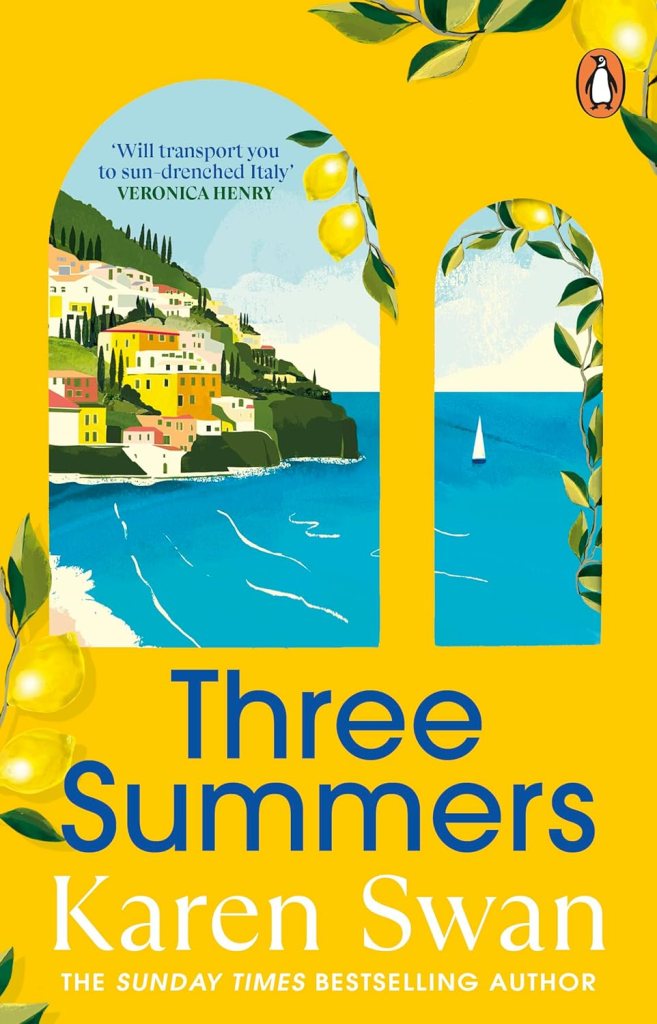
Three Summers by Karen Swan (audiobook, Penguin)
1957: The summer of innocence. Amongst the lemon trees, Rafaella Parisi impatiently waits for the summer visitors to arrive in her small fishing village on the coast of Puglia. She may be dating Fon Giannelli, but there is one person she longs to see: Cosimo – son of the wealthy Franchetti family.
1958: The summer everything changes. After a devastating accident at the lavish Franchetti villa, Rafa makes a vow that changes the course of all their futures.
1961: The summer they meet again. When Rafa and Cosi’s worlds collide, Rafa faces an agonizing choice. Is she willing to risk the life she has for the future she once dreamed of?
What I’ve Just Read
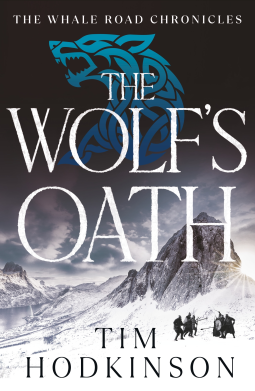
The Wolf’s Oath (The Whale Road Chronicles #9) by Tim Hodkinson (Head of Zeus)
Einar and the Wolf Coats sail back to the northern realms in order to honour a dying man’s last wish by placing his sword into the hands of his son.
As they get closer to their destination, they encounter a fearsome band of Viking mercenaries. Einar is keen to join forces, but the Wolf Coats are vehemently opposed… until a violent skirmish makes both sides realise they will be stronger together.
First though the Wolf Coats must pass a prove themselves to their new allies by discovering the truth behind strange tales of bloodshed in the far north.
Einar soon realises he may have signed up for more than he intended, for he must cross swords with allies of his bitter Eirik, the Serpent King. (Review to follow)
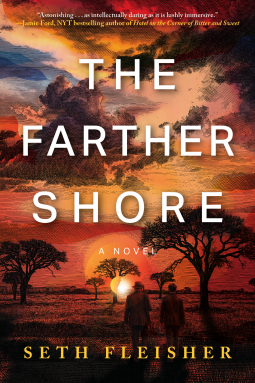
The Farther Shore by Seth Fleisher (Green City Books)
Southern Africa, turn of the twentieth century. Marais is a brilliant naturalist and iconoclastic journalist whose evolving theories about memory, addiction, and the hive mind are decades ahead of their time. But when tragedy strikes, he disappears into a remote African forest—leaving behind his newborn child and his conscience, and embarking on research that will haunt both their lives.
Thirty years later, his son Charles—now a professor of ancient Buddhist history at Harvard—discovers that the university’s most powerful faculty are mining his father’s research to bolster theories of racial hierarchy. Accompanied by a mysterious Jewish graduate student whose fate has become entangled with his own, Charles must journey to South Africa to confront his father, heal his fractured past, and stop a sinister plot taking root at the world’s most prestigious institution. (Review to follow)
What I’ll Be Reading Next
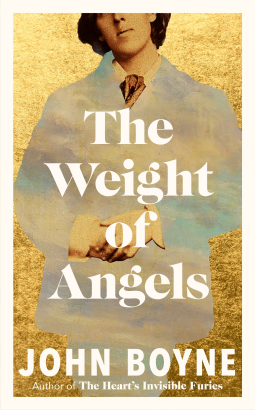
The Weight of Angels by John Boyne (Doubleday via NetGalley)
Can one rash decision prove the difference between a life well lived and a life destroyed?
When the Marquis of Queensbury left his calling card at the Albemarle Club in February 1895, it bore only his name and five words: ‘For Oscar Wilde, posing Somdomite’. The famous playwright sued for libel, which led to his arrest, criminal prosecution and imprisonment. From then on, his gilded existence spiralled into public disgrace and an early death.
But what if he had simply ignored the insult?
Rather than dying impoverished in Paris at forty-six, what if he had lived to bear witness to the momentous events and cataclysmic changes at the start of the twentieth century, and even influence some of them? What if the second half of his life were as celebrated, dramatic and tumultuous as the first?