Book Review: Widdershins by Helen Steadman

Did all women have something of the witch about them?

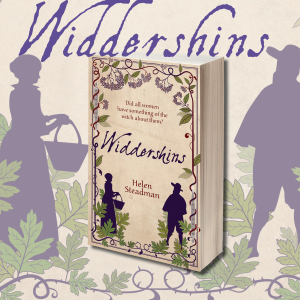
WiddershinsAbout the Book

Publisher’s description: Jane Chandler is an apprentice healer. From childhood, she and her mother have used herbs to cure the sick. But Jane will soon learn that her sheltered life in a small village is not safe from the troubles of the wider world. From his father’s beatings to his uncle’s raging sermons, John Sharpe is beset by bad fortune. Fighting through personal tragedy, he finds his purpose: to become a witch-finder and save innocents from the scourge of witchcraft.

Book Facts

  • Format: Paperback
  • Publisher: Impress Books
  • No. of pages: 250
  • Publication date: 1st July 2017
  • Genre: Historical Fiction

To pre-order/purchase Widdershins from Amazon.co.uk, click here (link provided for convenience, not as part of any affiliate programme)

Find Widdershins on Goodreads


My Review

Inspired by true events, this is a fantastically atmospheric book that immerses the reader vividly in seventeenth century north east England and Scotland. The narrative alternates between two main characters: Jane, whose mother is teaching her the skills of midwifery and herbal medicine; and John, a young man brutalised by his mother’s death and violent father. How their two stories will converge and at what point provides the narrative hook to the book.

I loved the period detail and depictions of everyday life such as the evocative description of the Newcastle fair.

‘The craftsmen were there to show off their skills and market their wares. Smiths, tanners, dyers, fullers, weavers and tailors galore. And farmers’ wives and girls sold their produce. Warm cider, weak ale and spiced mead sloshed from jugs. Hogs roasted over fires, filling the air with savoury smells and the crackle of fat melting onto flame. And above it all was the sweet smell of singing hinnies and gingerbread.’

The author does a good job of depicting a time when ignorance, intolerance, fear of change and superstition drove acts of great cruelty, in a lot of cases fuelled by misguided religious belief or a very fundamentalist interpretation of the Bible.   Women – especially midwives and herbalists – were a particular target for this and the author depicts in shocking and chilling detail the horrific examinations they were subjected to in order to ‘prove’ their innocence or guilt of the charge of witchcraft. These seem to have been driven by a kind of depraved, sexual hypocrisy.

Jane comes across as very much an innocent, not necessarily understanding all that she sees of her mother’s work and with an open, trusting nature. It’s not difficult to feel empathy with her, especially during the tragic events that lie in wait for her.  The author has a more challenging task to provide convincing motivation for the actions of John, who is a monster really.   His transformation from abused child to abuser is vividly described but whether it can completely explain his subsequent actions is open to question. There is such a thing as pure evil and it seems to me John is the incarnation of this.

I thought this was an impressive debut and the author succeeded in conjuring up a believable sense of time and place. Because of the subject matter, an uncomfortable read at times, but a really compelling story.

I received an advance reader copy courtesy of publishers, Impress Books, in return for an honest review.
WiddershinsCoverReveal

Follow my blog with Bloglovin

In three words: Evocative, chilling, compelling

Try something similar…Witchwood by John Buchan, The Vanishing Witch by Karen Maitland

HelenSteadmanAbout the Author

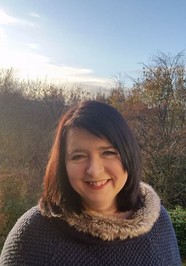
Helen Steadman lives in the foothills of the North Pennines, and she particularly enjoys researching and writing about the history of the north east of England. Following her MA in creative writing at Manchester Met, Helen is now completing a PhD in English at the University of Aberdeen. When she s not studying or writing, Helen critiques, edits and proofreads other writers work, and she is a professional member of the Society for Editors and Proofreaders.

Connect with Helen

Website: http://helensteadman.com/
Twitter
Goodreads: https://www.goodreads.com/author/show/2297484.Helen_Steadman

Book Review: A Countess in Limbo by Olga Hendrikoff & Sue Carscallen

One remarkable woman’s experiences of living through turbulent times

CountessAbout the Book

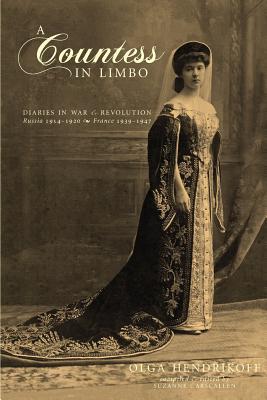
Countess Olga “Lala” Hendrikoff was born into the Russian aristocracy, serving as lady-in-waiting to the empresses and enjoying a life of great privilege. But on the eve of her wedding in 1914 came the first rumours of an impending war—a war that would change her life forever and force her to flee her country as a stateless person with no country to call home. Her personal writings have been collected and translated by her great niece, Sue Carscallen, to form A Countess in Limbo: Diaries in War and Revolution.

Spanning two of the most turbulent times in modern history—World War I in Russia and World War II in Paris—Countess Hendrikoff’s journals demonstrate the uncertainty, horror, and hope of daily life in the midst of turmoil. Her razor-sharp insight, wit, and sense of humour create a fascinating eyewitness account of the Russian Revolution and the occupation and liberation of Paris.

Book Facts

  • Format: ebook
  • Publisher: Archway Publishing
  • No. of pages: 337
  • Publication date: 3rd November 2016
  • Genre: Memoir, Non-Fiction, History

Purchase links*
Amazon
Barnes and Noble
Archway Publishing

*links provided for convenience, not as part of any affiliate programme

Find A Countess in Limbo on Goodreads


My Review

I found these journals absolutely fascinating and I was amazed how a woman could live through such upheaval, struggle, loss and privation and still provide such an objective commentary on events, managing to see the good – and bad – on both sides.

In the first section, the young Olga recounts some of her experiences living in Russia at the outbreak of World War I. There are touching scenes, such as when she and her mother witness the departure of her younger brother to join the army.

‘To the strains of martial music, the train, illuminated by the last rays of the setting sun, started pulling away from the platform and soon vanished in the evening darkness. With long-repressed tears flowing without measure, my mother and I stood on the platform for a few more minutes.’

Olga did not keep journals throughout her life – or at least, none remain – so there are gaps where only her great niece’s research can try to provide welcome answers. One such mystery is the circumstances around the ending of her marriage after only three years.

The sections of the book containing the journals Olga Hendrikoff kept during World War 2 – covering the onset of war, the occupation of France and its liberation – I found particularly compelling. Throughout there is a sense of incredulity that nations should so quickly repeat the mistakes of history.

‘Another war with Germany seems incredible to me when no-one has yet forgotten the last one.’

‘I often wake up in the morning thinking I have had a bad dream – the war, the departure of friends and relatives… The first few days after the war was declared, it was if I was stunned. I could not bring myself to believe that the country I live in is really at war.’

Olga documents the daily struggle to find food, fuel to keep warm and employment so that items only available on the thriving black market can be purchased. She vividly describes how the German advance into France provokes the desperate flight of people.

‘The route nationale is still clogged with refugees who make use of any means of locomotion: men on bicycles, women on foot pushing baby carriages, babies in wheelbarrows pulled like trailers by bicycles, mule- or horse-drawn carriages, strollers…in a word, anything on wheels, anything that rolls, has been mobilised for the exodus.’

The liberation of Paris brings no end to the food shortages, power cuts and daily struggle. It also brings something worse – reprisals against those deemed to have been collaborators.

‘In the troubled times we are going through, alas, the spirit of personal vengeance is naturally given free rein.’

Olga becomes one of hundreds of thousands stateless émigrés, in her case unable to return to Russia following the revolution and its transformation into the Soviet Union.  However, she never loses her affection for her homeland, which she looks back on fondly.

‘Would it suddenly be possible to go back to your own country and see Russian forests again, the rivers you knew as a child, the landscapes you still hold in your heart?’

In the end, economic pressures force her to leave France and, since a return to Russia is impossible, she embarks for America where she spent the remainder of her long life.

Countess Hendrikoff was clearly a remarkable woman with wit, intelligence, resilience, compassion for others and a relentless determination to survive. It is wonderful that her journals survive in order that modern readers can share her experiences and her admirable outlook on life. There is so much more that I could mention about this book but I will simply urge you to read it for yourself. One final quotation, should you need further persuading:

‘All war seems absurd to me anyway. The victors often lose in the exchange, and the vanquished think only of revenge.’

A lesson we do not yet seem to have learned.

I received a review copy courtesy of the author and publishers, Archway Publishing, in return for an honest review.

Follow my blog with Bloglovin

In three words: Enthralling, moving, inspirational

Try something similar…The Past is Myself by Christabel Bielenberg


About the Authors

Olga Hendrikoff was born in 1892 in Voronezh, Russia, and attended the famous Smolny Institute. In 1914, she married Count Peter Hendrikoff just as World War I began. In the ensuing years, Hendrikoff lived in Constantinople, Rome, Paris, and Philadelphia. She spent her last 20 years in Calgary. She died in 1987.

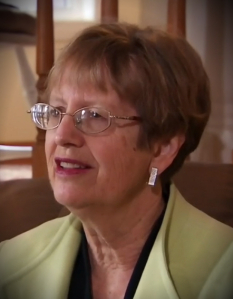
CarscallenSue Carscallen spent 20 years with Olga Hendrikoff before her great aunt’s passing in 1987. Carscallen stumbled upon Hendrikoff’s diaries hidden in a trunk at her great aunt’s Calgary home. Over time she unraveled the mysteries hidden in the manuscripts, traveling to France and Russia to supplement her research into Hendrikoff’s life. Today, Carscallen resides in Calgary.

Find out more…

Read a fascinating interview with Sue Carscallen about her great aunt, the discovery of her journals and how this book came into being.

Website: www.acountessinlimbo.com